
The main types of credentialing in healthcare include initial credentialing, recredentialing, ongoing credential monitoring, and delegated credentialing. Credential verification organizations may also perform defined verification functions. Provider enrollment, licensing, contracting, and privileging are closely related processes, but they should not be classified as types of credentialing.
Healthcare teams often use the word “credentialing” to describe nearly every provider onboarding activity. That creates confusion.
A practice may simultaneously be managing professional licensing, payer credentialing, CAQH, Medicare enrollment, group affiliation, hospital privileges, contracts, and recredentialing. These processes interact, but they do not all mean the same thing.
Understanding the different types of credentialing helps practices assign responsibility correctly and track provider readiness more accurately.
What Are the Main Types of Credentialing?
For most healthcare organizations, the most useful credentialing categories are:
- Initial credentialing
- Recredentialing
- Ongoing credential monitoring
- Delegated credentialing
- Credential verification services
Some organizations use different terminology, and their exact processes can vary according to payer requirements, accreditation standards, contracts, provider type, and care setting.
Types of Credentialing at a Glance
| Type | Primary Purpose | When It Happens |
|---|---|---|
| Initial credentialing | Reviews and verifies a provider before initial participation or appointment | Before or during initial onboarding |
| Recredentialing | Periodically reevaluates an already credentialed provider | According to the organization’s credentialing cycle |
| Ongoing monitoring | Monitors selected changes between formal credentialing cycles | Between credentialing and recredentialing reviews |
| Delegated credentialing | Allows another qualified organization to perform defined credentialing functions under an agreement | When formal delegation exists |
| Credential verification services | Verifies defined credentials from primary or recognized sources | During initial credentialing, recredentialing, or other approved workflows |
1. What Is Initial Credentialing?
Initial credentialing is the first formal review of a provider’s qualifications by a payer, healthcare organization, hospital, network, or other credentialing entity.
The process may review:
- Professional license
- Education
- Postgraduate training
- Work history
- Board certification when applicable
- Professional liability coverage
- DEA registration when applicable
- Malpractice history
- Sanctions and disciplinary actions
- Other organization-specific criteria
The objective is to determine whether the practitioner meets the credentialing organization’s standards.
For the broader workflow, see our provider credentialing process guide.
What Happens During Initial Credential Verification?
Credentialing organizations may verify information directly with an authoritative source or through another recognized source permitted by the applicable standard.
Examples can include verification of:
- Professional license status
- Education
- Training
- Board certification
- Professional sanctions
NCQA credentialing standards specifically address verification through primary sources, recognized sources, or contracted agents of primary sources.
Our primary source verification guide explains this process in more detail.
2. What Is Recredentialing?
Recredentialing is the periodic reevaluation of a practitioner who has already completed initial credentialing.
The purpose is to determine whether the practitioner continues to satisfy the organization’s credentialing requirements.
A recredentialing review may involve updated information such as:
- Current professional license
- Professional liability coverage
- Sanctions or disciplinary activity
- Malpractice history
- Board certification where applicable
- Updated practice information
- Other credentialing criteria
Recredentialing is not the same as renewing a professional license.
License renewal is handled by the applicable licensing authority. Recredentialing is performed by the payer or healthcare organization reviewing the provider.
See our provider recredentialing guide for the full distinction.
3. What Is Ongoing Credential Monitoring?
Formal credentialing does not mean an organization ignores the provider until the next recredentialing cycle.
Ongoing monitoring is used to identify important changes between formal reviews.
NCQA credentialing standards include monitoring practitioner sanctions, complaints, and quality issues between recredentialing cycles.
Depending on the organization, monitoring may include:
- License status
- Sanctions
- Exclusions
- Complaints
- Adverse professional actions
- Other defined credentialing events
Ongoing monitoring should not be confused with simply setting calendar reminders for document expiration dates.
Expiration tracking is useful operationally, but formal credential monitoring depends on the organization’s credentialing standards and approved sources.
How Is Continuous Monitoring Changing Credentialing?
Credentialing standards and technology are evolving toward more frequent monitoring of selected provider information.
NCQA’s 2026 Credentialing Collaborative is exploring continuous monitoring and exception-based review as alternatives to repeatedly rechecking every piece of information in the same way.
The concept is straightforward:
- Monitor trusted data sources more frequently.
- Identify meaningful changes.
- Send exceptions for appropriate review.
- Maintain auditability and human oversight.
This does not eliminate the need for reliable sources, credentialing policies, attestations, or formal reviews where required.
4. What Is Delegated Credentialing?
Delegated credentialing occurs when an organization formally authorizes another entity to perform specified credentialing functions on its behalf.
For example, a health plan may delegate defined credentialing activities to a qualified medical group, health system, or credentialing organization under a written agreement.
Delegation can involve responsibilities such as:
- Credential verification
- Application review
- Credentialing decisions where permitted
- Recredentialing
- Ongoing monitoring
The exact delegated functions depend on the agreement.
NCQA emphasizes that the delegating organization remains responsible for oversight of delegated credentialing activities.
For more detail, see our delegated credentialing guide.
What Is Not Delegated Credentialing?
Several common arrangements should not automatically be described as delegated credentialing.
For example:
- Using credentialing software
- Hiring administrative staff to collect documents
- Outsourcing payer follow-up
- Using an outside company to enter application data
These may support credentialing operations, but formal delegation involves defined credentialing authority and responsibilities under an agreement.
5. What Is a Credential Verification Organization?
A Credential Verification Organization, often called a CVO, performs credential verification functions for healthcare organizations.
A CVO may verify defined information from primary or recognized sources and return those verification results to the client organization.
Depending on the arrangement, the CVO may handle functions such as:
- License verification
- Education verification
- Training verification
- Board certification verification
- Other approved credential checks
Using a CVO does not automatically mean the CVO makes the final credentialing decision.
The organization using the verification information may retain responsibility for reviewing the provider and making the credentialing decision.
Is Physician Credentialing a Separate Type of Credentialing?
Physician credentialing is better understood as credentialing applied to a particular provider type rather than an entirely separate credentialing category. For comparison, see our physician assistant credentialing guide.
The same general concept can apply to other practitioners, including:
- Nurse practitioners
- Physician assistants
- Psychologists
- Clinical social workers
- Therapists
- Other credentialed healthcare professionals
The exact qualifications reviewed depend on the profession and organization.
Is Provider Enrollment a Type of Credentialing?
No.
Provider enrollment is closely related to credentialing but is a separate administrative process.
Enrollment establishes a provider or healthcare organization within a payer or government program’s administrative system.
It may involve:
- NPI
- TIN
- Practice locations
- Billing relationships
- Ownership
- Group affiliations
- Reassignments
- Other payer-specific information
Credentialing asks whether the provider meets professional qualification standards.
Enrollment asks how the provider or organization is established with the payer or program.
See our provider enrollment process guide for the separate enrollment workflow.
How Is Medicare Enrollment Different From Credentialing?
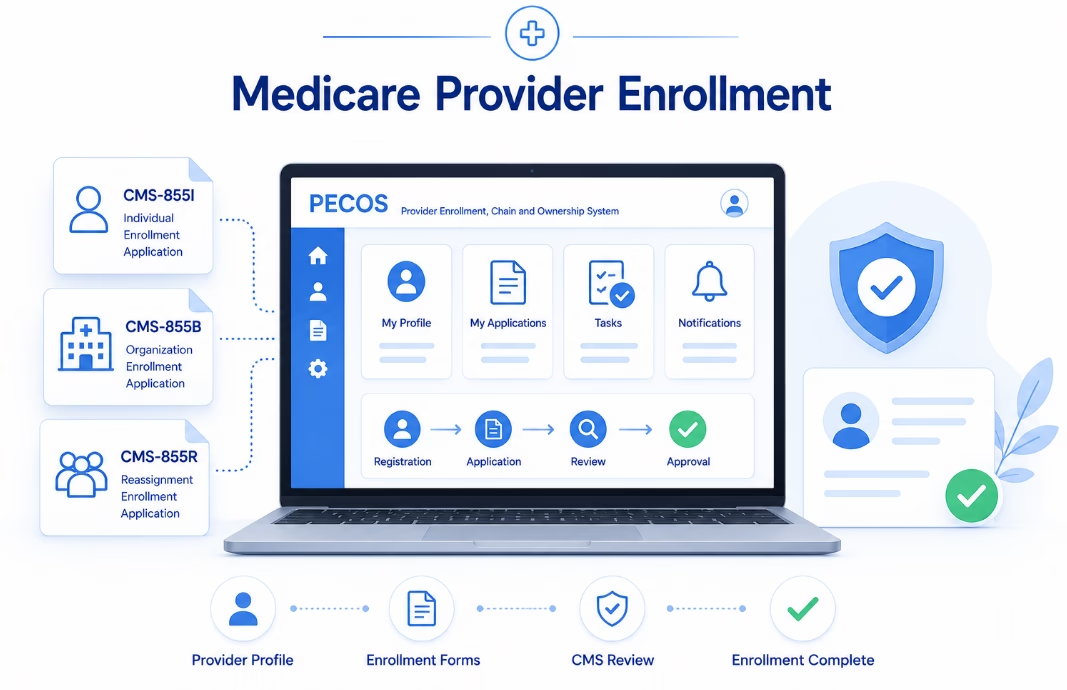
Medicare provider enrollment is administered through CMS and Medicare Administrative Contractors.
CMS uses PECOS as its online Medicare enrollment management system.
PECOS allows providers and suppliers to:
- Submit initial Medicare enrollment applications
- Review enrollment information
- Upload supporting documentation
- Submit changes
- Complete revalidation
Medicare enrollment should therefore be tracked separately from commercial credentialing and recredentialing.
Is Privileging a Type of Credentialing?
Privileging is related to credentialing but should be treated as a separate process.
Credentialing evaluates a practitioner’s professional qualifications.
Privileging determines what specific clinical activities the practitioner is authorized to perform within a healthcare organization.
A provider may therefore be credentialed but not approved for every requested clinical privilege.
See our credentialing vs privileging vs enrollment guide for a side-by-side comparison.
Is Professional Licensing a Type of Credentialing?
No.
Licensing is the legal authorization issued by the applicable state or other government authority to practice a regulated healthcare profession.
The professional license may then become one of the credentials reviewed during credentialing.
This distinction matters:
- The licensing authority issues the professional license.
- The credentialing organization verifies and evaluates that license as part of its review.
Credentialing vs Related Healthcare Processes
| Process | Is It a Type of Credentialing? | Main Function |
|---|---|---|
| Initial credentialing | Yes | Initial professional qualification review |
| Recredentialing | Yes | Periodic reevaluation |
| Ongoing monitoring | Part of credentialing operations | Monitors important changes between formal reviews |
| Delegated credentialing | Yes, as an organizational model | Transfers defined credentialing functions under an agreement |
| Professional licensing | No | Provides legal authority to practice |
| Provider enrollment | No | Establishes provider or organization with payer or program |
| Privileging | No | Authorizes specific clinical activities within an organization |
| Contracting | No | Establishes payer participation terms |
Why Does the Type of Credentialing Matter?
Knowing which credentialing process is underway helps the practice understand what should happen next.
For example:
- An initial credentialing file may need missing primary source verification.
- A recredentialing file may need updated professional information.
- An ongoing monitoring alert may require human review.
- A delegated credentialing arrangement may require oversight and reporting.
- A payer enrollment case may actually be waiting on group affiliation rather than credentialing.
Using the correct terminology makes workflow status much easier to understand.
How Should Practices Manage Different Credentialing Workflows?
Keep one structured provider record
Maintain current provider information and documents in an organized system.
See our provider credentialing documents guide for the common information practices should maintain.
Track initial credentialing separately from recredentialing
Do not simply overwrite the provider’s original credentialing record when a new review begins.
Maintain a history of:
- Initial approval
- Recredentialing reviews
- Relevant monitoring events
- Current participation status
Track credential expirations
Monitor professional licenses, professional liability coverage, DEA registrations where applicable, board certifications, and other time-sensitive records.
Document verification sources
Credentialing records should make it clear where verified information came from and when it was checked.
Separate credentialing from payer enrollment
Track credentialing, contracting, enrollment, affiliation, and effective dates as distinct milestones.
Use automation carefully
Technology can support:
- Expiration reminders
- Document organization
- Missing-information alerts
- Application tracking
- Follow-up tasks
Automation does not replace credentialing policies, reliable source verification, or accountable review.
Frequently Asked Questions
What are the main types of credentialing in healthcare?
The main categories include initial credentialing, recredentialing, ongoing monitoring, delegated credentialing, and credential verification services. Terminology and workflows can vary by organization.
Is provider enrollment a type of credentialing?
No. Provider enrollment is a separate process used to establish the provider or organization within a payer or government program’s system.
Is recredentialing the same as license renewal?
No. Recredentialing is a periodic organizational review of provider qualifications. License renewal is handled by the applicable professional licensing authority.
What is ongoing credential monitoring?
Ongoing monitoring checks defined provider information between formal credentialing reviews, such as sanctions, complaints, license changes, or other credentialing events identified by the organization.
What is delegated credentialing?
Delegated credentialing occurs when an organization formally authorizes another qualified entity to perform specified credentialing functions on its behalf under an agreement.
Is using a credentialing company the same as delegated credentialing?
Not automatically. Administrative outsourcing may involve application preparation, document collection, or payer follow-up. Formal delegated credentialing involves authority to perform defined credentialing functions under a delegation agreement.
Is hospital privileging a type of credentialing?
No. Credentialing verifies professional qualifications. Privileging determines which clinical activities a provider may perform within a particular healthcare organization.
Is Medicare enrollment a type of credentialing?
No. Medicare provider enrollment is a separate CMS process managed through PECOS and Medicare Administrative Contractors.
Use the Right Credentialing Process for the Right Purpose
Understanding the types of credentialing makes provider onboarding and ongoing management easier to organize.
Initial credentialing evaluates a provider for the first time. Recredentialing periodically reevaluates the provider. Ongoing monitoring identifies important changes between reviews. Delegated credentialing allows defined functions to be performed by another organization under a formal arrangement.
Licensing, enrollment, privileging, and contracting remain separate processes and should be tracked accordingly.
eClinicAssist supports healthcare organizations with provider credentialing administration, payer enrollment, CAQH management, provider documentation, application follow-up, renewals, Medicare and Medicaid enrollment administration, and related workflows.
Contact eClinicAssist to discuss credentialing and payer enrollment support for your healthcare organization.
This article provides general administrative information and is not legal, accreditation, contractual, licensing, billing, or compliance advice. Credentialing requirements and terminology vary by payer, healthcare organization, provider type, state, program, and accreditation framework.