
Reducing delays in the payer enrollment process is essential for maintaining a steady revenue cycle and ensuring providers can start billing without disruption. Many practices struggle to reduce payer enrollment delays, which leads to lost revenue, billing gaps, and operational inefficiencies.
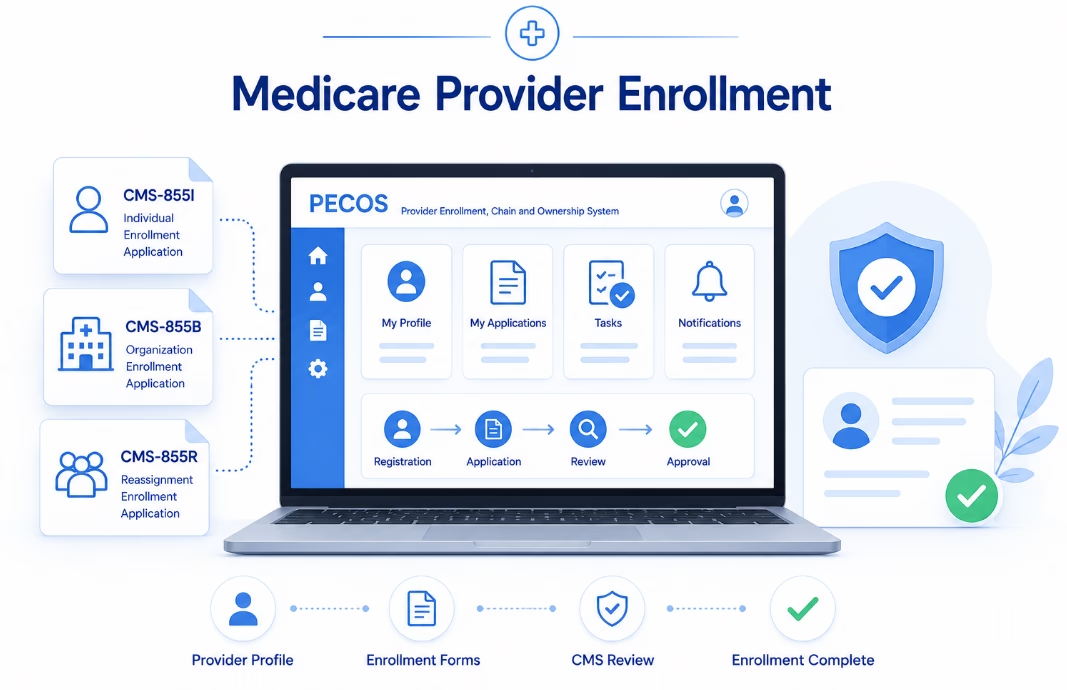
For healthcare administrators and practice managers, speeding up approvals is not just about efficiency—it is about protecting financial stability and improving patient access. To build a strong foundation, practices should first understand the complete payer enrollment process, including documentation, verification, and approval workflows:
Problem Explanation
Enrollment delays directly impact revenue and workflow stability. When providers are not approved on time, claims cannot be submitted, which results in delayed reimbursements and increased pressure on medical billing teams.
In most cases, delays occur due to avoidable issues such as incomplete documentation, inconsistent provider data, and lack of follow-up. Additionally, payer-specific requirements vary widely, which makes the process more complex and error-prone.
Common causes that increase delays include:
-
Mismatched data between CAQH, NPPES, and payer systems
-
Missing or outdated credentialing documents
-
Failure to follow payer-specific submission rules
-
Lack of structured follow-up process
To better understand how these issues affect approvals, review this guide on credentialing mistakes that delay payments.
Without a clear system in place, these small issues can extend enrollment timelines by weeks or even months.
Step-by-Step Solution
1. Centralize Provider Data for Accuracy
The first step to reduce payer enrollment delays is to centralize all provider data in one system. When information is scattered across files or departments, inconsistencies are more likely to occur.
A centralized system should include:
-
Provider demographics and identifiers
-
NPI and tax information
-
Licenses and certifications
-
Malpractice insurance details
-
Practice location data
Keeping all information aligned across CAQH, NPPES, and payer portals ensures faster approvals and fewer rejections.
2. Maintain an Updated CAQH Profile
CAQH plays a critical role in commercial payer enrollment, and an outdated profile can delay the entire process. Providers must keep their CAQH profile complete, accurate, and regularly updated.
Key actions include:
-
Completing all required sections
-
Uploading current documents
-
Re-attesting every 120 days
Missing re-attestation deadlines blocks payer access and stalls active applications.
For deeper insight, explore this guide on CAQH credentialing delays and approval issues.
3. Automate Enrollment and Credentialing Workflows
Manual processes slow down approvals and increase the risk of errors. Implementing credentialing software can significantly improve efficiency and reduce administrative workload.
Automation helps practices:
-
Auto-fill applications with accurate data
-
Track application status in real time
-
Receive alerts for renewals and deadlines
-
Maintain compliance with credentialing requirements
By improving workflow efficiency, practices can shorten approval timelines and improve Time-to-Revenue.
4. Understand Payer-Specific Requirements
Each payer has unique enrollment processes, forms, and timelines. Understanding these requirements helps prevent rejections and reduces unnecessary delays.
Practices should create internal checklists that include:
-
Required documents and forms
-
Submission methods (online vs. paper)
-
Contact details and escalation paths
-
Expected processing timelines
5. Implement a Consistent Follow-Up Strategy
Submitting an application does not guarantee progress. Without follow-ups, applications can remain pending for extended periods.
A structured follow-up system should include:
-
Weekly status checks with payers
-
Documentation of all communications
-
Escalation procedures for delays
Regular follow-up ensures that issues are addressed quickly and prevents applications from being overlooked.
6. Consider Outsourcing for Faster Results
For many practices, managing enrollment internally is time-consuming and resource-intensive. Outsourcing to credentialing experts can significantly reduce delays and improve approval rates.
Outsourcing provides:
-
Access to experienced professionals
-
Faster processing and fewer errors
-
Improved compliance with payer requirements
-
Reduced administrative burden
This allows your team to focus on patient care while improving overall revenue cycle performance.
Conclusion
To successfully reduce payer enrollment delays, healthcare practices must adopt a structured and proactive approach that focuses on data accuracy, automation, and consistent follow-ups. When these strategies are implemented effectively, practices can accelerate approvals, improve compliance, and protect their revenue cycle.
If your team is facing ongoing enrollment delays or workflow inefficiencies, eClinicAssist can help streamline your process and ensure faster approvals. Contact eClinicAssist today to reduce delays and keep your revenue flowing.