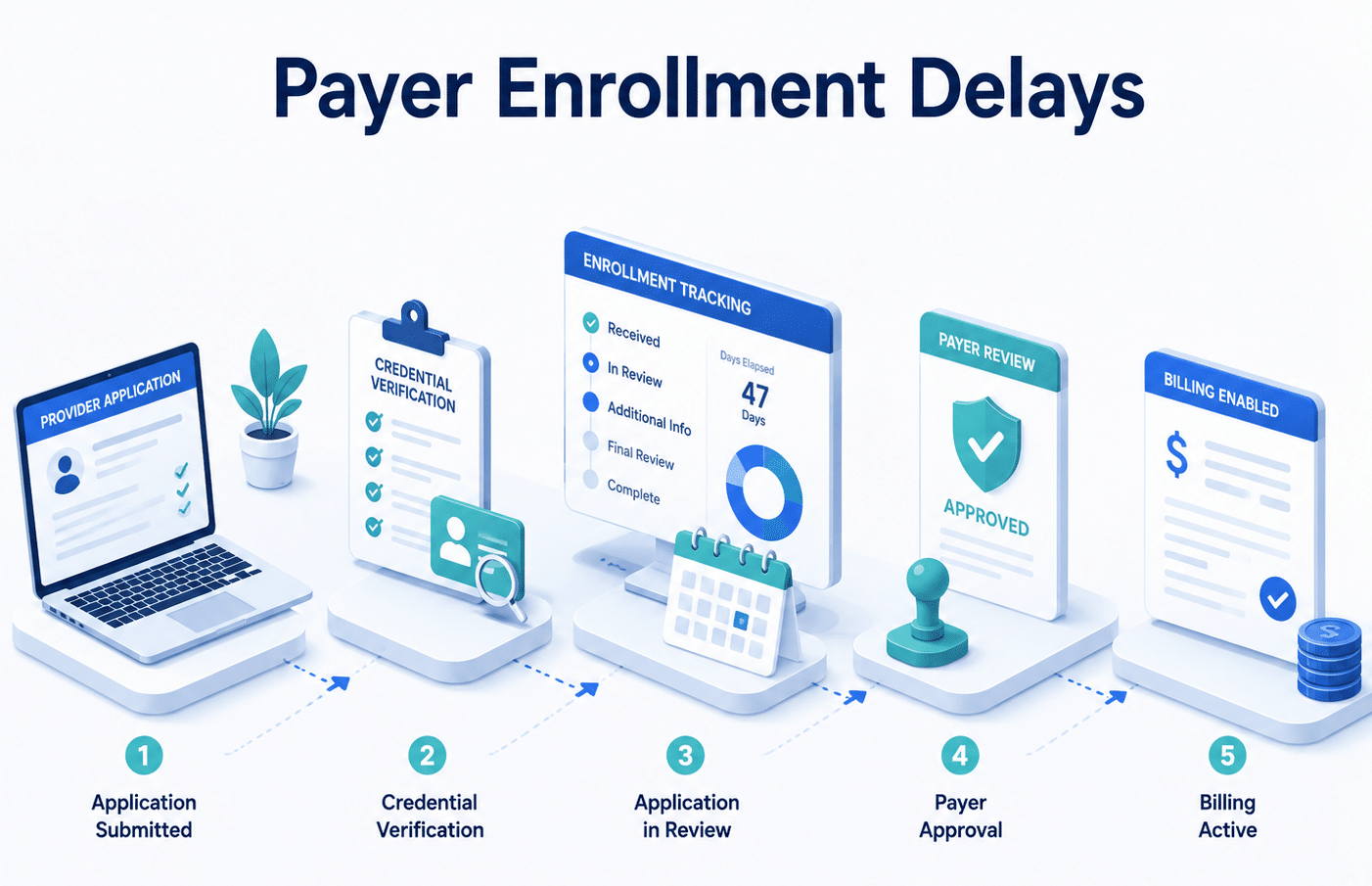
Payer enrollment delays are one of the biggest operational challenges healthcare practices face during provider onboarding. Long approval timelines, incomplete applications, and repeated follow-ups can significantly slow reimbursements and disrupt revenue cycle management.
For practice managers, clinic owners, and healthcare administrators, delayed enrollment affects far more than paperwork. When providers cannot bill insurance companies, practices lose revenue daily while administrative teams struggle to keep applications moving forward.
Although payer enrollment often feels frustratingly slow, proactive planning and organized workflows can dramatically improve approval timelines.
Why Payer Enrollment Delays Hurt Healthcare Practices
Provider enrollment directly impacts financial performance.
Without payer approval, providers may still see patients but remain unable to submit reimbursable claims. As a result, practices absorb operational costs without generating expected revenue.
Common consequences of payer enrollment delays include:
- Delayed cash flow
- Increased administrative workload
- Billing backlogs
- Scheduling disruptions
- Slower provider onboarding
- Revenue cycle instability
For growing practices, even a few months of delayed reimbursements can create serious financial pressure.
Start Enrollment Early to Reduce Payer Enrollment Delays
One of the biggest mistakes practices make is waiting too long to begin enrollment.
Commercial payer credentialing may take several months, while Medicare and Medicaid enrollment often require even longer review timelines. Therefore, practices should ideally begin applications at least 90–120 days before a provider’s anticipated start date.
Early preparation creates flexibility for:
- Missing document requests
- Additional verification reviews
- Contract processing delays
- Credentialing corrections
Practices that start early usually avoid last-minute operational stress and reimbursement interruptions.
Organize Documents Before Submission
Incomplete documentation remains one of the leading causes of payer enrollment delays.
Before submitting applications, practices should organize essential provider documents such as:
- State licenses
- DEA certificates
- Malpractice insurance
- NPI information
- Board certifications
- W-9 forms
- Updated CVs
Keeping documents centralized and digitally organized significantly improves workflow efficiency.
Practices that maintain structured provider credentialing documents often reduce administrative back-and-forth during enrollment reviews.
CAQH Accuracy Helps Prevent Payer Enrollment Delays
CAQH profiles play a major role in commercial payer enrollment.
Many insurance companies retrieve provider information directly from CAQH during credentialing reviews. Consequently, incomplete or outdated profiles frequently slow approvals.
Practices should regularly verify:
- License information
- Practice locations
- Work history
- Malpractice coverage
- Hospital affiliations
In addition, providers should re-attest CAQH profiles every 120 days to maintain active participation status.
Organizations that maintain accurate CAQH profile registration workflows usually experience smoother enrollment timelines.
Use Technology to Streamline Enrollment Workflows
Manual enrollment tracking quickly becomes overwhelming, especially for growing practices.
Credentialing software and workflow automation tools help practices:
- Monitor application progress
- Track payer communication
- Store provider documentation
- Generate deadline reminders
- Reduce repetitive data entry
Automated systems improve visibility and reduce the risk of missed follow-ups or expired documentation.
Even smaller practices benefit from organized tracking spreadsheets and centralized enrollment databases.
Submit Applications in Parallel
Many practices lose valuable time by waiting for one payer approval before starting another application.
Instead, organizations should submit applications simultaneously for:
- Medicare
- Medicaid
- Commercial payers
- Regional insurance networks
Parallel processing dramatically shortens overall enrollment timelines and helps providers become fully operational faster.
Practices should also prioritize high-volume payers first to accelerate reimbursement opportunities.
Follow Up Consistently With Insurance Payers
Submitting applications is only the beginning of the enrollment process.
Insurance companies frequently request clarification, missing documents, or additional verification before approvals are finalized. Without proactive follow-up, applications may remain inactive for weeks.
Practices should maintain detailed records of:
- Submission dates
- Payer representatives contacted
- Follow-up conversations
- Outstanding requirements
- Escalation requests
Consistent communication often prevents avoidable delays and keeps applications moving forward.
Learn Payer-Specific Enrollment Systems
Every insurance payer uses different enrollment procedures.
For example:
- Medicare enrollment uses PECOS
- Medicaid enrollment varies by state
- Commercial payers maintain separate provider portals
Understanding payer-specific requirements helps practices avoid common application mistakes.
Practices that strengthen payer relationship strategies for healthcare growth often improve communication efficiency and enrollment responsiveness.
Keep Provider Records Updated
Expired credentials frequently trigger enrollment denials or processing delays.
Practices should actively monitor expiration dates for:
- Medical licenses
- DEA registrations
- Malpractice insurance
- Board certifications
- CAQH attestations
Automated reminders and organized tracking systems help practices stay proactive.
Keeping provider information current reduces disruptions during both enrollment and recredentialing processes.
Build Faster Enrollment Workflows for Long-Term Growth
Reducing payer enrollment delays requires organization, consistency, and proactive communication. Practices that prepare documents early, maintain accurate provider data, and follow up consistently usually experience faster approvals and fewer reimbursement interruptions.
Most importantly, efficient enrollment workflows help providers begin billing sooner and allow healthcare organizations to maintain stronger financial stability during growth phases.
If your organization needs support managing provider enrollment, healthcare credentialing, or payer workflows, eClinicAssist helps healthcare practices streamline enrollment operations and reduce approval delays.