Adding a new provider to your practice should create new revenue opportunities—not months of billing delays. Yet many healthcare organizations discover that even a qualified physician or nurse practitioner cannot generate Medicare revenue until the enrollment process is complete. Every missing document, incorrect application, or delayed approval extends the time between hiring a provider and receiving reimbursement.
Choosing the right Medicare provider enrollment application is one of the most important steps in building a healthy revenue cycle. The correct application determines how a provider enters the Medicare program, whether a practice can bill under its organizational Tax Identification Number (TIN), and how Medicare sends payments. Selecting the wrong form can delay enrollment, slow reimbursements, and create unnecessary administrative work.
Fortunately, the process becomes much easier once you understand the purpose of each Centers for Medicare & Medicaid Services (CMS) enrollment application. Whether you operate a solo practice, manage a growing medical group, or open a new healthcare organization, knowing which forms apply to your situation helps you avoid costly setbacks.
Understanding the Medicare Provider Enrollment Process
Before reviewing the individual applications, it helps to understand the overall enrollment process.
Medicare provider enrollment allows CMS to verify that healthcare professionals and organizations meet federal participation requirements. During this review, CMS confirms professional qualifications, business ownership, licensure, practice locations, banking information, and other regulatory requirements before approving Medicare billing privileges.
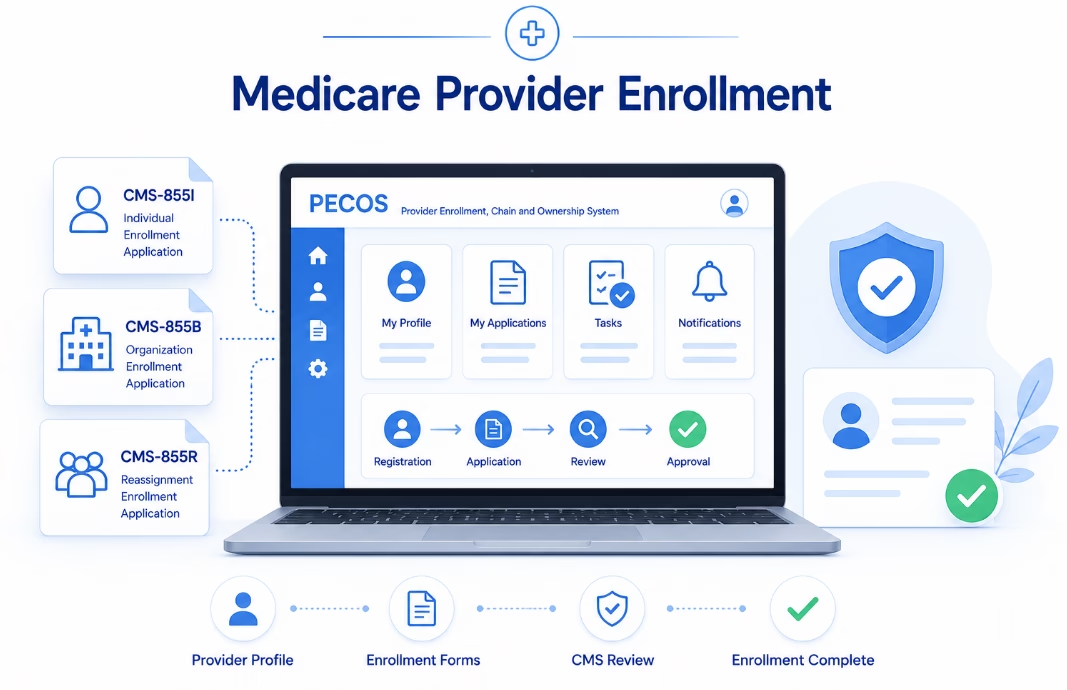
Today, most providers complete this process through the Provider Enrollment, Chain, and Ownership System (PECOS). The online portal simplifies document submission, improves application tracking, and often reduces processing times compared with traditional paper forms.
Although PECOS manages the electronic workflow, CMS still organizes every enrollment according to its traditional application numbers. Understanding these forms helps practice managers choose the correct enrollment path from the beginning.
Which Medicare Provider Enrollment Application Do You Need?
The answer depends on how the provider plans to participate in Medicare.
An independent physician follows a different enrollment process than a provider joining an established group practice. Likewise, a newly formed medical organization completes different applications than an existing clinic adding another clinician.
In many situations, practices submit more than one Medicare provider enrollment application before a provider can begin billing successfully. Instead of viewing each form as separate paperwork, think of them as connected pieces of a complete enrollment strategy.
CMS-855I: Medicare Provider Enrollment Application for Individual Providers
The CMS-855I serves as the primary Medicare provider enrollment application for individual healthcare professionals. It establishes the provider’s identity within the Medicare program and verifies that the individual meets all participation requirements.
Most physicians, nurse practitioners, physician assistants, psychologists, therapists, and other eligible healthcare professionals begin Medicare enrollment with this application.
CMS reviews several important areas during the evaluation, including:
- Professional licenses
- Education and residency training
- Board certifications
- National Provider Identifier (NPI)
- Practice locations
- Professional employment history
- Reportable disciplinary or legal actions
Completing the CMS-855I establishes an individual’s eligibility to participate in Medicare. However, it does not automatically authorize a medical practice to receive Medicare payments on that provider’s behalf.
Healthcare organizations should review every application carefully before submission. Small inconsistencies between licensing records, NPPES, CAQH, or supporting documentation often trigger additional review and extend processing times.
Related reading: Provider Credentialing Process
CMS-855B: Medicare Provider Enrollment Application for Organizations
Individual enrollment alone is not enough for medical groups, clinics, or healthcare corporations.
Organizations that bill Medicare under a business entity complete the CMS-855B. This Medicare provider enrollment application establishes the legal organization as an approved Medicare supplier.
Healthcare organizations commonly submit this application when they establish:
- Physician group practices
- Multi-specialty clinics
- Independent therapy practices
- Diagnostic facilities
- Corporate healthcare organizations
- Other Medicare-approved suppliers
Unlike the CMS-855I, the organizational application focuses on the business itself rather than an individual clinician.
CMS reviews information such as ownership structure, managing employees, business addresses, Tax Identification Numbers, practice locations, and organizational compliance requirements.
For newly established practices, the CMS-855B creates the organizational foundation that supports future provider enrollments.
CMS-855R: Reassigning Medicare Benefits
Many providers assume they can immediately bill through their employer once Medicare approves their individual enrollment. In reality, Medicare requires another important step.
The CMS-855R allows an individual provider to reassign Medicare benefits to a healthcare organization. This reassignment authorizes Medicare to pay the employer rather than the individual practitioner.
Without an approved reassignment, a provider may hold active Medicare enrollment while the organization cannot collect reimbursement for services provided under its Tax Identification Number.
This application plays an important role when physicians, nurse practitioners, physician assistants, or specialists join an existing medical group.
Rather than creating another enrollment, the CMS-855R connects an already enrolled provider to the organization’s Medicare billing relationship. That connection allows the practice to submit claims correctly and receive reimbursement through its established billing structure.
Practice managers should verify that reassignment approvals match the correct practice location, Tax Identification Number, and provider information before scheduling Medicare patients. Confirming these details early helps prevent avoidable billing delays after enrollment approval.
CMS-588: Setting Up Electronic Medicare Payments
Receiving Medicare approval does not automatically allow your practice to receive payments. Before Medicare can deposit reimbursements into your business bank account, you must complete the CMS-588, the Electronic Funds Transfer (EFT) Authorization Agreement.
This application links Medicare payments to your verified banking information. Most organizations also submit supporting documentation, such as a voided check or an official bank letter, to confirm account ownership.
Since Medicare relies on electronic payments for routine reimbursement, completing the CMS-588 is an essential part of the enrollment process. Missing or inaccurate banking information can delay payments even after CMS approves the provider’s enrollment.
Healthcare organizations should review their banking details carefully before submission to avoid unnecessary payment interruptions.
CMS-460: Choosing Medicare Participating Status
Enrollment and participation are not the same.
After completing the Medicare provider enrollment application, providers must decide whether to become participating or non-participating Medicare providers. They make this decision by signing the CMS-460, officially known as the Medicare Participating Physician or Supplier Agreement.
Providers who sign the CMS-460 agree to accept Medicare’s approved amount as payment in full for covered services. In return, they receive the full Medicare Physician Fee Schedule reimbursement and benefit from a more predictable billing process.
Providers who choose not to participate may still treat Medicare beneficiaries, but Medicare generally reimburses them at a lower rate. Additional billing rules also apply.
Many physician groups and healthcare organizations choose participating status because it simplifies billing and improves revenue predictability. However, every practice should evaluate its patient population, payer mix, and long-term financial strategy before making this decision.
Medicare Provider Enrollment Applications at a Glance
Each CMS application serves a specific purpose, but together they create a complete Medicare enrollment workflow.
| CMS Form | Primary Purpose | Typical Users |
|---|---|---|
| CMS-855I | Individual provider enrollment | Physicians, nurse practitioners, physician assistants, therapists, psychologists, and other eligible practitioners |
| CMS-855B | Organizational enrollment | Medical groups, clinics, healthcare organizations, and suppliers |
| CMS-855R | Reassignment of Medicare benefits | Providers billing through a group practice or employer |
| CMS-588 | Electronic Funds Transfer (EFT) authorization | Any enrolled provider or organization receiving Medicare payments |
| CMS-460 | Medicare participation agreement | Providers choosing participating Medicare status |
Although each application has a different purpose, organizations often submit several of these forms during a single provider onboarding process.
How the Medicare Provider Enrollment Application Process Works
Imagine a growing multi-specialty clinic that hires a Nurse Practitioner named Sarah.
The clinic wants Sarah to begin seeing Medicare patients as quickly as possible while ensuring every claim processes correctly.
If Sarah has never enrolled with Medicare, she first completes the CMS-855I to establish her individual Medicare enrollment.
Because she will bill through the clinic instead of independently, the organization also submits a CMS-855R to reassign her Medicare benefits to the practice.
The clinic already completed its organizational enrollment through the CMS-855B, and Medicare already recognizes its banking information through the CMS-588. As a result, the organization does not need to repeat those applications.
After CMS approves Sarah’s enrollment and reassignment through PECOS, the clinic can begin billing Medicare for the services she provides.
This example shows why many organizations submit more than one Medicare provider enrollment application during the onboarding process.
Common Medicare Provider Enrollment Application Mistakes
Many enrollment delays begin long before CMS reviews an application. Small administrative mistakes often create the biggest obstacles.
One of the most common issues involves inconsistent provider information. Differences between NPPES records, state licenses, PECOS applications, and supporting documentation frequently trigger requests for clarification.
Other common mistakes include:
- Entering incorrect practice addresses.
- Reporting outdated ownership information.
- Submitting incomplete supporting documents.
- Providing inaccurate banking information.
- Forgetting required signatures.
- Waiting too long to report organizational changes.
Healthcare organizations should compare every application against their official records before submission. A careful review often prevents weeks of avoidable delays later in the enrollment process.
Why Most Organizations Use PECOS
Although CMS still accepts paper applications in certain situations, most healthcare organizations use PECOS to complete Medicare enrollment.
The online system offers several advantages over paper submissions.
Practice managers can monitor application progress, upload supporting documents electronically, receive development requests faster, and respond without mailing additional paperwork.
Electronic submissions also reduce data entry errors and improve record management throughout the enrollment process.
PECOS cannot eliminate every enrollment delay, but it gives organizations greater visibility into the review process and allows them to address problems sooner.
Don’t Forget Your Medicare Administrative Contractor (MAC)
CMS does not process enrollment applications directly.
Instead, regional Medicare Administrative Contractors (MACs) review applications, request additional documentation, and approve Medicare enrollment within their assigned service areas.
Organizations such as Novitas, Palmetto GBA, Noridian, WPS, and other MACs manage provider enrollment across different regions of the country.
Practice managers should know which MAC serves their state. They should also monitor application status regularly and respond promptly whenever the contractor requests additional information.
Consistent communication helps organizations resolve questions before they become lengthy enrollment delays.
Building a Strong Medicare Enrollment Workflow
Successful organizations rarely rely on last-minute enrollment activities.
Instead, they build standardized workflows that reduce administrative errors before applications reach CMS.
Many high-performing healthcare organizations:
- Begin enrollment well before a provider’s anticipated start date.
- Maintain complete provider documentation.
- Verify information across federal databases.
- Coordinate credentialing with payer enrollment.
- Align Medicare enrollment with revenue cycle planning.
These proactive steps reduce reimbursement delays and help providers begin treating Medicare patients sooner.
Related reading: Provider Credentialing Timeline
Medicare Enrollment Supports Long-Term Revenue Growth
Completing the correct Medicare provider enrollment application involves much more than submitting paperwork. Every enrollment decision affects reimbursement, provider productivity, and the financial performance of your organization.
Whether your practice hires its first physician, expands into multiple locations, or adds advanced practice providers, an organized enrollment strategy helps providers begin billing sooner while reducing unnecessary administrative delays.
At eClinicAssist, we help healthcare organizations simplify Medicare enrollment, PECOS submissions, provider credentialing, payer enrollment, and revenue cycle management. Our experienced team works proactively to improve enrollment accuracy, reduce delays, and help practices begin billing with confidence.
Ready to simplify your Medicare enrollment process? Contact eClinicAssist today and let our experts help you complete provider enrollment accurately and efficiently.