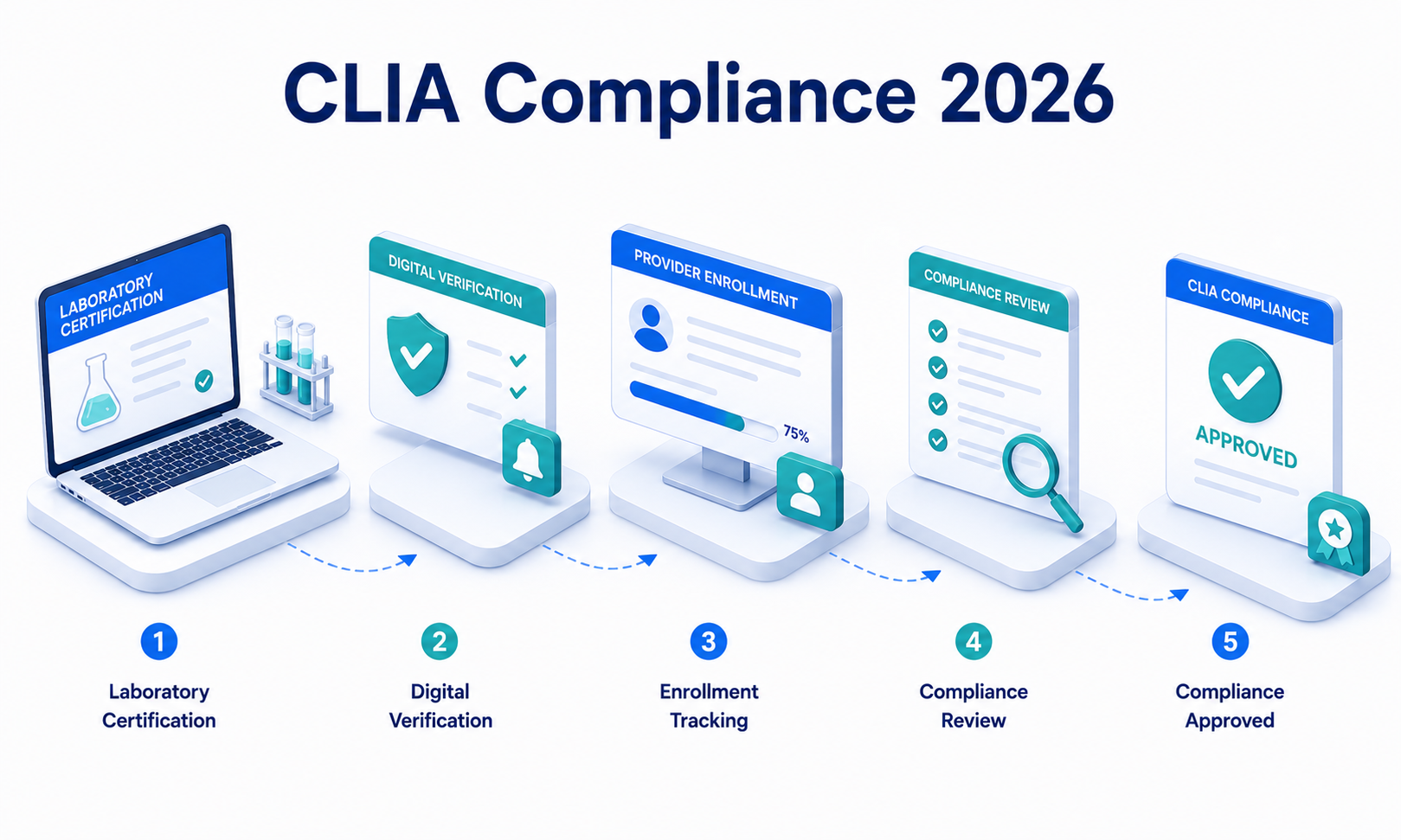

Hiring a new provider is one of the biggest investments a healthcare practice can make. Understanding the provider credentialing timeline is just as important because a provider cannot generate insurance revenue until credentialing and enrollment are complete. Whether you’re onboarding a physician, nurse practitioner, physician assistant, or behavioral health specialist, every delay affects both operations and cash flow.
For practice managers, clinic owners, healthcare administrators, and medical billing teams, credentialing influences much more than provider onboarding. It impacts scheduling, insurance enrollment, healthcare compliance, revenue cycle management, and ultimately the financial health of the entire organization.
Why the Provider Credentialing Timeline Takes Longer Than Most Practices Expect
Many practices assume credentialing begins when an application reaches an insurance company. In reality, the process starts much earlier and involves far more than completing a few forms.
Before a payer reviews an application, practices must gather provider documents, verify licenses, update CAQH profiles, confirm malpractice coverage, validate NPI records, and prepare payer-specific enrollment packets. Every step depends on accurate information, and even a small inconsistency can slow the entire process.
The challenge becomes even greater when organizations hire multiple providers, expand into new locations, or enroll with several insurance networks at the same time. Without a structured workflow, credentialing quickly becomes one of the most time-consuming administrative responsibilities in a medical practice.
Understanding the Provider Credentialing Timeline
Although every payer follows its own review process, most credentialing projects move through several common stages. Understanding these stages helps practices set realistic expectations and prepare for potential delays.
1. Collecting Provider Information
Every successful application begins with complete provider documentation. Licensing records, board certifications, malpractice insurance, DEA registration, work history, education, references, CAQH information, and NPI records all need to be verified before submission.
Practices that organize these documents early spend less time searching for missing information later. A centralized provider file also makes future updates and recredentialing much easier to manage.
2. Preparing and Submitting Applications
Once provider information has been verified, applications are prepared for individual insurance companies. Each payer has unique enrollment requirements, supporting documents, and submission procedures.
Submitting incomplete applications rarely saves time. In fact, correcting rejected applications usually extends the provider credentialing timeline much longer than taking extra time to review everything before submission.
3. Primary Source Verification
Insurance companies verify provider credentials directly with licensing boards, educational institutions, certification organizations, and federal databases. This stage confirms that every qualification reported by the provider is accurate and current.
Practices have little control over the payer’s review schedule, but they can reduce unnecessary delays by ensuring every submitted document matches official records.
4. Internal Payer Review
After verification is complete, the application moves through the payer’s internal review process. Depending on the organization, credentialing specialists, provider enrollment teams, contracting departments, and credentialing committees may all participate before approval is granted.
Some applications move quickly through this stage, while others remain under review because of committee schedules, network capacity, or additional documentation requests.
Common Delays in the Provider Credentialing Timeline
Credentialing delays rarely happen because of one major mistake. More often, several small issues combine to slow the approval process.
Incomplete employment history, expired malpractice insurance, outdated CAQH profiles, incorrect NPI information, missing signatures, or inconsistent provider data frequently trigger requests for additional documentation. Every correction adds time to the application and increases administrative workload.
State licensing requirements also contribute to delays. Providers practicing across multiple states must satisfy different licensing and scope-of-practice requirements before insurance enrollment can move forward.
Network availability is another factor. Some insurance companies temporarily close provider panels in certain specialties or geographic regions, preventing enrollment even when credentialing requirements have been satisfied.
The Financial Impact of Credentialing Delays
A delayed credentialing application affects much more than a provider’s start date. It slows reimbursement, increases administrative work, and creates unnecessary pressure across multiple departments.
Imagine a growing family medicine clinic hiring a new Nurse Practitioner to reduce patient wait times. The provider begins seeing patients shortly after joining the practice, but credentialing with several commercial insurance companies remains pending.
A few weeks later, one payer requests updated malpractice documentation while another identifies a discrepancy between the provider’s CAQH profile and NPI record. Although both issues are relatively minor, the applications are placed on hold until corrections are submitted.
While the provider continues caring for patients, claims cannot be processed correctly. Payroll expenses continue, billing teams spend additional hours communicating with insurance companies, and expected revenue is delayed. Situations like this are common, particularly for practices managing credentialing without a dedicated process.
Credentialing, Enrollment, and Contracting Are Different Processes
Many healthcare professionals use these terms interchangeably, but they represent different parts of the provider onboarding journey.
Healthcare credentialing verifies a provider’s education, licensure, board certification, professional history, malpractice coverage, and qualifications. Provider enrollment connects that approved provider to the payer’s claims system, while contracting establishes reimbursement rates and participation agreements.
Completing one stage does not automatically complete the others. Understanding these differences helps practices communicate realistic expectations to providers while avoiding confusion during onboarding.
Building a Strong Foundation Before Submission
Practices with shorter credentialing timelines usually begin preparing long before applications are submitted. Provider documents are reviewed, CAQH profiles are updated, licenses are verified, and supporting documentation is organized before payer enrollment begins.
This proactive approach reduces avoidable errors and helps applications move through review with fewer interruptions. Strong preparation also makes future updates and recredentialing significantly easier.
Related reading: Provider Credentialing Process: Steps to Avoid Delays
How to Improve Your Provider Credentialing Timeline
Reducing the provider credentialing timeline starts with preparation rather than follow-up. Many delays occur because practices wait until a provider’s first day to begin gathering documents or updating enrollment records.
Successful organizations start credentialing 90 to 120 days before a provider’s anticipated start date. This gives enough time to collect documentation, resolve inconsistencies, and respond to payer requests without disrupting patient schedules or delaying reimbursement.
A few practical strategies can make a significant difference:
- Maintain a centralized provider credentialing file.
- Keep CAQH profiles updated and re-attested regularly.
- Verify licenses, malpractice insurance, and DEA registrations before submission.
- Track every application through each stage of the enrollment process.
- Respond to payer requests as quickly as possible.
Strong preparation shortens the provider credentialing timeline and reduces unnecessary administrative work.
Metrics Every Practice Should Monitor
Credentialing should be managed like any other operational process. Tracking performance helps identify delays before they affect revenue.
Some of the most useful credentialing metrics include:
- Average credentialing turnaround time.
- Days from provider hire to payer approval.
- Number of pending payer applications.
- Percentage of applications returned for corrections.
- Average response time to payer requests.
Monitoring these metrics allows practice managers to identify bottlenecks, improve workflows, and create more accurate onboarding timelines for future providers.
When Outsourcing Credentialing Makes Sense
As healthcare organizations grow, provider credentialing becomes increasingly difficult to manage internally. Office managers and billing teams already oversee scheduling, insurance verification, patient communication, claim follow-up, and revenue cycle management.
Adding provider enrollment to those responsibilities often creates competing priorities. Applications move more slowly, payer follow-ups are delayed, and credentialing becomes another operational bottleneck.
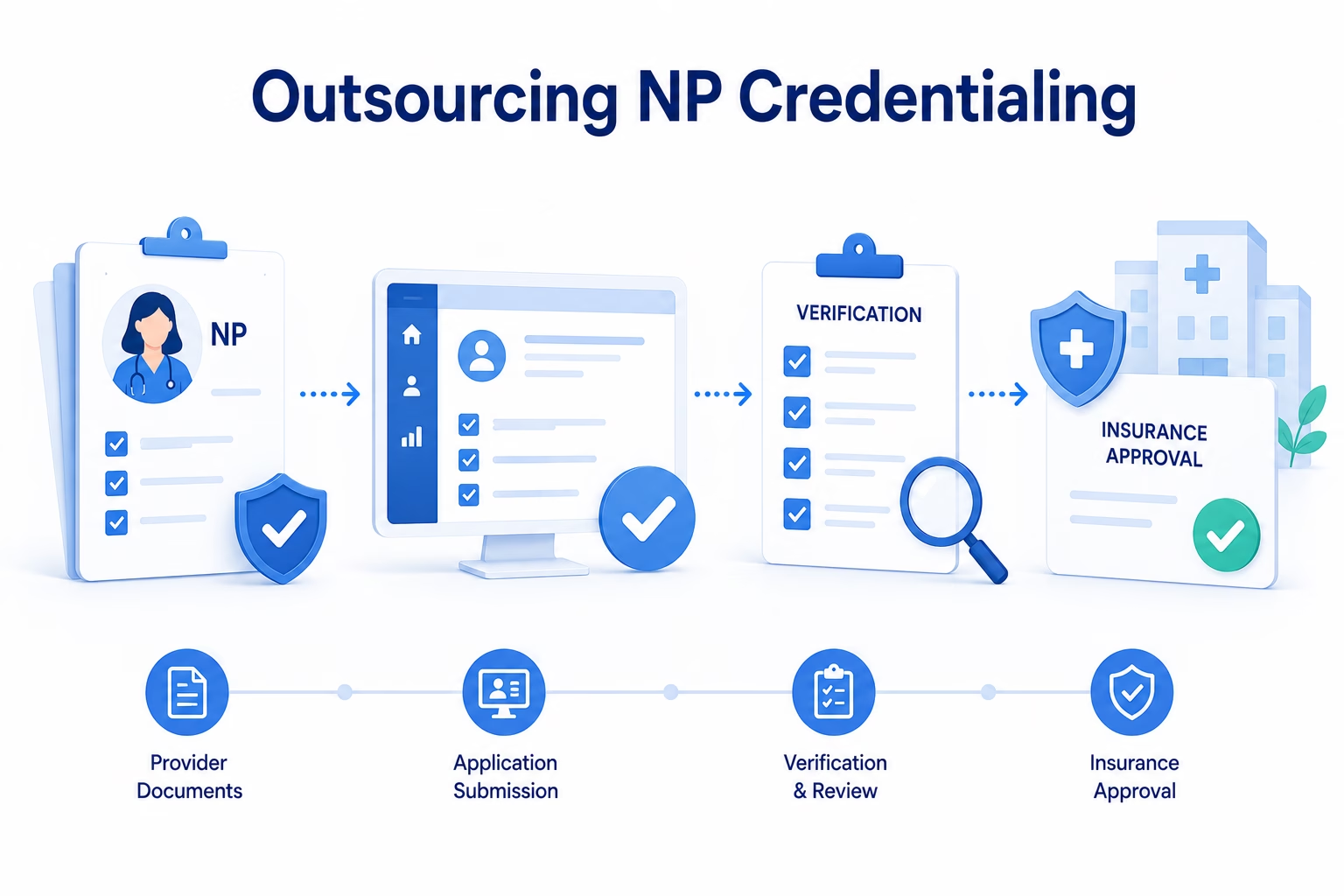
Outsourcing allows dedicated credentialing specialists to manage documentation, communicate directly with insurance companies, monitor application status, and resolve issues before they become major delays. Internal teams can then focus on patient care, billing operations, and improving the overall patient experience.
For many growing practices, outsourcing is not simply about reducing workload—it is about protecting revenue and improving operational efficiency.
Related reading: Reduce Payer Enrollment Delays
The Future of the Provider Credentialing Timeline
Credentialing continues to evolve as insurance companies adopt electronic enrollment systems and automated verification tools. Digital applications have simplified many administrative tasks, but they have also increased expectations for accuracy and consistency.
Practices that continue relying on manual spreadsheets or fragmented documentation often struggle to keep pace with changing payer requirements. Modern credentialing workflows emphasize centralized documentation, digital tracking, and proactive compliance management.
Technology can improve efficiency, but successful credentialing still depends on organized documentation, timely communication, and careful oversight throughout the enrollment process.
Final Thoughts
The provider credentialing timeline is much more than an administrative requirement—it directly influences provider onboarding, healthcare compliance, revenue cycle management, and long-term financial performance. Practices that prepare early, maintain accurate provider records, and monitor credentialing progress consistently are better positioned to reduce payer delays and accelerate reimbursement.
As payer requirements continue to evolve, credentialing should be viewed as a strategic business function rather than a paperwork exercise. Investing in better workflows today helps practices onboard providers more efficiently while supporting sustainable growth in the future.
If your organization needs support with healthcare credentialing, provider enrollment, insurance enrollment, or compliance management, eClinicAssist can help. Our experienced credentialing specialists work alongside practice managers, clinic owners, and healthcare providers to streamline the credentialing process, reduce administrative burden, and shorten the provider credentialing timeline so your providers can begin delivering care—and generating revenue—as quickly as possible.