
Provider enrollment mistakes can create unexpected billing problems for healthcare practices, even when a physician or other healthcare professional has already completed credentialing. Errors involving group affiliations, payer enrollment records, practice locations, or effective dates may delay claims processing and require additional administrative follow-up. A periodic credentialing quality audit can help practices identify inconsistencies before they affect enrollment or billing.
Common provider enrollment mistakes include missing provider-group affiliations, incorrect NPI or Taxpayer Identification Number information, outdated practice locations, incomplete CAQH records, and billing before payer participation requirements are satisfied. Identifying these issues before a provider starts seeing patients can help reduce avoidable reimbursement delays.
For practice managers, healthcare administrators, and medical billing teams, understanding these enrollment problems is an important part of maintaining organized provider onboarding and revenue cycle operations.
Credentialing vs. Provider Enrollment: What’s the Difference?
Credentialing and provider enrollment are related processes, but they serve different purposes.
Credentialing involves reviewing and verifying a healthcare provider’s professional qualifications, such as licenses, education, training, certifications, and relevant professional history.
Provider enrollment involves establishing the appropriate administrative and billing relationship between the provider, healthcare organization, and insurance payer.
Depending on the payer, enrollment may require additional contracting, group affiliation, reassignment, or participation procedures.
| Credentialing | Provider Enrollment |
|---|---|
| Verifies professional qualifications. | Establishes applicable participation and billing relationships. |
| Reviews licenses, training, certifications, and relevant history. | Reviews payer applications, NPI and TIN information, affiliations, and locations. |
| Does not independently establish billing privileges. | Supports billing eligibility when applicable requirements are complete. |
| May be completed before final contracting. | May require completed contracting or reassignment arrangements. |
A provider can be professionally credentialed while still having incomplete enrollment or affiliation information.
For more information, read our provider credentialing process guide.
1. Missing Provider-Group Affiliation
One important provider enrollment mistake occurs when an individual provider has been enrolled or credentialed but has not been appropriately affiliated with the group practice responsible for billing.
For example, a physician may have an active individual NPI and an approved Medicare enrollment but still need to complete the applicable reassignment relationship with a new group.
Commercial insurers may require their own group-affiliation or provider-loading procedures.
What Is the Provider-Group Linking Gap?
The linking gap occurs when the payer’s records do not accurately reflect the provider’s relationship with the billing organization.
Depending on the payer, this may involve:
- Individual Type 1 NPI.
- Organizational Type 2 NPI, where applicable.
- Group Taxpayer Identification Number (TIN).
- Billing and rendering provider relationships.
- Practice location information.
- Provider reassignment or affiliation records.
- Applicable payer participation effective dates.
Incorrect or incomplete affiliations may cause claims to reject, deny, or require further review.
Important: An individual NPI and organization NPI do not automatically establish a valid billing relationship. The relevant payer’s enrollment requirements must also be satisfied.
2. Incorrect NPI and Tax Information
Providers and organizations use different identifiers for healthcare transactions.
Individual healthcare practitioners generally use a Type 1 NPI, while eligible healthcare organizations use a Type 2 NPI.
The Taxpayer Identification Number identifies the taxpayer associated with the relevant billing arrangement.
Common Information Errors
- Entering an incorrect rendering provider NPI.
- Using the wrong billing organization NPI.
- Associating a provider with an incorrect TIN.
- Using outdated organizational enrollment information.
- Failing to complete the required reassignment or affiliation.
- Submitting inconsistent information across payer enrollment systems.
Practices should verify that the identifiers are accurate and appropriate for the payer and billing arrangement.
For an explanation of how provider identifiers and enrollment records differ, see our PECOS vs. CAQH vs. NPPES guide.
3. Outdated or Incorrect Practice Locations
Healthcare providers frequently change office locations, add facilities, or begin practicing at additional sites.
These changes may require updates to Medicare, Medicaid, or commercial payer enrollment records.
Potential issues include:
- Billing from a location that has not been appropriately enrolled.
- Using an outdated address in payer records.
- Missing required location additions.
- Incorrect service facility information on claims.
- Differences between the practice’s current business records and payer enrollment information.
Not every difference in address formatting causes a claim denial. However, inaccurate location information can create enrollment, directory, or claims-processing complications. Our guide to common causes of in-network claim denials explains related issues.
Practices should maintain accurate location information and follow the applicable payer’s change-reporting rules.
4. Incomplete CAQH Information and Missed Attestations
Many commercial insurance companies use CAQH-powered provider information during credentialing and recredentialing.
Providers should maintain accurate professional information, required supporting documents, and current attestations.
Common CAQH Problems
- Missing professional work history.
- Outdated professional liability insurance information.
- Expired professional licenses.
- Incomplete practice location details.
- Missing payer authorization.
- Overdue provider attestations.
CAQH generally requires periodic re-attestation, commonly every 120 days, subject to applicable exceptions or additional payer requirements.
Keeping CAQH information current can reduce avoidable credentialing requests, but it does not automatically establish network participation or group affiliation.
5. Incomplete Medicare Enrollment or Reassignment
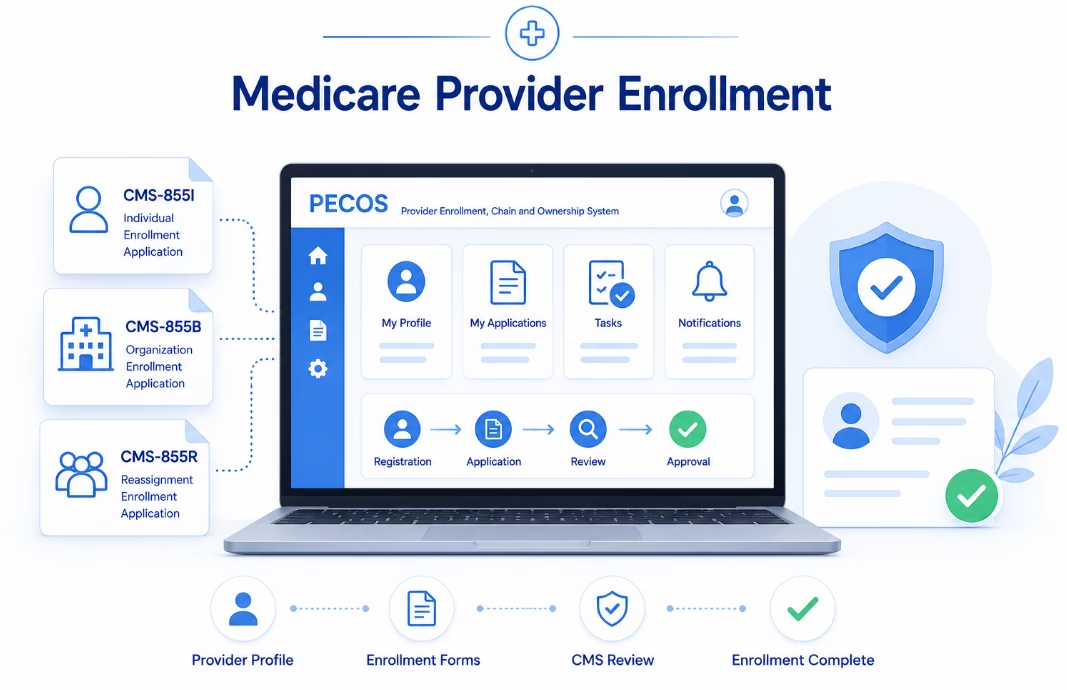
Medicare enrollment involves specific rules for individual practitioners, organizations, and reassignment of benefits.
A provider may need to complete an individual Medicare enrollment and establish the applicable reassignment relationship before a group can receive Medicare payment for that practitioner’s services.
Medicare reassignment information is maintained through the applicable enrollment process, including PECOS.
Practices should verify individual enrollment, organizational enrollment, reassignment relationships, and practice locations before assuming billing arrangements are complete.
Can Medicare Enrollment Be Retrospective?
Under 42 CFR § 424.521, eligible provider and supplier types may retrospectively bill for certain services furnished before their effective date when the applicable conditions are met.
For eligible physicians, nonphysician practitioners, and specified organizations, retrospective billing may be permitted for:
- Up to 30 days before the effective date when circumstances prevented enrollment before services were furnished.
- Up to 90 days before the effective date when a qualifying presidentially declared disaster prevented advance enrollment.
These allowances are conditional and do not establish unrestricted retroactive billing rights.
Providers must satisfy applicable Medicare requirements, including relevant licensure and practice location requirements.
The Medicare enrollment approval date, effective date of billing privileges, and retrospective billing period are distinct concepts.
Practices should confirm the applicable dates and requirements with their Medicare Administrative Contractor.
6. Billing Before Network Participation Is Effective
Another common mistake is assuming that a credentialing approval means a provider can immediately bill an insurance company as in network.
Commercial payers may require additional steps involving contracting, organizational affiliation, or loading the provider into the relevant network.
Before submitting in-network claims, verify:
- Credentialing approval, where required.
- Applicable participation agreement.
- Provider-group affiliation.
- Approved practice locations.
- Applicable insurance network.
- Confirmed participation effective date.
Retroactive effective dates and claim payment arrangements vary by insurer and should not be assumed without confirmation.
7. Failing to Coordinate Credentialing and Billing Teams
Enrollment problems may go unnoticed when credentialing and billing teams maintain separate records without communicating important changes.
For example, the credentialing team may receive notification that a provider’s enrollment is complete, but the billing team may not know which group TIN, location, or effective date applies.
A structured process should communicate:
- Provider and organizational identifiers.
- Insurance payer and network.
- Group affiliation.
- Enrollment status.
- Participation effective date.
- Approved billing information.
- Outstanding payer restrictions or follow-up items.
Clear handoffs can reduce preventable claim submissions using incorrect enrollment information.
Provider Enrollment Timeline: When Should You Begin?
Enrollment preparation should ideally begin before a new provider’s intended start date.
There is no universal 30-, 60-, or 90-day timeline that guarantees approval across all insurance companies.
However, practices can use the following planning framework.
| Planning Stage | Recommended Actions |
|---|---|
| As early as possible | Confirm provider information, identify target payers, gather documents, and review participation requirements. |
| Before payer submission | Update CAQH information and verify NPI, TIN, practice location, and applicable professional records. |
| During credentialing | Track applications, respond to payer requests, and coordinate contracting or group affiliation. |
| Before in-network billing | Confirm the applicable participation arrangement, provider relationship, and effective date. |
| After enrollment approval | Update billing system records, monitor initial claims, and review any enrollment-related rejections. |
This framework supports organized onboarding but does not guarantee that a provider will be fully enrolled by a particular date.
Example: A New Provider With an Incomplete Group Affiliation
Consider a group practice hiring a new physician.
The physician has an active professional license, individual NPI, and completed credentialing with a commercial insurer.
However, the insurer’s records do not yet reflect the physician’s affiliation with the group’s billing organization.
The practice begins submitting claims under the group TIN, but the payer cannot validate the required billing relationship.
The resulting claims may require corrections or further enrollment review.
The practice must work with the payer to complete the affiliation and verify the applicable effective date.
Whether previously submitted claims can be corrected or reprocessed depends on the payer’s participation terms and claims rules.
The lesson: Completing individual credentialing is not the same as confirming the provider’s group enrollment and billing status.
How Provider Enrollment Mistakes Affect Revenue Cycle Management
Enrollment errors can create additional work throughout the revenue cycle.
Potential consequences include:
- Claims rejections or denials.
- Delayed reimbursement.
- Additional payer follow-up.
- Higher administrative workload.
- Unresolved accounts receivable.
- Claims correction and reprocessing requirements.
- Patient scheduling complications when network participation is pending.
However, not every claim problem is caused by credentialing or enrollment.
Billing teams must also investigate coding, eligibility, authorization, medical necessity, coverage, and other payer requirements.
For strategies to address enrollment-related delays, read our guide to reducing payer enrollment delays.
Provider Enrollment Mistakes Checklist
Use this checklist before submitting payer applications or activating a new provider in the billing system.
- Confirm the provider’s legal name.
- Verify the individual Type 1 NPI.
- Confirm the group Type 2 NPI, where applicable.
- Verify the correct billing TIN.
- Review active professional licenses.
- Confirm relevant taxonomy codes.
- Review CAQH profile completeness and attestation.
- Verify practice locations.
- Complete applicable payer credentialing applications.
- Confirm contracting and group affiliation requirements.
- Verify Medicare reassignment where applicable.
- Track payer requests and outstanding documentation.
- Confirm the participation effective date.
- Update the practice management and billing systems.
- Monitor initial claims for enrollment-related errors.
Practices should customize this checklist according to provider specialty, state, insurance network, and organizational structure.
How eClinicAssist Helps Prevent Provider Enrollment Mistakes
Managing provider onboarding across multiple insurance companies requires accurate documentation, organized communication, and consistent application tracking.
eClinicAssist supports healthcare practices with administrative credentialing and payer enrollment activities, including:
- Provider documentation management.
- NPI registration assistance.
- CAQH profile creation and maintenance.
- Medicare enrollment and reassignment coordination.
- Commercial payer credentialing and contracting follow-up.
- Provider-group affiliation tracking.
- Enrollment status reporting.
- Demographic updates and recredentialing monitoring.
Our team helps practices maintain organized records, identify incomplete enrollment information, and coordinate outstanding payer requirements.
Final credentialing decisions, network acceptance, billing privileges, effective dates, and reimbursement outcomes remain subject to the applicable payers and authorities.
Need help reviewing provider enrollment records or onboarding new clinicians?
Contact eClinicAssist to discuss your provider enrollment needs.
Frequently Asked Questions About Provider Enrollment Mistakes
What are the most common provider enrollment mistakes?
Common mistakes include incorrect NPI or TIN information, missing group affiliations, outdated practice locations, incomplete CAQH records, and billing before the applicable participation requirements are complete.
Can a provider be credentialed but not enrolled with a group?
Yes. Credentialing verifies professional qualifications, while group enrollment or affiliation establishes the relevant administrative and billing relationship. Separate steps may be required.
Why do claims deny when the provider has an active NPI?
An active NPI does not automatically establish payer enrollment or billing eligibility. Claims may be affected by missing affiliations, incorrect identifiers, inactive participation, or other billing requirements.
Does Medicare require provider reassignment to a group?
When an eligible individual practitioner reassigns Medicare benefits to a group, the applicable reassignment requirements must be completed. The group and practitioner must also satisfy relevant enrollment rules.
Can Medicare claims be billed retroactively?
Eligible providers and suppliers may qualify for limited retrospective billing under 42 CFR § 424.521. The ordinary permitted period is up to 30 days before the effective date when applicable conditions are met, with a 90-day exception for certain presidentially declared disasters.
How early should a practice start provider credentialing?
Practices should begin preparation as early as practical before the provider’s intended start date. Actual enrollment and credentialing timelines vary by payer, specialty, state, and application circumstances.
Does an updated CAQH profile establish in-network status?
No. CAQH supports the credentialing information process. Network participation may require separate credentialing decisions, contracting, group affiliation, and effective-date confirmation.
Can provider enrollment errors affect medical billing?
Yes. Inaccurate provider enrollment records may contribute to claim rejections, denials, payment delays, or additional administrative review. Each claim issue should be investigated according to the payer’s actual rejection or denial reason.
Disclaimer: This article provides general educational and administrative information about provider enrollment, credentialing, and medical billing. It does not constitute legal, regulatory, credentialing, or billing advice. Requirements vary by state, provider type, insurance payer, participation agreement, and applicable regulations. Confirm current obligations with CMS, Medicare Administrative Contractors, and relevant commercial insurers. eClinicAssist does not guarantee credentialing approval, network participation, effective dates, processing times, or reimbursement outcomes.