
Credentialing mistakes are one of the most common reasons healthcare practices face delayed payments and claim denials. When practices make credentialing mistakes, they slow down provider enrollment, disrupt medical billing workflows, and weaken revenue cycle management.
For practice managers and healthcare administrators, credentialing is not just a compliance requirement—it directly affects financial performance. Therefore, even small errors can create serious operational issues and delay reimbursements.
How Credentialing Mistakes Impact Revenue
Credentialing requires accuracy, consistency, and timely execution. However, many practices underestimate how complex the process can be.
When practices make credentialing mistakes, they often face:
-
Claim denials and rejections
-
Delayed provider enrollment
-
Disrupted insurance enrollment
-
Slower medical billing workflows
-
Unstable revenue cycle management
For example, a provider may begin seeing patients before completing credentialing. As a result, the practice cannot bill for those services, which leads to immediate revenue loss.
Moreover, each payer has different requirements, which increases the risk of errors. Because of this, even a small issue—such as missing documentation or incorrect data—can delay approvals for weeks or months.
Step-by-Step Guide to Avoid Credentialing Mistakes
A structured approach helps practices reduce errors and improve credentialing timelines. Below are the most common mistakes and how to fix them.
1. Poor Planning and Time Management
Credentialing takes time, and practices must plan ahead to avoid delays. However, many teams start too late, which creates unnecessary pressure. As a result, providers may begin working without being fully credentialed, which prevents billing.
How to fix it:
Start the credentialing process at least 90–120 days before the provider’s start date. In addition, create a timeline that tracks every step, from document collection to payer approval.
2. Data Entry Errors and Inconsistent Information
Small data errors can quickly lead to major delays. For instance, entering the wrong NPI number or mismatched address can stop the entire application. Because payers verify information across CAQH, NPPES, and PECOS, inconsistencies trigger additional reviews.
How to fix it:
Always verify provider data across all systems before submission. Additionally, implement a double-check process to catch errors early and reduce rework.
3. Incomplete or Inaccurate Applications
Incomplete applications often delay credentialing because payers cannot proceed without full documentation. Furthermore, missing information forces resubmissions, which extends timelines.
How to fix it:
Use a standardized checklist to confirm all required documents are included. This includes licenses, malpractice insurance, board certifications, and tax forms.
For a detailed breakdown, explore this guide on credentialing documents and preparation:
4. Non-Compliance with State and Payer Requirements
Credentialing requirements vary across states and insurance payers. Therefore, practices must stay updated on changing regulations to remain compliant. Failure to meet these requirements can result in application denials and potential compliance risks.
How to fix it:
Assign responsibility to a team member or partner with a credentialing expert. In addition, regularly review payer guidelines to ensure ongoing compliance.
5. Enrollment Errors That Disrupt Billing
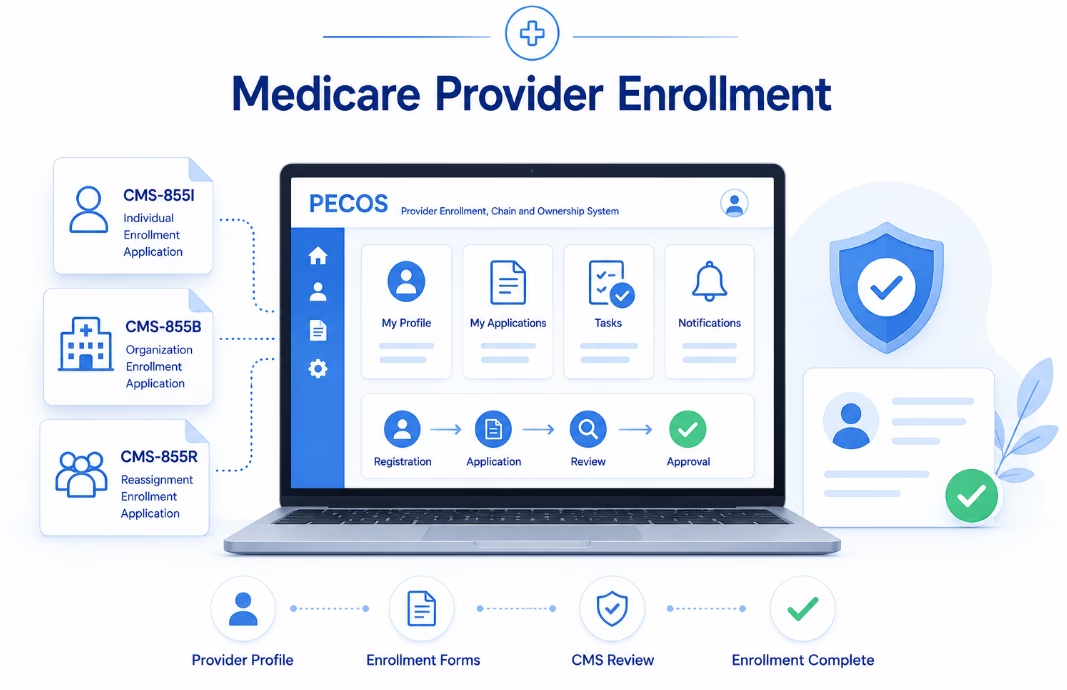
Credentialing and provider enrollment work together, but they serve different purposes. When practices make enrollment errors, providers cannot bill even after credentialing approval. As a result, revenue cycle management becomes inconsistent and delayed.
How to fix it:
Carefully review enrollment applications and confirm that providers are correctly linked to tax IDs and billing entities.
To improve your enrollment strategy, review this guide on payer enrollment and reimbursement optimization:
6. Lack of Technology and Process Automation
Manual credentialing processes increase the risk of errors and inefficiencies. Without proper systems, practices may miss deadlines or lose track of important updates. Meanwhile, administrative workload continues to grow.
How to fix it:
Adopt credentialing software that automates document tracking, deadline reminders, and status updates. This improves efficiency and reduces administrative burden.
Conclusion
Avoiding credentialing mistakes is essential for maintaining a strong revenue cycle and ensuring smooth healthcare operations. When practices plan ahead, verify data, and follow structured workflows, they reduce delays and improve provider onboarding timelines.
However, ignoring credentialing mistakes leads to denied claims, workflow disruptions, and lost revenue. Therefore, practices must treat credentialing as a critical part of their operational strategy.
If your practice is struggling with credentialing delays or enrollment issues, eClinicAssist can help. Our experts manage provider enrollment, healthcare credentialing, and compliance to ensure your practice stays efficient and financially stable.
Contact eClinicAssist today to streamline your credentialing process and protect your revenue.