Managing Medicare enrollment manually can quickly become overwhelming for healthcare practices. From paperwork delays to compliance risks, traditional enrollment processes often slow provider onboarding and disrupt revenue cycle management. Fortunately, PECOS provider enrollment gives healthcare organizations a more efficient and organized way to manage Medicare participation.
For practice managers, clinic owners, and healthcare administrators, PECOS provider enrollment has become a critical operational tool for maintaining compliance, accelerating provider approvals, and reducing administrative workload.
Instead of relying on slow paper submissions and uncertain processing timelines, healthcare practices can now manage enrollment digitally through CMS’s Provider Enrollment, Chain, and Ownership System (PECOS).
Why PECOS Provider Enrollment Matters
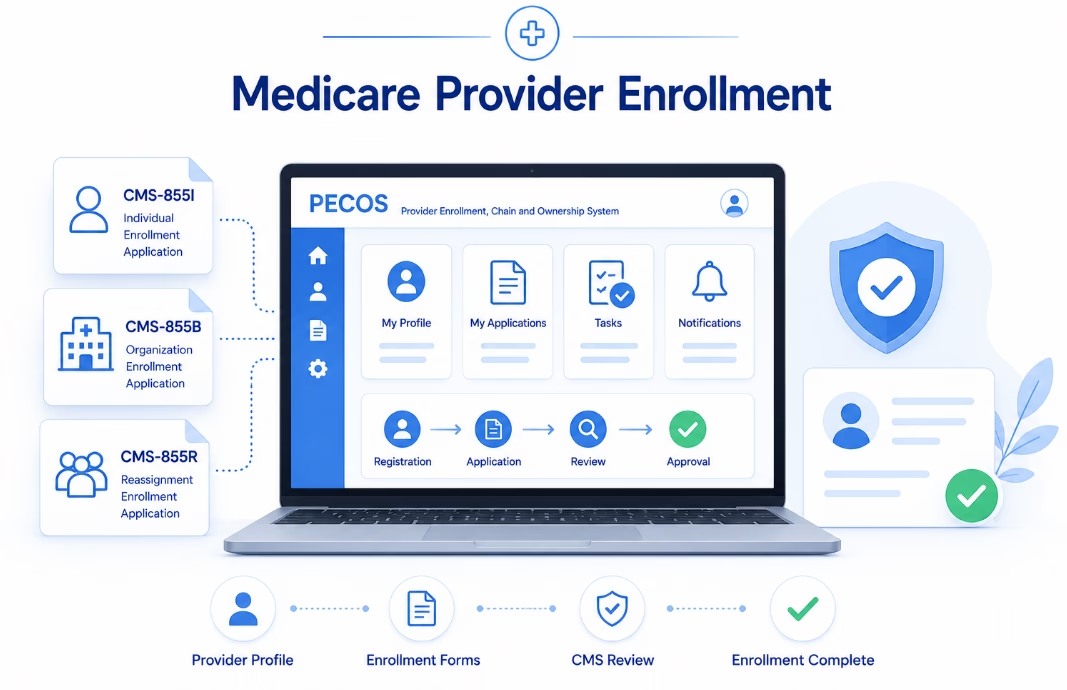
PECOS is the official CMS web-based platform used for Medicare provider enrollment, updates, and revalidation.
Healthcare organizations use PECOS to:
- Enroll new providers
- Update provider information
- Revalidate Medicare participation
- Track application status
- Manage ownership changes
- Maintain compliance records
Without proper Medicare enrollment management, providers may experience reimbursement delays, claim denials, or participation interruptions.
Because Medicare enrollment directly affects billing eligibility, practices should prioritize organized enrollment workflows from the beginning.
Faster Medicare Enrollment Through PECOS Provider Enrollment
Traditional paper-based enrollment processes are slow and vulnerable to administrative errors.
PECOS significantly improves efficiency by allowing providers to submit applications electronically instead of mailing large paper packets. As a result, practices often experience faster processing times and improved visibility throughout the enrollment process.
Electronic enrollment also reduces common problems such as:
- Missing documentation
- Incomplete applications
- Mailing delays
- Lost paperwork
- Manual processing errors
For growing healthcare organizations, these improvements help providers begin billing Medicare more quickly after onboarding.
Real-Time Tracking Improves Enrollment Visibility
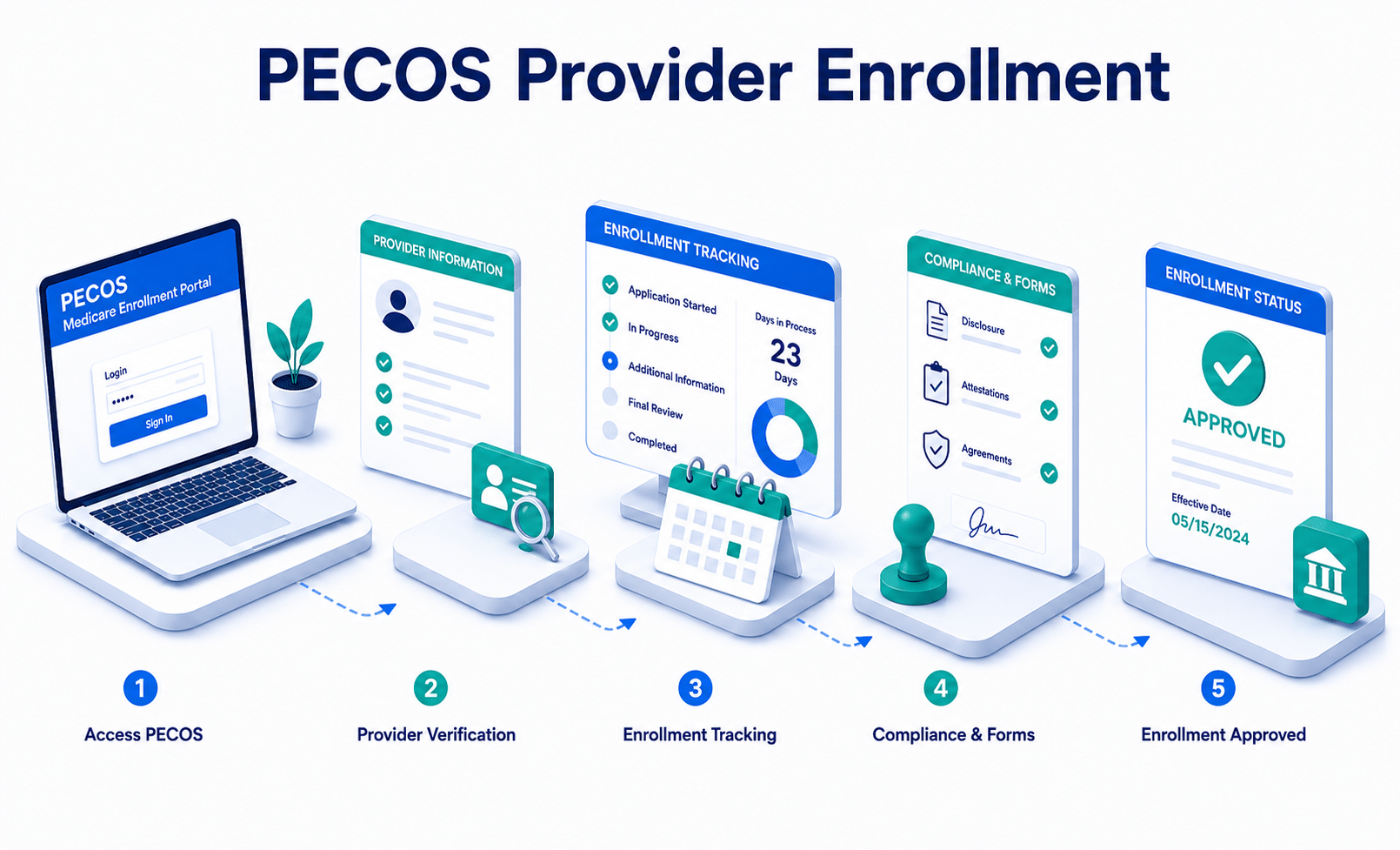
One major advantage of PECOS provider enrollment is application tracking.
Instead of waiting weeks for mailed responses, practices can monitor enrollment status directly through the portal. This allows credentialing and enrollment teams to identify issues early and respond to additional requests quickly.
Real-time visibility helps practices:
- Reduce processing delays
- Monitor pending applications
- Respond to CMS requests faster
- Improve provider onboarding timelines
Consistent monitoring also reduces uncertainty for both administrators and providers during enrollment reviews.
Practices that maintain organized provider enrollment process workflows often improve operational efficiency throughout credentialing and billing operations.
PECOS Provider Enrollment and Medicare Revalidation
Medicare providers must periodically revalidate enrollment information to remain compliant with CMS requirements.
Revalidation typically occurs every three to five years depending on provider type and participation status. Failure to complete revalidation on time can result in:
- Medicare billing deactivation
- Claim denials
- Payment interruptions
- Compliance issues
PECOS simplifies revalidation by allowing practices to review, update, and resubmit enrollment data electronically.
Automated reminders and organized digital records also help practices avoid missed deadlines.
Keeping NPPES and PECOS Data Consistent
One of the most common causes of Medicare enrollment delays is inconsistent provider information between NPPES and PECOS.
Critical provider details such as:
- Legal business names
- Provider names
- Practice addresses
- NPI information
must match exactly across systems.
Even small discrepancies can trigger enrollment delays, manual reviews, or application rejection requests.
Practices should regularly verify provider information across both platforms to maintain enrollment accuracy.
Organizations that also maintain accurate NPPES provider database workflows typically experience fewer Medicare enrollment interruptions.
Updating Provider Information Through PECOS
Healthcare organizations frequently need to update provider information.
Common updates include:
- New practice locations
- Ownership changes
- Address updates
- Reassignment changes
- Billing information modifications
CMS requires many changes to be reported within specific timeframes, often between 30 and 90 days.
Failing to report updates promptly can create compliance risks and reimbursement issues.
PECOS allows practices to submit updates electronically while maintaining centralized enrollment records.
Secure Digital Management for Healthcare Compliance
Provider enrollment involves highly sensitive information, including:
- Medicare identifiers
- Tax information
- Ownership details
- Provider credentials
PECOS improves security by maintaining enrollment records through secure CMS-managed systems rather than relying on physical paper storage.
Secure digital management helps practices reduce document loss and improve compliance organization.
At the same time, practices should maintain strong internal security workflows to protect provider data and operational records.
Common PECOS Provider Enrollment Mistakes
Even with digital systems, enrollment problems still occur when practices fail to maintain accurate information.
Common mistakes include:
- Outdated NPPES records
- Missing supporting documentation
- Incorrect reassignment information
- Incomplete ownership disclosures
- Delayed revalidation responses
Healthcare organizations should establish internal review systems before submitting updates or applications.
Proactive review processes significantly reduce administrative delays later.
Build Stronger Medicare Enrollment Workflows
Successful PECOS provider enrollment depends on organization, accuracy, and proactive monitoring. Practices that maintain updated provider records, monitor application status regularly, and respond quickly to CMS requests often experience smoother Medicare enrollment operations.
Most importantly, organized enrollment systems reduce billing disruptions and help providers begin serving Medicare patients faster.
If your organization needs support with provider enrollment, Medicare credentialing, or compliance workflows, eClinicAssist helps healthcare practices streamline enrollment operations and improve long-term efficiency.