
Credentialing vs privileging vs enrollment are three critical processes that directly impact healthcare operations and revenue. Without a clear understanding of credentialing vs privileging vs enrollment, practices often face delays, compliance issues, and lost revenue.
For practice managers and healthcare administrators, these processes are not interchangeable. Each plays a unique role in healthcare credentialing, provider enrollment, and medical billing workflows.
Credentialing: Verifying Provider Qualifications
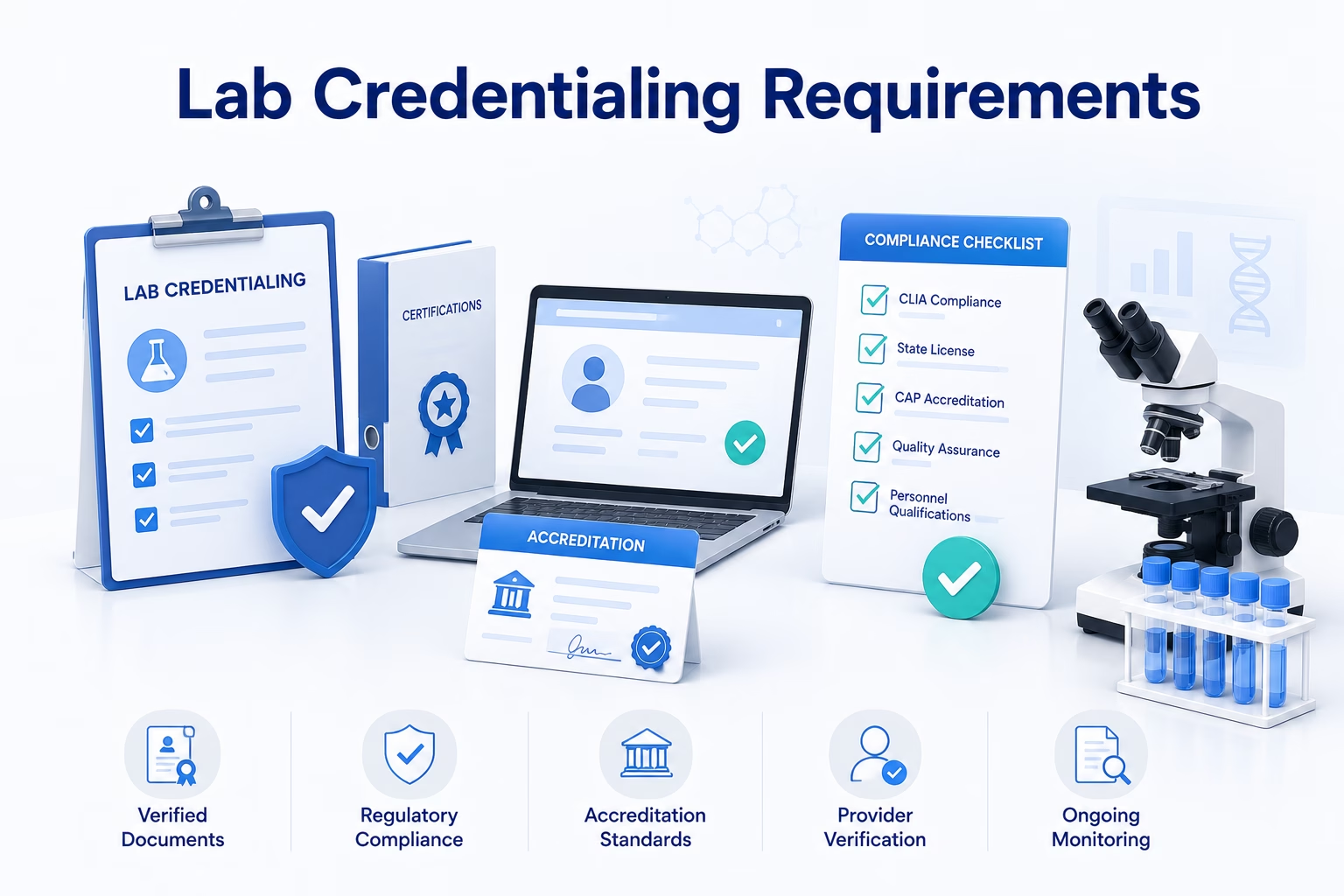
Credentialing is the foundation of all provider approvals. It verifies a provider’s education, training, licenses, and professional history before they can practice.
This process ensures that only qualified providers deliver care. It also protects patient safety and supports healthcare compliance standards.
Key Steps in Credentialing
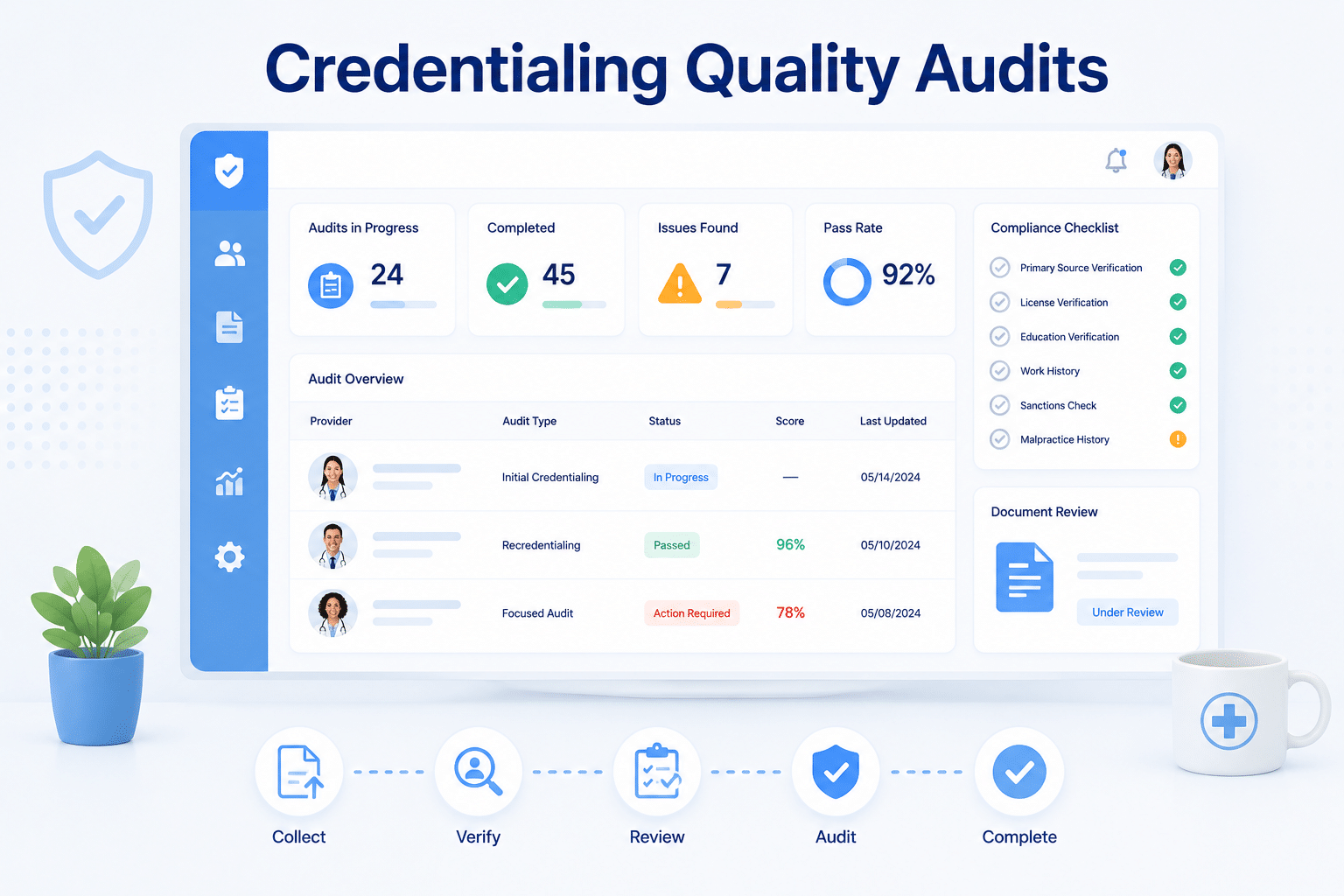
Application Submission: Providers submit detailed information about education, training, and experience.
Primary Source Verification: All credentials are verified directly with institutions and licensing boards.
Committee Review: A credentialing committee evaluates qualifications and determines eligibility.
Approval and Monitoring: Once approved, providers are continuously monitored and re-credentialed periodically.
Credentialing delays are one of the most common causes of onboarding issues. To better understand this, it’s important to learn how credentialing delays impact revenue and operations.
Privileging: Defining Scope of Practice
Privileging determines what a provider is allowed to do within a specific healthcare facility. While credentialing confirms qualifications, privileging defines clinical responsibilities.
This ensures providers only perform procedures they are trained and approved for. It reduces risk and improves patient safety.
Key Steps in Privileging
Privilege Application: Providers request specific clinical privileges based on expertise.
Verification and Evaluation: Facilities verify experience and assess competency for requested procedures.
Peer Review: A panel of specialists reviews the provider’s qualifications.
Approval and Monitoring: Privileges are granted and continuously monitored for performance.
Without proper privileging, providers may face restrictions in performing procedures, leading to workflow disruption and reduced productivity.
Enrollment: Enabling Insurance Reimbursement
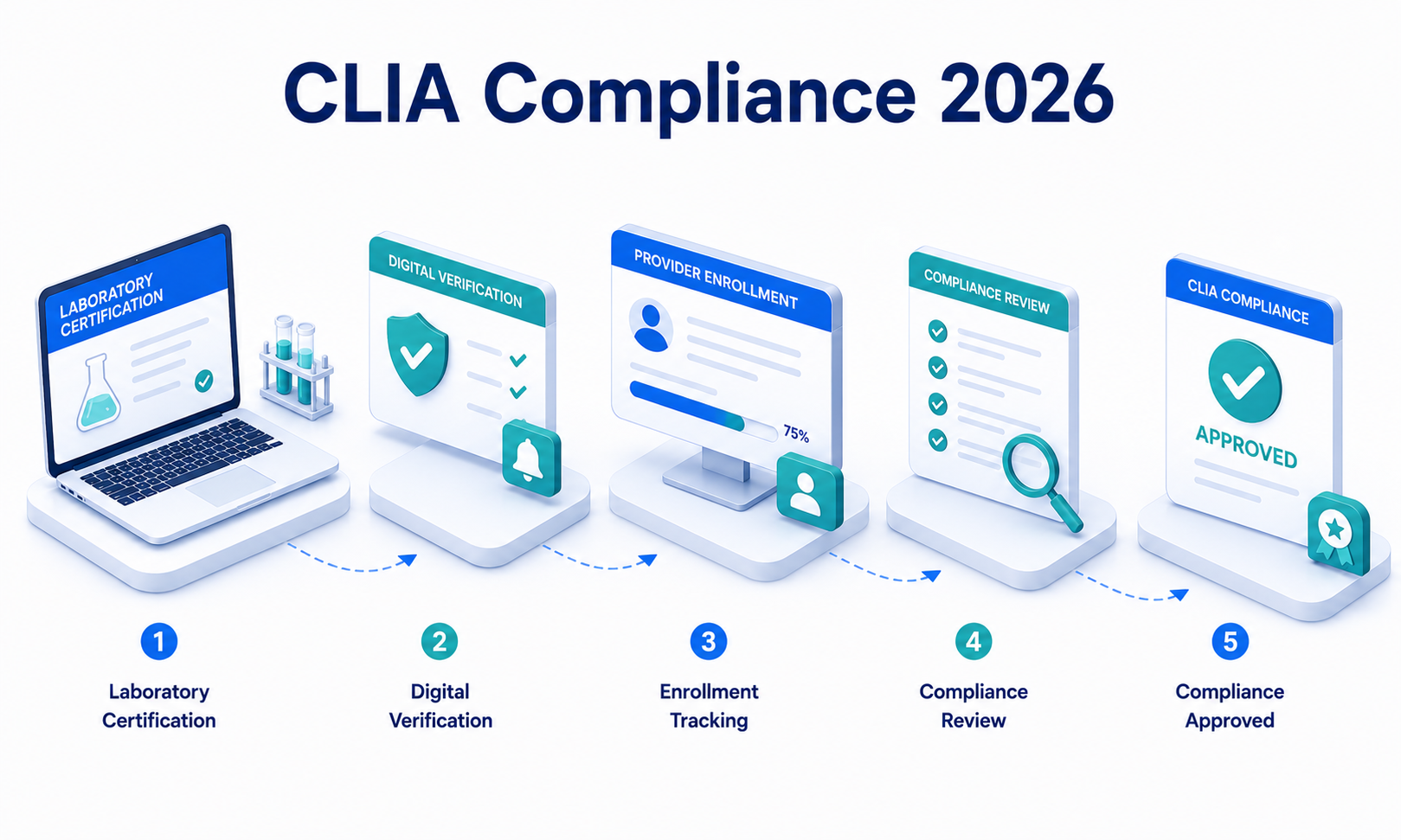
Enrollment allows providers to join insurance networks and receive payment for services. It is the final step that connects clinical work to revenue generation.
Without enrollment, even fully credentialed and privileged providers cannot bill insurance companies.
Key Steps in Enrollment
Application to Payers: Providers submit applications to insurance companies and government programs.
Review Process: Payers evaluate credentials, compliance, and eligibility.
Approval and Network Inclusion: Once approved, providers become in-network and eligible for reimbursement.
Enrollment delays often result in payment gaps and increased accounts receivable. To avoid this, it’s helpful to understand how provider enrollment processes affect billing and reimbursement timelines.
How These Processes Work Together
Credentialing, privileging, and enrollment are closely connected and must be managed together.
Credentialing verifies qualifications, privileging defines scope, and enrollment enables payment. Each step builds on the previous one.
If any step is delayed, the entire workflow is affected. This leads to billing delays, compliance risks, and operational inefficiencies.
Common Challenges Practices Face
Many practices struggle because they treat these processes separately. This often leads to data inconsistencies and missed deadlines.
Incomplete documentation, lack of coordination between teams, and poor tracking systems are common issues. These problems slow down approvals and increase administrative workload.
Without a structured approach, practices face repeated delays and revenue loss.
Best Practices to Streamline All Three Processes
To improve efficiency, practices must align credentialing, privileging, and enrollment workflows.
Maintaining accurate provider data across all systems reduces verification errors and speeds up approvals.
Using technology to track applications and deadlines improves visibility and prevents missed steps.
Strong communication between credentialing, compliance, and billing teams ensures smooth coordination.
Practices that implement these strategies experience faster onboarding and more stable revenue cycles.
Real-World Impact on Healthcare Operations
Consider a provider who completes credentialing but delays enrollment. They can see patients but cannot bill insurance, leading to lost revenue.
In another case, a provider is credentialed and enrolled but lacks privileges for certain procedures. This limits service delivery and reduces efficiency.
Both scenarios highlight the importance of managing all three processes together.
Align Credentialing vs Privileging vs Enrollment
Understanding credentialing vs privileging vs enrollment is essential for maintaining compliance, improving workflows, and protecting revenue.
By aligning credentialing vs privileging vs enrollment processes, healthcare practices can reduce delays, improve efficiency, and ensure consistent reimbursement.
If your practice is struggling with these processes, eClinicAssist offers expert support to streamline credentialing, privileging, and enrollment. Contact us today to optimize your operations and protect your revenue cycle.