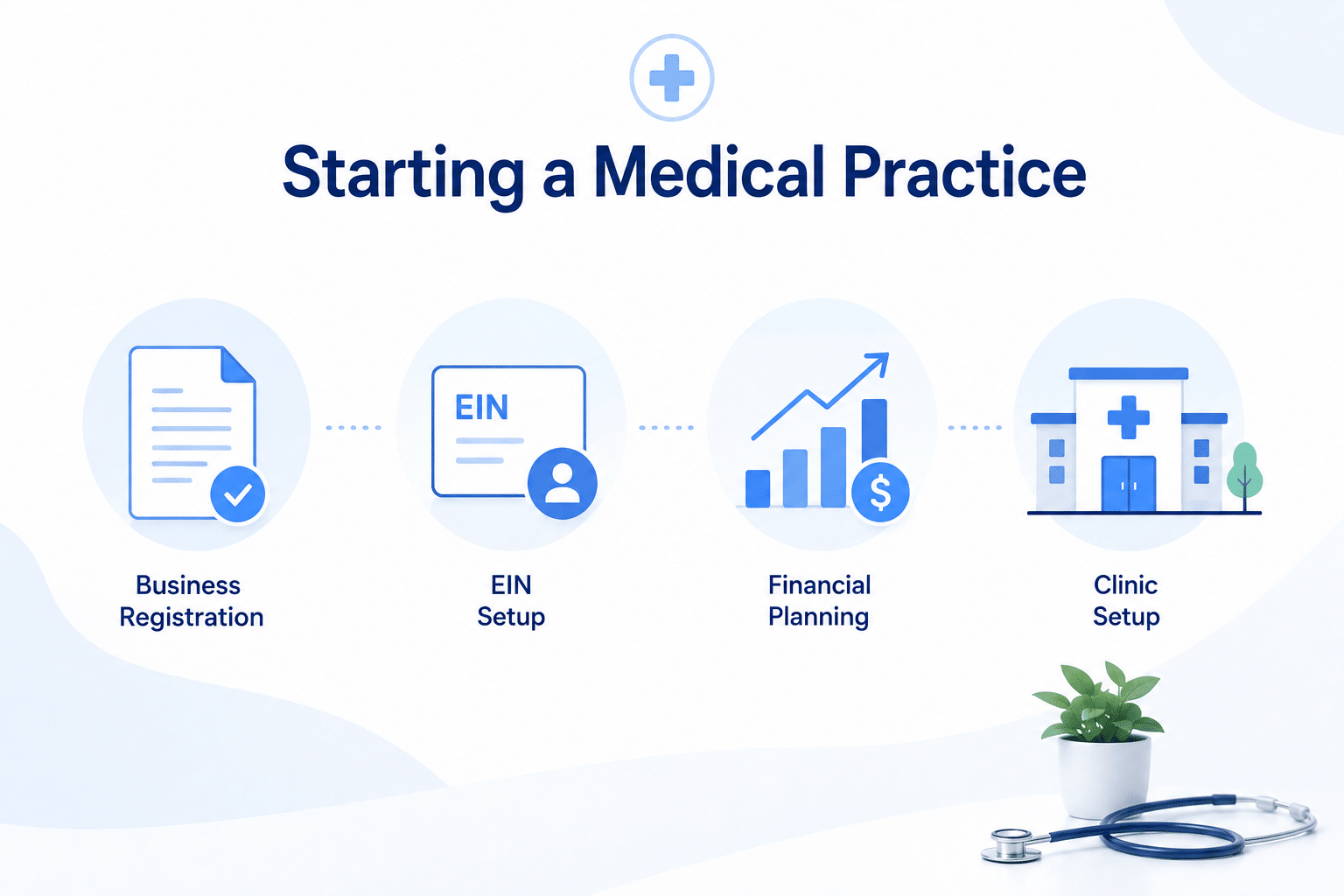
Starting a medical practice is one of the biggest professional milestones a healthcare provider can take on. While the opportunity to build an independent clinic is exciting, starting a medical practice also requires careful planning, financial preparation, and strong operational structure from day one.
For many providers, the clinical side feels familiar. However, the business side of healthcare introduces an entirely different challenge. From legal registration to financial systems and compliance planning, every early decision affects how smoothly the practice operates later.
This first stage is not just paperwork. It creates the foundation that supports future provider enrollment, healthcare credentialing, medical billing workflows, and long-term revenue cycle management.
Why the Business Setup Stage Matters
Many new practices focus heavily on patient care planning while underestimating the importance of business setup. Unfortunately, mistakes made early often create expensive operational issues later.
For example, using the wrong legal structure may create tax complications or liability exposure. Delayed EIN registration can slow banking setup and payer enrollment timelines. Poor financial planning may also affect staffing, equipment purchases, and early cash flow stability.
Because healthcare practices operate under strict compliance and reimbursement requirements, organization from the beginning matters significantly.
1. Choose the Right Legal Structure for Your Practice
The first major step in starting a medical practice is selecting the appropriate legal structure.
Most healthcare providers choose between:
- Professional Limited Liability Company (PLLC)
- Professional Corporation (PC)
- Limited Liability Company (LLC)
- Partnership structures
The right option depends on state laws, ownership structure, liability considerations, and tax planning goals.
Many states enforce corporate practice of medicine rules that require physicians to operate under specific professional entities. Therefore, providers should review state regulations carefully before filing formation documents.
Working with a healthcare attorney or accountant during this phase often prevents compliance problems later.
2. Register Your Business and Secure Your Practice Name
After choosing a structure, the next step is registering the business with the state.
This process usually involves filing organizational documents and officially securing your practice name. Choosing the right name is more important than many providers realize.
A strong practice name should:
- Be easy to remember
- Reflect your services or specialty
- Support future branding and marketing
- Have an available website domain
In addition, providers should confirm the name is not already registered or trademarked.
These details become increasingly important once marketing, insurance enrollment, and patient communication begin.
3. Obtain an EIN and Prepare Financial Accounts
An Employer Identification Number (EIN) functions as the tax identity for your practice.
Even solo providers need an EIN to:
- Open business bank accounts
- Process payroll
- Complete tax filings
- Begin payer enrollment
Fortunately, obtaining an EIN through the IRS is straightforward. However, delaying this step can slow multiple operational processes.
Once the EIN is active, practices should immediately establish separate business banking accounts and accounting systems. Mixing personal and business finances creates unnecessary accounting and legal complications.
Strong financial organization also improves reporting accuracy and simplifies future revenue tracking.
4. Create a Financial and Operational Business Plan
A business plan gives structure to your practice goals and operational strategy.
Although many providers skip this step, a strong business plan helps clarify:
- Startup expenses
- Revenue projections
- Staffing needs
- Equipment investments
- Marketing strategy
- Patient growth expectations
More importantly, financial planning prepares practices for the reality that profitability may take time.
Many new practices experience delays related to healthcare credentialing, provider enrollment, and payer approvals. Without proper planning, these delays can create serious cash flow pressure during the first year.
Practices should also evaluate strategies related to insurance credentialing for new practices early in the planning process to avoid reimbursement slowdowns later.
5. Understand State and Local Compliance Requirements
Every state has different healthcare business regulations.
Some locations require additional permits, zoning approvals, local business licenses, or professional entity registrations. Missing these requirements can delay practice opening and create compliance issues.
Providers should also verify requirements related to:
- Occupational permits
- Local healthcare regulations
- Sales tax registration where applicable
- State medical board requirements
Healthcare compliance starts long before the first patient visit.
6. Build Operational Systems Early
Even before the clinic officially opens, operational systems should begin taking shape.
This includes planning for:
- Appointment scheduling systems
- Medical billing workflows
- Revenue cycle management processes
- Credentialing timelines
- Insurance enrollment tracking
Practices that organize these systems early avoid many of the workflow disruptions that commonly affect new clinics.
In addition, maintaining organized provider credentialing documents from the beginning helps speed up future payer enrollment and provider onboarding.
7. Prepare for Long-Term Growth
Starting a medical practice is not only about opening the doors. It is about building a sustainable healthcare business.
Practices that invest time into legal structure, financial planning, operational systems, and compliance preparation create stronger foundations for growth. As a result, they are better positioned to expand services, hire providers, and maintain stable revenue over time.
The early setup phase may feel administrative, but it directly impacts long-term operational success.
Build the Right Foundation Before You Launch
Starting a medical practice requires more than clinical expertise. It requires strong business planning, operational structure, and compliance preparation from the beginning.
Practices that take the time to organize these foundational steps experience fewer delays, smoother workflows, and stronger financial stability as they grow.
If your organization needs help navigating provider enrollment, credentialing, operational setup, or healthcare practice workflows, eClinicAssist helps healthcare practices streamline operations and build stronger systems from day one.
Next Steps
Your practice now has the legal and operational groundwork needed to move forward. With the business structure, EIN setup, and financial planning complete, the next step is deciding what type of practice best fits your goals and community needs.
In Part 2, we’ll explore different practice models, specialty considerations, and how to choose the right structure for long-term success.