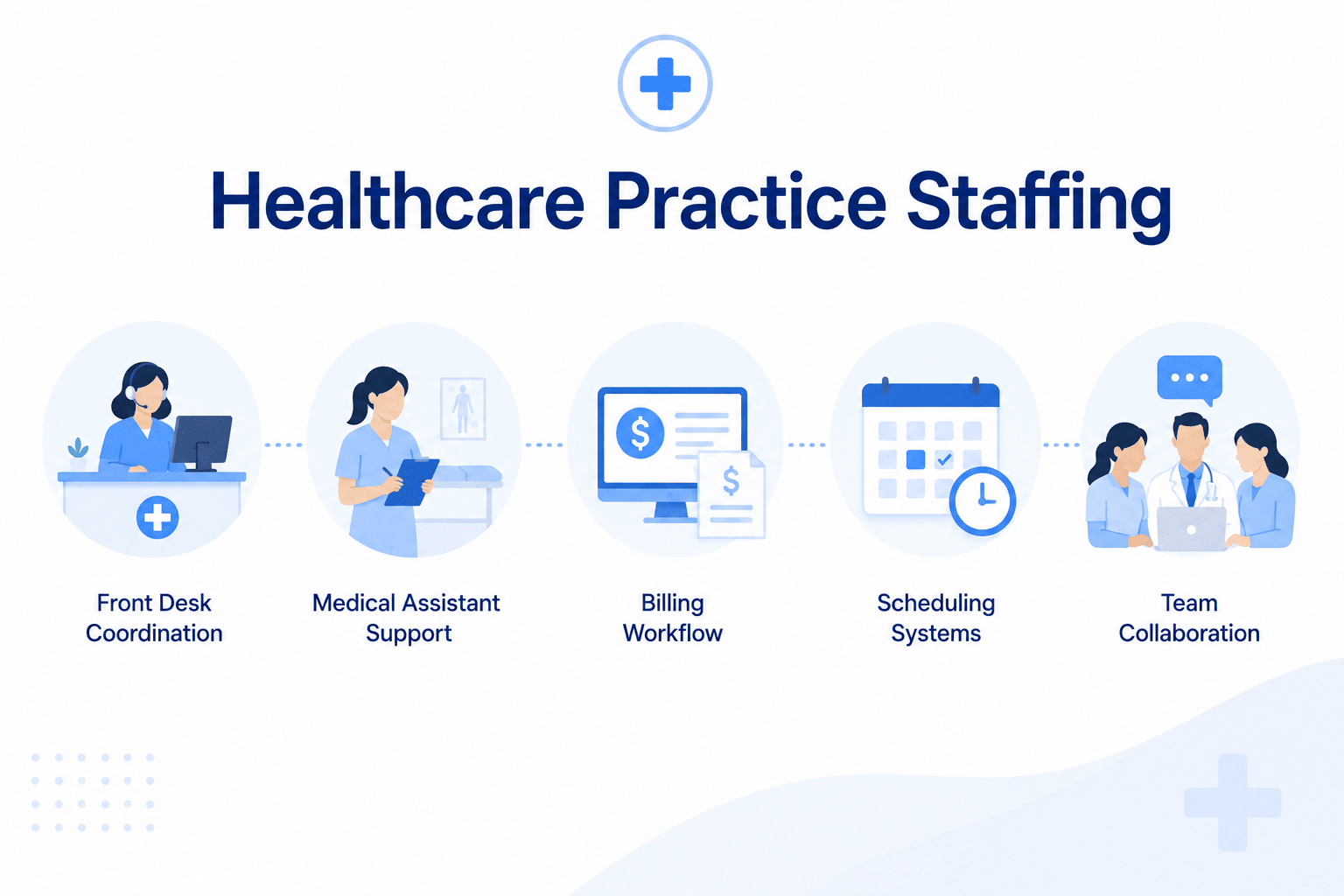
A successful clinic depends on far more than just the provider. Strong healthcare practice staffing creates smoother workflows, better patient experiences, and more stable daily operations. In fact, effective healthcare practice staffing often determines whether a new practice feels organized and efficient or constantly overwhelmed.
After completing insurance credentialing and payer enrollment, the next major challenge is building the team that keeps your practice running every day. While many providers initially focus on clinical care, staffing decisions directly affect scheduling, patient satisfaction, medical billing workflows, and operational efficiency.
Hiring too quickly can strain finances. However, hiring too late often creates burnout, workflow disruption, and patient frustration. Because of this, healthcare practices need a smart staffing strategy from the beginning.
Why Healthcare Practice Staffing Matters
Every staff member affects the patient experience.
From the first phone call to checkout, patients interact with your team far more often than they interact with the provider. As a result, staffing quality directly influences retention, online reviews, and overall practice reputation.
Strong staffing also improves:
- Front-desk efficiency
- Insurance verification accuracy
- Revenue cycle management
- Clinical workflow coordination
- Healthcare compliance support
On the other hand, understaffing commonly leads to scheduling delays, billing errors, provider stress, and communication breakdowns.
Practices that build reliable teams early usually experience smoother growth and better operational stability.
Create a Healthcare Practice Staffing Plan Early
Before hiring begins, practices should create a realistic staffing plan based on expected patient volume and operational needs.
Most new outpatient clinics initially require:
- Front-desk or reception staff
- Medical assistants or nurses
- Billing and insurance support
- Office or practice management assistance
Some practices may also require referral coordinators, surgery schedulers, or prior authorization specialists depending on specialty needs.
Instead of over hiring immediately, practices should prioritize the roles that directly affect patient flow and revenue generation first.
Front-Desk Staffing and Patient Experience
Front-desk staff are often the first impression patients receive.
Receptionists handle scheduling, phone calls, patient check-ins, insurance verification, and communication. Therefore, strong communication skills and professionalism matter just as much as administrative experience.
During hiring, practices should look for candidates who demonstrate:
- Patience under pressure
- Strong multitasking ability
- Customer service skills
- Organizational consistency
- Comfort with healthcare technology
Because front-desk errors can lead to denied claims or scheduling confusion, proper training is essential.
Practices that also maintain organized insurance network enrollment strategies often improve front-desk efficiency by reducing insurance confusion during scheduling and check-in.
Clinical Staffing for Healthcare Practice Operations
Medical assistants, nurses, and clinical support staff keep providers productive throughout the day.
Clinical staff typically assist with:
- Rooming patients
- Taking vitals
- Managing injections or procedures
- Handling refill requests
- Preparing documentation
- Coordinating patient flow
The right clinical support structure depends on specialty, patient volume, and operational goals.
For example, smaller practices may initially rely on medical assistants for cost efficiency. Meanwhile, higher-acuity practices may require licensed nurses for triage or advanced clinical responsibilities.
Strong staffing coordination improves provider efficiency while reducing patient wait times.
Employee vs Contractor Staffing Decisions
New practices must also decide which roles should remain in-house and which services can be outsourced.
Core operational roles such as receptionists and medical assistants are typically employees because practices require consistent scheduling, workflow control, and team integration.
However, outsourcing may work well for:
- Revenue cycle management
- IT support
- Payroll processing
- Bookkeeping
- Marketing services
Outsourcing can reduce overhead expenses during early growth stages. At the same time, practices should carefully evaluate vendor reliability and communication quality before outsourcing critical operations.
Revenue Cycle Staffing and Billing Support
Medical billing errors quickly affect practice revenue.
Because of this, practices need reliable billing support from the beginning. Some organizations hire in-house billers, while others outsource billing operations to specialized revenue cycle management companies.
Billing teams manage:
- Insurance claim submission
- Payment posting
- Denial follow-up
- Patient billing communication
- Prior authorization tracking
Without strong billing oversight, payer delays and denied claims can significantly disrupt cash flow.
Practices that maintain organized credentialing follow-up processes often reduce enrollment-related reimbursement interruptions as they grow.
Training and Workflow Development
Hiring good employees is only the beginning.
New staff members need structured onboarding and workflow training before patient volume increases. Without proper systems, even experienced employees struggle to maintain consistency.
Practices should create written workflows for:
- Patient intake procedures
- Scheduling protocols
- Prescription refill handling
- Lab result communication
- Billing and collections processes
- HIPAA and compliance procedures
In addition, practices should conduct workflow simulations before opening day to identify operational bottlenecks early.
Consistent training improves both employee confidence and patient experience.
Build a Positive Healthcare Practice Culture
Culture strongly affects employee retention and operational performance.
Small healthcare practices function best when communication remains respectful, collaborative, and organized. Providers who encourage teamwork and feedback often create stronger employee engagement and lower turnover rates.
Simple practices such as:
- Morning team huddles
- Clear communication expectations
- Regular workflow reviews
- Staff recognition and appreciation
can significantly improve morale and operational consistency.
A positive culture ultimately creates a better patient experience as well.
Compliance and HR Responsibilities for Healthcare Practices
Healthcare employers must also manage employment compliance carefully.
New practices should establish systems for:
- Employee onboarding documentation
- OSHA and HIPAA training
- Time tracking and payroll
- Workplace safety procedures
- Confidentiality agreements
Medical offices should also maintain written policies for workplace incidents, infection control, and employee communication standards.
Strong HR systems reduce legal risk while supporting smoother operations long-term.
Build a Stronger Clinic Through Better Staffing
Effective healthcare practice staffing supports every part of clinic operations, from patient scheduling and billing to workflow efficiency and provider productivity. Practices that hire carefully, train consistently, and build strong workplace culture create smoother daily operations and stronger long-term growth.
Most importantly, the right team allows providers to focus more on patient care instead of operational stress.
If your organization needs support with healthcare operations, credentialing workflows, or practice setup processes, eClinicAssist helps healthcare practices improve operational efficiency and support sustainable long-term growth.
Next Steps
With your staffing structure coming together, your practice is becoming operationally ready. However, even the best team needs the right technology and systems to work efficiently together.
In Part 7, we’ll focus on healthcare technology setup, including EHR systems, practice management software, scheduling tools, billing systems, and operational technology that powers modern medical practices.