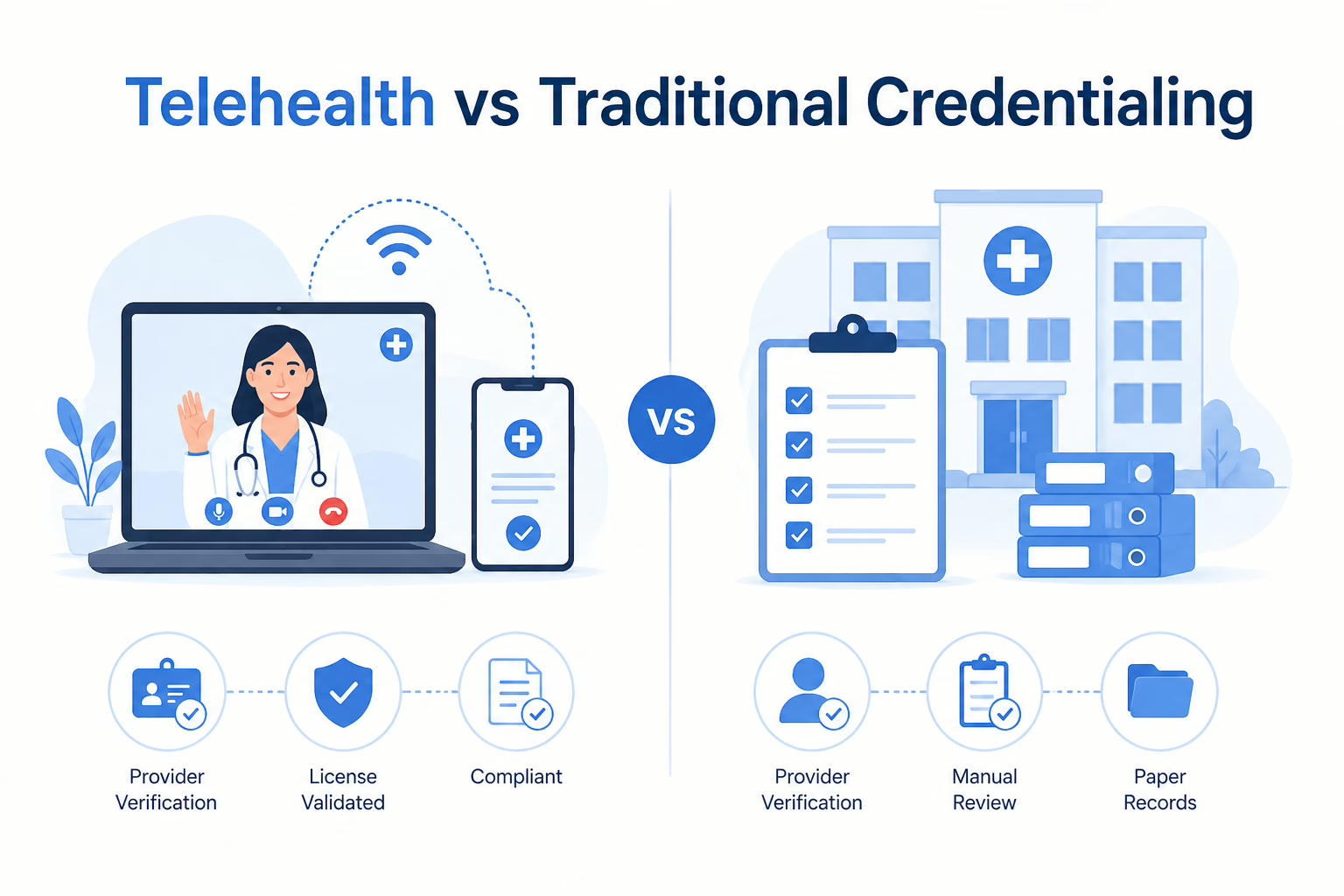
Telehealth credentialing vs traditional credentialing is a critical topic for healthcare practices adapting to modern care delivery. For practice managers and healthcare administrators, understanding telehealth credentialing vs traditional credentialing directly impacts compliance, provider enrollment, and revenue cycle management.
As telehealth expands access to care, credentialing processes must evolve to address new regulatory, operational, and technological challenges.
Understanding the Core Difference
Credentialing, whether traditional or telehealth-based, ensures that providers meet required standards of education, licensure, and training. However, the way these verifications are conducted differs significantly depending on the care delivery model.
Traditional credentialing focuses on in-person care within a specific facility, while telehealth credentialing supports remote care across multiple locations and regulatory environments.
Key Differences Between Telehealth and Traditional Credentialing
Understanding these distinctions helps practices avoid delays, compliance issues, and revenue disruption:
- Verification Process:
Traditional credentialing involves detailed, facility-based verification. Telehealth often uses credentialing by proxy or delegated models to speed up remote provider approvals. - Speed and Efficiency:
Traditional processes can take months due to manual reviews. Telehealth credentialing is faster due to centralized systems and streamlined workflows. - Scope of Practice:
Traditional credentialing is tied to a physical location. Telehealth credentialing focuses on remote service delivery and cross-state care requirements. - Licensure Requirements:
Traditional providers need a license in the facility’s state. Telehealth providers must comply with the patient’s state laws, often requiring multiple licenses or compact participation. - Technology Requirements:
Traditional models rely on facility-based systems. Telehealth requires secure platforms, remote EHR access, and HIPAA-compliant communication tools. - Regulatory Compliance:
Traditional credentialing follows standard accreditation bodies like NCQA and Joint Commission. Telehealth must also meet evolving state laws and payer-specific telehealth policies. - Privileging:
Traditional privileging is procedure-based within a facility. Telehealth privileging is typically limited to remote consultations and digital care services.
To better understand the foundation behind these processes, it’s important to learn how the provider credentialing process works and impacts approvals.
Operational Impact on Healthcare Practices
Telehealth credentialing introduces flexibility, but also complexity. Practices must manage multiple licenses, track varying state regulations, and ensure consistent documentation across systems.
Without proper coordination, this can lead to credentialing delays, compliance risks, and interruptions in provider enrollment. These issues directly affect medical billing workflows and revenue cycle performance.
Practices that adapt quickly to telehealth models often experience faster onboarding and expanded patient reach. However, success depends on structured credentialing systems and proactive compliance management.
Common Challenges in Telehealth Credentialing
Healthcare organizations frequently face challenges when transitioning to telehealth credentialing:
- Managing multi-state licensing requirements
- Keeping up with changing telehealth regulations
- Ensuring data security and HIPAA compliance
- Coordinating credentialing across multiple payers
- Avoiding payer delays due to incomplete documentation
These challenges highlight the need for centralized systems and standardized workflows.
Practices that address these issues early also focus on reducing payer enrollment delays to improve claim approvals and revenue flow.
How to Optimize Telehealth Credentialing
To successfully manage telehealth credentialing, practices should:
- Implement centralized credentialing systems for all providers
- Track multi-state licensure and renewal deadlines
- Use automated tools for monitoring and alerts
- Ensure compliance with both federal and state telehealth regulations
- Maintain accurate and updated provider data across all platforms
These strategies help reduce errors, improve efficiency, and maintain compliance across expanding healthcare networks.
Adapting Credentialing for Modern Healthcare
Telehealth credentialing vs traditional credentialing highlights how healthcare operations are evolving with technology and patient needs. While both processes aim to ensure provider qualifications and patient safety, telehealth introduces additional layers of complexity that require proactive management.
Practices that invest in structured credentialing systems can reduce delays, improve compliance, and strengthen revenue cycle management. If your organization is expanding into telehealth or facing credentialing challenges, contact eClinicAssist today for expert support.