
How to Credential a Nurse Practitioner With Commercial Insurance

Nurse practitioner credentialing with commercial insurance involves much more than completing a payer application. To successfully credential a nurse practitioner (NP), a medical practice typically needs to verify the provider’s state license and professional qualifications, confirm the correct individual NPI and taxonomy, maintain an accurate CAQH profile, apply to the appropriate commercial insurance networks, complete […]
Master the Aetna Credentialing Process: Expert Approval Tips

The Aetna credentialing process is an important step for healthcare providers and medical practices seeking to participate in Aetna insurance networks. However, credentialing is only one part of the broader payer participation process. Practices may also need to complete a network participation request, contracting, provider enrollment, and effective-date confirmation. Practices comparing payer requirements can also […]
Master the BCBS Credentialing Process to Minimize Delays
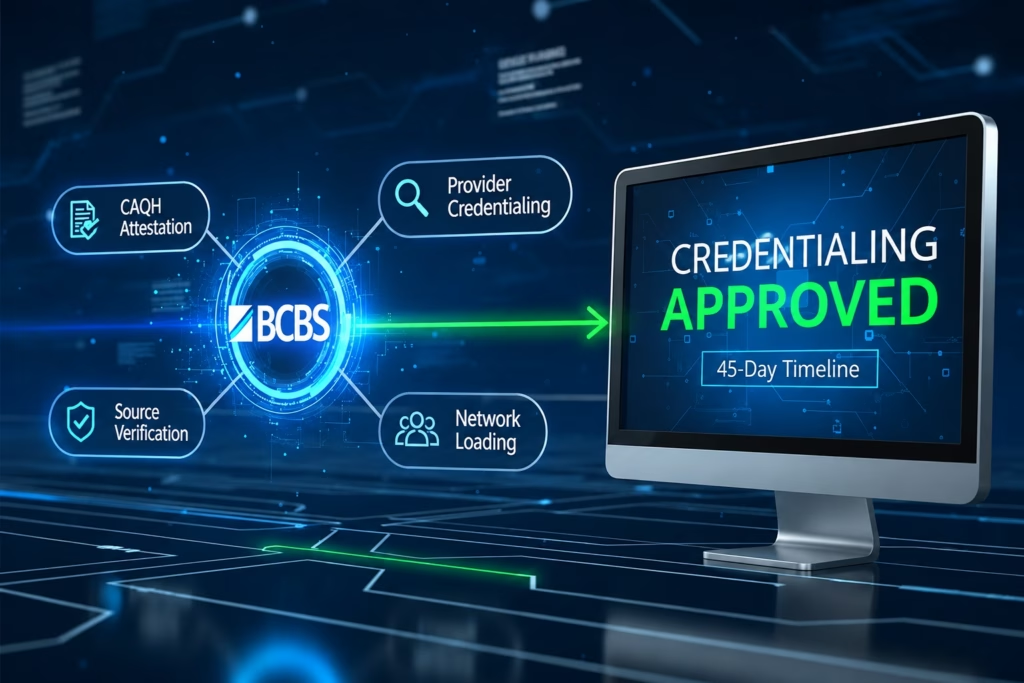
The Blue Cross Blue Shield (BCBS) credentialing process is an important step for healthcare professionals and medical practices seeking to participate in BCBS insurance networks. However, unlike a single nationwide insurance company, the Blue Cross Blue Shield system includes independently operated health plans with their own enrollment, contracting, and credentialing procedures. To complete BCBS credentialing, […]
Payer Credentialing Requirements: What Practices Need to Know

Payer credentialing requirements vary by payer, provider type, network, state, and program. Commercial health plans may require credentialing, contracting, enrollment, and group affiliation, while Medicare uses a separate CMS enrollment process through PECOS and Medicaid follows state-administered enrollment and screening rules. Practices should verify requirements separately for each payer. Compare Medicare and Medicaid enrollment processes […]
Recredentialing Management for Multi-Provider Practices
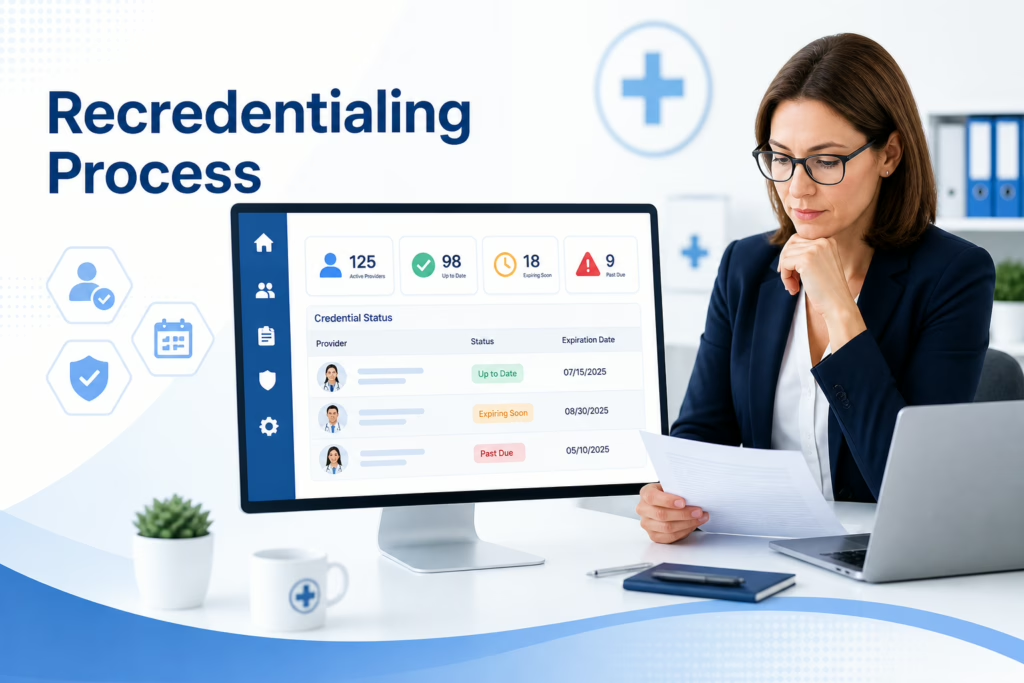
Recredentialing management for a multi-provider practice requires more than tracking one renewal date per clinician. Each provider may have different payer recredentialing cycles, CAQH attestations, licenses, certifications, professional liability coverage, Medicare revalidation dates, locations, and group affiliations. The most reliable approach is a centralized provider-by-payer system with clear owners, deadlines, dependencies, and escalation rules. Recredentialing […]
Payer Enrollment Delays: How to Speed Up Approval
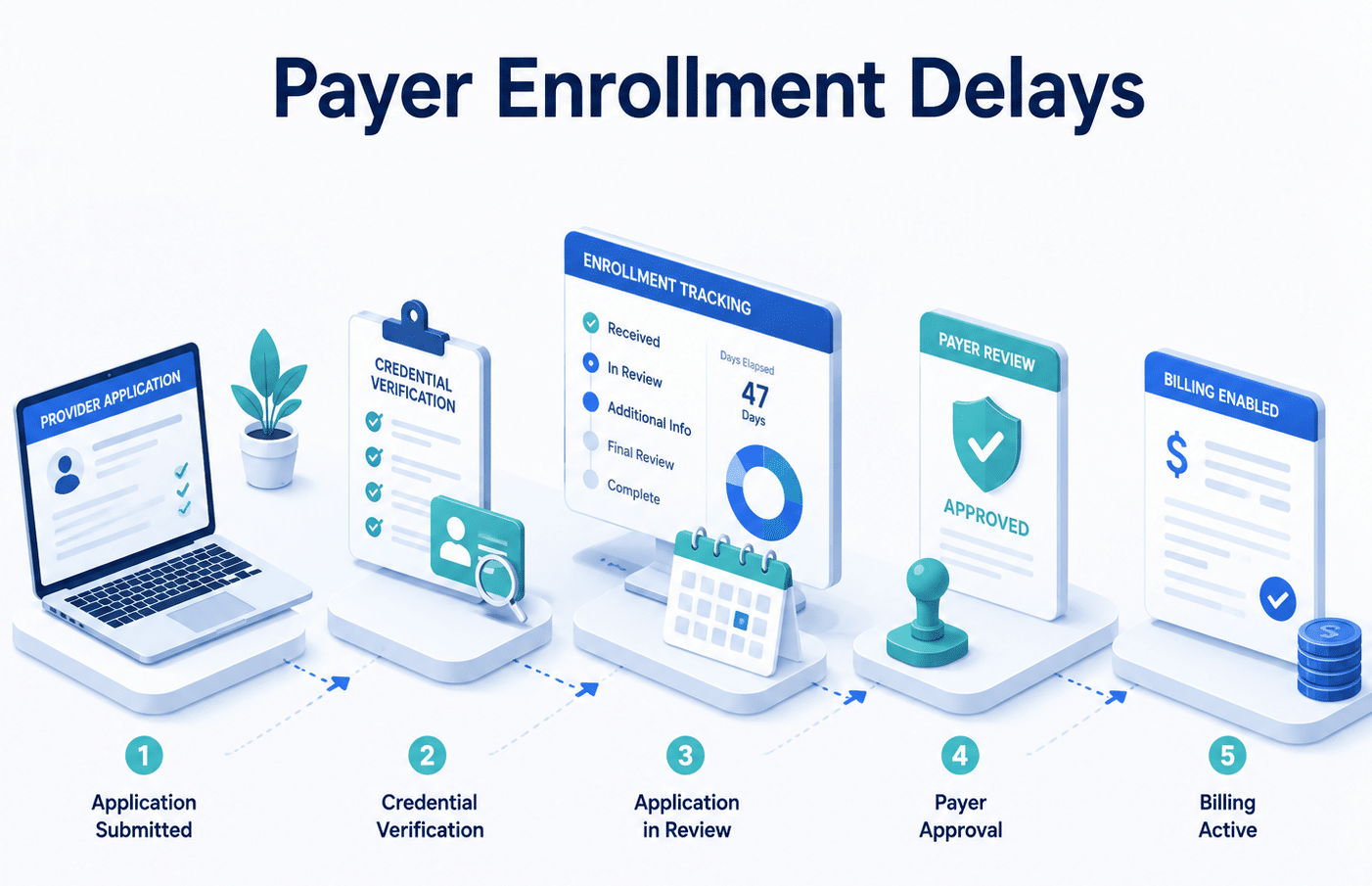
Payer enrollment delays are one of the biggest operational challenges healthcare practices face during provider onboarding. Long approval timelines, incomplete applications, and repeated follow-ups can significantly slow reimbursements and disrupt revenue cycle management. For practice managers, clinic owners, and healthcare administrators, delayed enrollment affects far more than paperwork. When providers cannot bill insurance companies, practices […]
Insurance Credentialing Process for New Practices
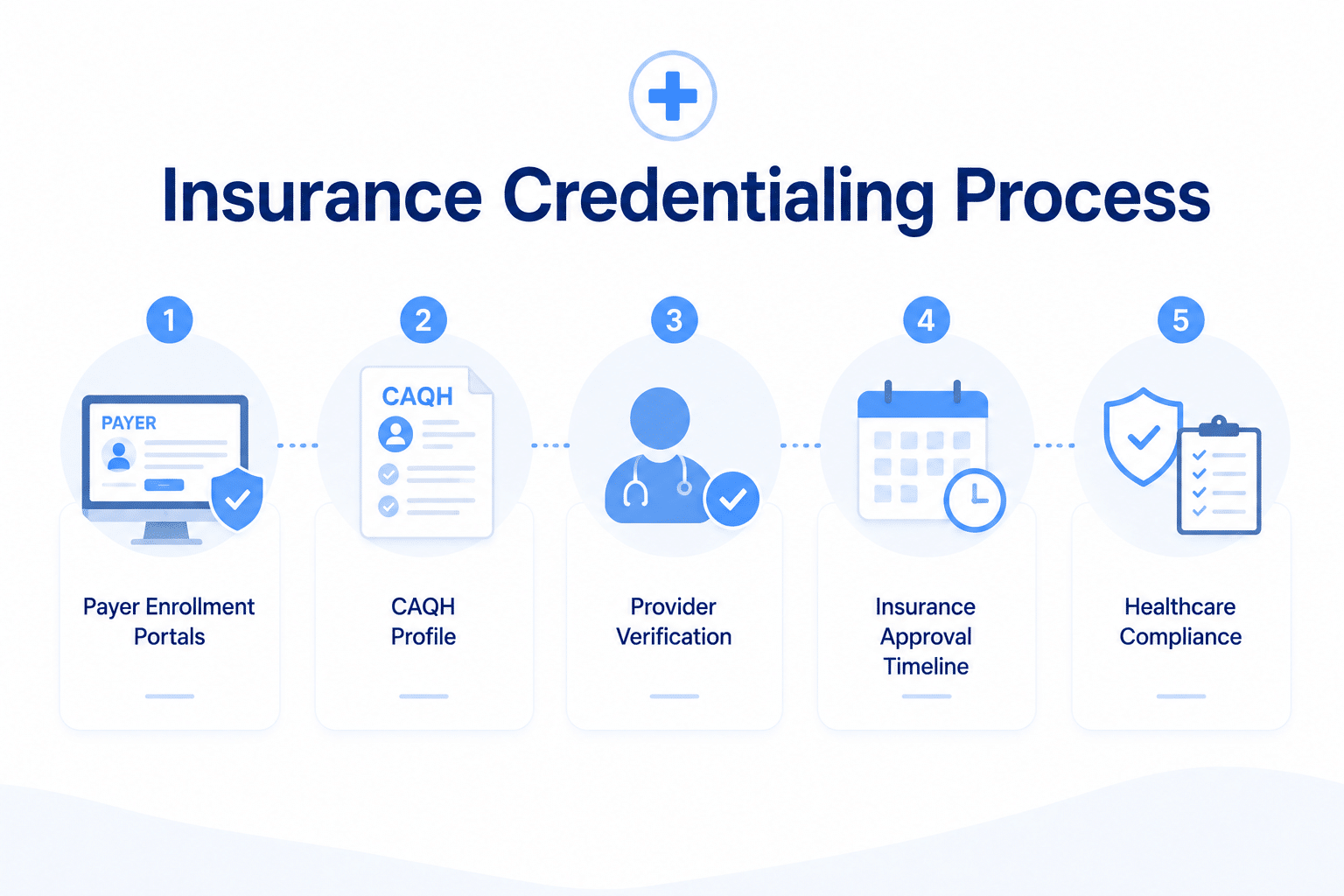
The insurance credentialing process for a new practice involves more than submitting provider documents. Commercial payer participation may require credentialing, contracting, provider and group enrollment, location setup, and a confirmed network effective date. Medicare and Medicaid follow separate enrollment processes. Practices should track each milestone individually before representing a provider as in-network. Credentialing is one […]
Medicare, Medicaid & Commercial Payer Enrollment Guide

Payer enrollment requirements are a critical step in expanding your healthcare practice and accessing a broader patient base. Without understanding payer enrollment requirements, providers often face delays in billing, compliance issues, and disruptions in revenue cycle management. For practice managers, healthcare providers, and clinic owners, mastering this process ensures smooth provider onboarding, efficient medical billing […]
Reduce Payer Enrollment Delays: Proven Strategies

Reducing delays in the payer enrollment process is essential for maintaining a steady revenue cycle and ensuring providers can start billing without disruption. Many practices struggle to reduce payer enrollment delays, which leads to lost revenue, billing gaps, and operational inefficiencies. For healthcare administrators and practice managers, speeding up approvals is not just about efficiency—it […]