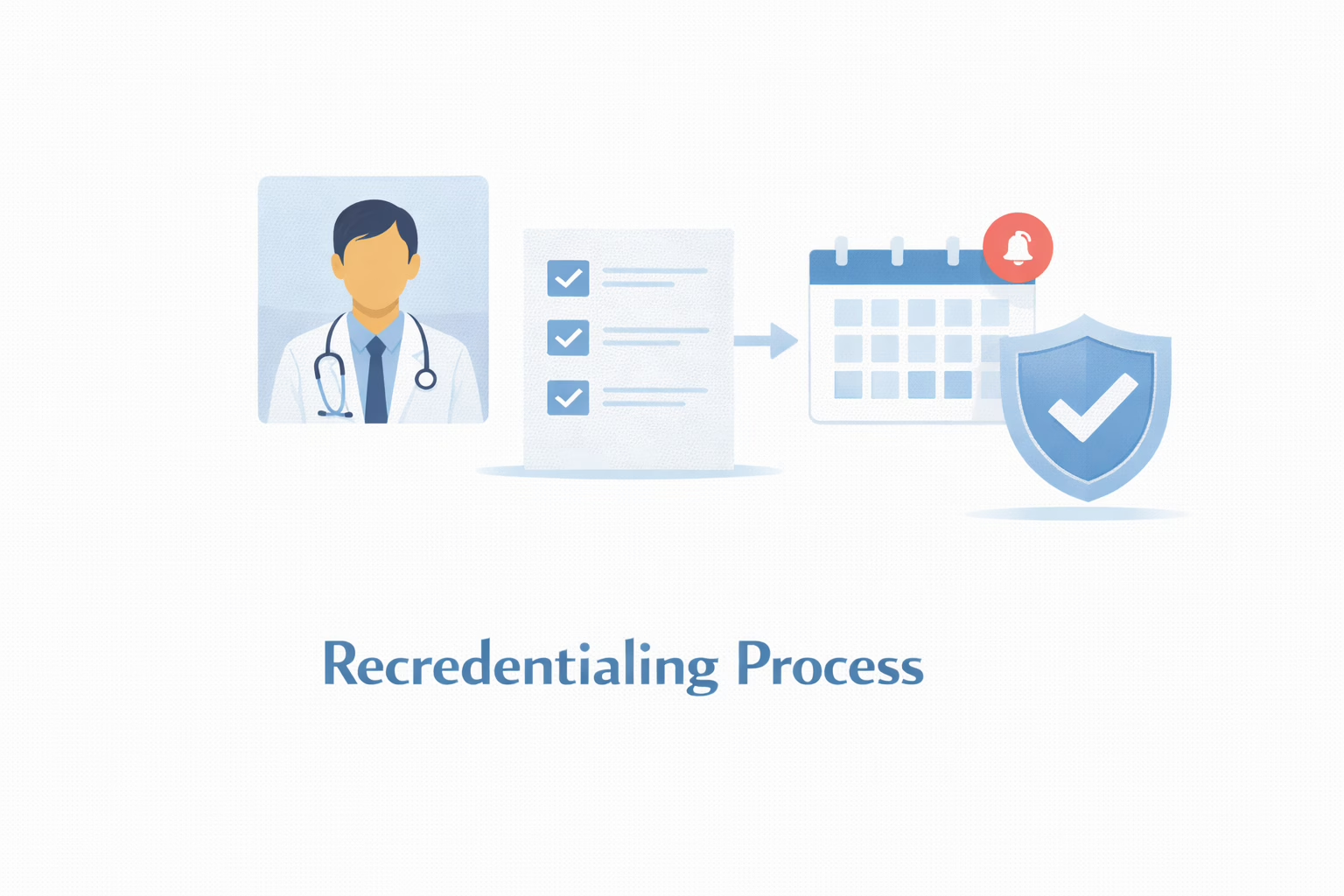
The provider recredentialing process is a periodic payer review used to confirm that a participating healthcare professional continues to meet the payer’s credentialing requirements. Many health plans use a cycle of about three years, but timing and requirements vary. Practices should maintain provider data continuously rather than waiting for the payer’s next recredentialing request. For a broader overview, see the types of healthcare credentialing and the credentialing compliance risks practices should monitor.
Recredentialing is an important part of maintaining network participation, but it should not be confused with Medicare revalidation, state license renewal, CAQH attestation, or payer enrollment.
For practice managers, the most reliable approach is to keep provider records current throughout the credentialing cycle, monitor payer communications, and respond promptly when a health plan begins its review.
What Is the Provider Recredentialing Process?
Recredentialing is the periodic review a health plan, credentialing organization, or other healthcare organization performs after a practitioner has already been credentialed.
The process may include renewed verification of professional qualifications, licenses, sanctions, liability coverage, work history, board certification, hospital affiliations, and other information required under the organization’s credentialing standards.
The purpose is different from initial credentialing. Initial credentialing determines whether a provider qualifies for participation for the first time. Recredentialing evaluates whether an existing participating provider continues to satisfy applicable requirements.
Practices that need a broader overview can review our provider credentialing process guide.
How Often Does Provider Recredentialing Occur?
There is no single recredentialing interval that should be assumed for every payer and every provider.
A 36-month cycle is common among major commercial health plans. For example, UnitedHealthcare’s 2026 Administrative Guide states that it recredentials participating healthcare providers at least every 36 months.
However, state regulations, accreditation requirements, payer policies, provider type, delegated credentialing arrangements, or other circumstances can affect the applicable schedule.
The safest practice is to track the actual requirements of each payer rather than calculating one universal recredentialing date for every network.
Recredentialing Is Not the Same as Medicare Revalidation
This distinction is especially important for practice managers.
| Process | What It Generally Does |
|---|---|
| Commercial payer recredentialing | Periodically reevaluates whether an existing participating provider continues to meet the payer’s credentialing standards. |
| Medicare revalidation | Requires Medicare-enrolled providers and suppliers to resubmit and recertify their Medicare enrollment information according to CMS requirements. |
| CAQH attestation | Confirms that the provider’s CAQH Provider Data Portal information remains current and accurate. |
| License renewal | Maintains the provider’s professional authority to practice under applicable state licensing requirements. |
CMS generally requires most Medicare providers and suppliers to revalidate every five years, while DMEPOS suppliers generally revalidate every three years. That federal enrollment cycle should not be substituted for a commercial payer’s recredentialing schedule.
For more detail, see our guide to Medicare and Medicaid revalidation.
What Information Is Reviewed During Recredentialing?
The exact file varies by payer and provider type, but commonly reviewed information may include:
- Active professional licenses
- Professional liability insurance
- DEA registration when applicable
- Board certification when applicable
- Education and training
- Work history
- Practice locations
- Hospital affiliations when relevant
- Professional sanctions or disciplinary history
- Malpractice history
- Current provider demographics
Payers may obtain some information directly from primary sources or credentialing databases rather than relying only on documents uploaded by the provider.
Our provider credentialing documents guide explains the types of information practices should organize before credentialing and recredentialing requests arrive.
How Should Practices Manage the Provider Recredentialing Process?
1. Maintain a payer-specific credentialing calendar
Do not rely on one generic date for every payer.
Track the provider, payer, last credentialing or recredentialing activity, known review cycle, correspondence received, responsible staff member, and current status.
When a payer provides a specific deadline, that deadline should become the controlling date in your workflow.
2. Track credential expiration dates separately
Professional credentials can expire between recredentialing cycles.
Maintain reminders for:
- State professional licenses
- DEA registrations where applicable
- Board certifications
- Professional liability coverage
- Other provider-specific certifications
Credential expiration management is an ongoing function, not something that should begin only when recredentialing is due. Our credential expiration management guide covers this process in more detail.
3. Keep CAQH information current when the payer uses it
Many commercial payers use the CAQH Provider Data Portal to collect provider information for credentialing and recredentialing.
Maintain accurate professional information, upload required documents, review payer access authorizations, and complete required attestations.
However, CAQH completion should not be interpreted as payer approval. The payer still controls its own review and participation decision.
See our CAQH Provider Data Portal guide for the administrative workflow.
4. Review provider information before submission
When a payer requests recredentialing information, review the provider record rather than automatically resubmitting old data.
Check:
- Legal and professional names
- NPI
- Practice locations
- Contact information
- Current licenses
- Professional liability coverage
- Employment and work history
- Hospital affiliations where applicable
- Required disclosures
Different systems do not always contain identical fields, so the goal is not blind uniformity. The goal is accurate information that reflects the provider’s actual professional and practice circumstances.
5. Respond promptly to payer requests
Recredentialing frequently involves follow-up questions, missing-item requests, or updated verification.
Record:
- The date the request was received
- The information requested
- The response deadline
- The staff member responsible
- The date the response was submitted
- Confirmation or reference numbers
Do not mark the case complete simply because information was submitted. Continue tracking until the payer confirms completion or provides the final status.
Should Practices Submit Recredentialing Early?
Follow the payer’s instructions.
Some payers begin the recredentialing process automatically and obtain information from CAQH or another credentialing source. Others may send a request that requires the provider or practice to take action.
Because these workflows differ, there is no universal rule requiring every recredentialing application to be submitted exactly 90 days before a deadline.
A better strategy is to keep the provider file ready throughout the cycle so the practice can respond immediately when the payer initiates its review.
What Happens If Recredentialing Is Not Completed?
The consequences depend on the payer, contract, network, provider type, and reason the recredentialing process was not completed.
Potential outcomes may include:
- Requests for additional information
- Delays in completing the review
- Administrative escalation
- Changes to network participation status
- Termination from a payer network under applicable contract and policy provisions
A missed recredentialing request does not automatically mean every subsequent claim will be denied. Practices should verify the provider’s actual participation and effective status with the payer before making billing decisions.
Common Provider Recredentialing Mistakes
Waiting for the payer before reviewing provider records
If the first review of a provider’s file happens after the payer sends a deadline, expired or missing information may already require corrective work.
Confusing CAQH attestation with recredentialing completion
CAQH can provide information used in the review, but the payer makes the recredentialing decision.
Assuming an expired document automatically changes network status
An expired license, liability policy, or certification can be significant, but the effect depends on the credential involved and the payer’s requirements. Verify the actual status rather than assuming automatic termination or automatic claim denial.
Failing to document payer communications
Phone calls alone are difficult to reconstruct later. Keep reference numbers, portal messages, emails, submission confirmations, and dates of follow-up.
Combining every credentialing process into one status
A provider can simultaneously have an active state license, current CAQH profile, pending payer recredentialing, and separate Medicare revalidation date.
Track those processes separately.
Provider Recredentialing Checklist
| Item | What to Verify |
|---|---|
| Payer | Which network or plan is conducting the review? |
| Deadline | What date has the payer provided? |
| Provider demographics | Are current locations, contact details, NPI, and affiliations accurate? |
| Licenses and credentials | Are required professional credentials current? |
| Liability coverage | Is current professional liability information available where required? |
| CAQH | If used by the payer, is the profile current, attested, and accessible to the appropriate organization? |
| Payer requests | Have all missing-item or verification requests been answered? |
| Final outcome | Has the payer confirmed completion or continued participation? |
Frequently Asked Questions
How often are providers recredentialed?
The schedule varies by payer and applicable requirements. A three-year or 36-month cycle is common among major commercial health plans, but practices should confirm the actual payer policy rather than assuming the same interval applies universally.
Is recredentialing the same as credentialing?
No. Initial credentialing occurs when an organization first evaluates a provider’s qualifications for participation. Recredentialing is the later periodic review of an already credentialed provider.
Is payer recredentialing the same as Medicare revalidation?
No. Medicare revalidation is a CMS enrollment process. Commercial payer recredentialing is a network credentialing process. Their schedules and administrative requirements are different.
Does CAQH complete recredentialing automatically?
No. A payer may use information from the CAQH Provider Data Portal during recredentialing, but the payer or credentialing organization performs the review and makes the final decision.
Can an expired provider document affect recredentialing?
Yes. An expired credential can create a problem when that credential is required for participation or verification. The exact consequence depends on the document, payer requirements, and provider circumstances.
Should practices wait for the payer to contact them?
No. Practices should continuously maintain licenses, liability information, CAQH records, provider demographics, and credentialing documentation. However, the actual recredentialing submission should follow the payer’s process and instructions.
How eClinicAssist Supports Recredentialing Management
Managing multiple provider files and payer cycles can become difficult as a practice grows. eClinicAssist supports healthcare practices with provider credentialing, recredentialing administration, document management, CAQH maintenance, payer follow-up, renewal tracking, and related enrollment workflows.
eClinicAssist can help organize and follow the administrative process, but payer credentialing decisions, participation requirements, network availability, and effective dates remain under the payer’s control.
Contact eClinicAssist to discuss support for provider credentialing and recredentialing management.
This article provides general administrative information and is not legal advice. Credentialing and recredentialing requirements vary by payer, provider type, state, network, and contract. Verify current requirements with the applicable payer or credentialing organization.