PECOS provider enrollment is a critical process for healthcare practices that want to bill Medicare and maintain compliance. Without proper PECOS provider enrollment, providers cannot receive reimbursement, leading to delays and lost revenue.
For practice managers and credentialing teams, PECOS is more than just a system. It directly impacts provider enrollment, medical billing workflows, and overall revenue cycle management.
What Is PECOS and Why It Matters
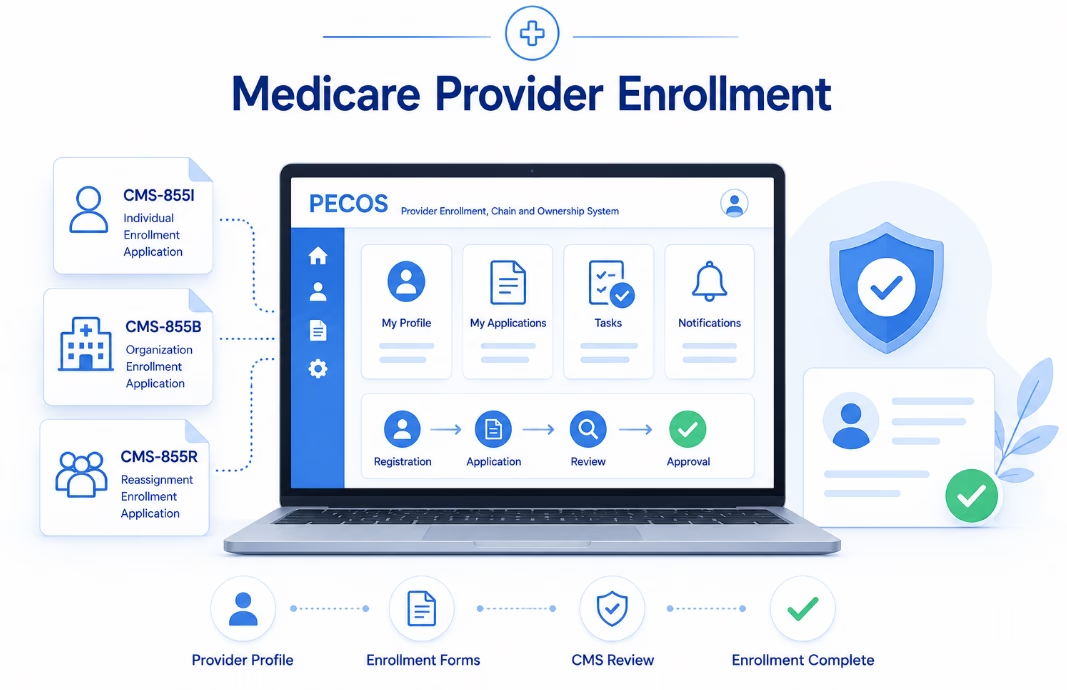
PECOS is the online system used by CMS to manage Medicare enrollment. It replaces traditional paper applications and centralizes all provider enrollment data. This system acts as the foundation for Medicare billing eligibility. If a provider is not correctly enrolled in PECOS, claims will not be processed or paid.
For growing practices, PECOS ensures that new providers can quickly begin seeing Medicare patients and generating revenue.
Preparing for PECOS Provider Enrollment
Preparation is the most important step in avoiding delays. Missing or incorrect information is one of the biggest causes of enrollment issues. Providers must have an active NPI, accurate Identity & Access credentials, and all required supporting documents ready before starting. These include licenses, DEA certificates, tax IDs, and banking details.
Accurate documentation is essential for smooth approvals. To reduce errors, it’s important to understand how provider credentialing documents impact compliance and enrollment success
Step-by-Step: PECOS Provider Enrollment Process
1. Access the PECOS System
Log in using Identity & Access credentials and select the appropriate role and enrollment type. This could be a new enrollment, update, or revalidation.
2. Complete the Application
Enter all required provider and practice details, including ownership, locations, and affiliations. Accuracy is critical at this stage.
3. Upload Supporting Documents
Attach all necessary documents such as licenses, tax forms, and agreements. Missing files can delay the review process.
4. Submit and Sign Electronically
Review the application carefully before submitting. Electronic signatures are required for final submission.
5. Track Application Status
After submission, monitor progress using the PECOS tracking system. Follow up regularly to avoid unnecessary delays.
The Role of Credentialing Teams
Credentialing specialists play a key role in managing PECOS provider enrollment. Their responsibilities go beyond submitting applications. They track application status, respond to CMS requests, and ensure that all provider data remains consistent across systems like NPPES and CAQH.
Strong coordination between credentialing and billing teams helps prevent payer delays and ensures faster approvals.
How PECOS Impacts Revenue Cycle Management
PECOS provider enrollment directly affects a practice’s ability to generate revenue. Without enrollment approval, providers cannot bill Medicare. This leads to delayed payments, increased accounts receivable, and disruptions in medical billing workflows. Over time, these issues can significantly impact financial performance.
To avoid delays, it’s helpful to understand how payer enrollment processes influence reimbursement timelines
Revalidation: A Critical Ongoing Requirement
PECOS enrollment is not a one-time process. CMS requires providers to revalidate their information every few years. Missing a revalidation deadline can result in deactivation. This means providers lose billing privileges and practices stop receiving payments.
Regular monitoring of revalidation dates is essential for maintaining continuous revenue flow.
Common Challenges in PECOS Enrollment
Many practices face delays due to incomplete applications, inconsistent data, or missed documentation. Another common issue is lack of follow-up after submission. Without tracking, applications may remain pending for extended periods.
These challenges often lead to workflow disruption and increased administrative workload.
Best Practices to Streamline PECOS Provider Enrollment
Maintaining accurate provider data across all systems is key to reducing delays. Consistency ensures faster verification and approval. Using digital tools to track submissions and deadlines improves efficiency. Automation reduces errors and prevents missed updates.
Clear communication between credentialing, compliance, and billing teams ensures smooth coordination. This helps avoid gaps in the enrollment process. Practices that follow these strategies experience faster approvals and more stable revenue cycles.
Real-World Impact on Healthcare Practices
Imagine hiring a new provider who is not fully enrolled in PECOS. Even if they start seeing patients, the practice cannot bill Medicare. This creates immediate revenue loss and increases financial pressure. It also affects patient access and scheduling efficiency.
In another case, missing a revalidation deadline can stop payments entirely. Recovery takes time and disrupts operations. Both scenarios highlight the importance of proactive PECOS management.
Master PECOS Provider Enrollment
PECOS provider enrollment is essential for maintaining compliance, enabling billing, and protecting revenue. Without proper PECOS provider enrollment, practices risk delays, deactivation, and financial loss. By maintaining accurate data, tracking deadlines, and aligning credentialing workflows, healthcare practices can avoid costly mistakes and ensure smooth operations.
If managing PECOS feels overwhelming, eClinicAssist can help. Our experts handle provider enrollment, revalidation, and compliance so you can focus on patient care. Contact us today to streamline your processes and protect your revenue.