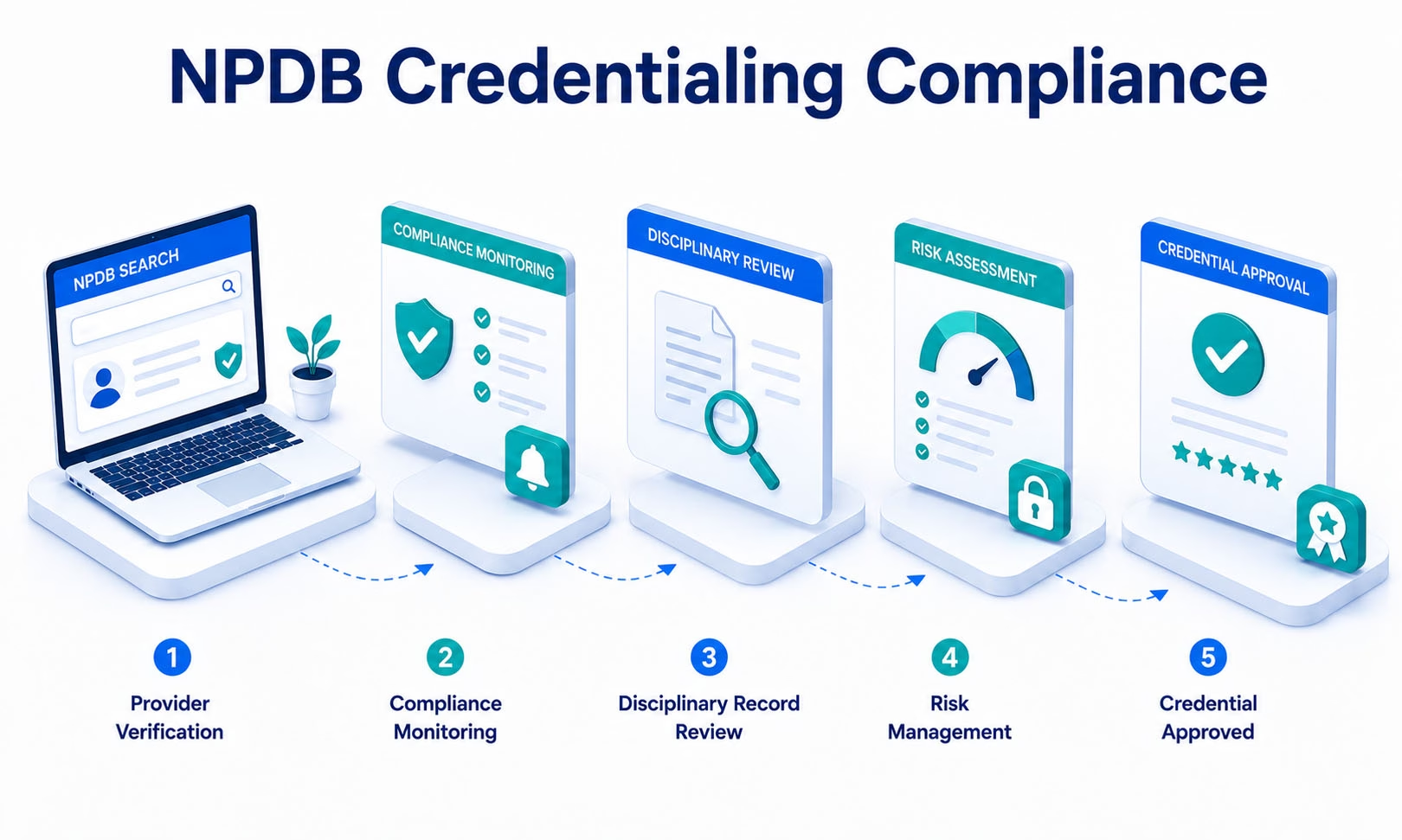
NPDB credentialing compliance means understanding when an organization may query the National Practitioner Data Bank, when a hospital must query, which adverse actions must be reported, how Continuous Query works, and how confidential NPDB information may be used. Querying, reporting, credentialing review, and disclosure are separate compliance responsibilities. Our NPDB query process guide explains how queries fit into credentialing workflows.
The National Practitioner Data Bank, or NPDB, is an important part of healthcare credentialing and professional review.
But NPDB compliance is often oversimplified.
Not every healthcare organization has the same legal obligations. Some entities must query. Others may query. Some must report certain actions. Some may not query at all.
The first step is identifying what type of organization you are and what federal authority applies to the activity.
What Is NPDB Credentialing Compliance?
NPDB credentialing compliance refers to correctly managing an organization’s responsibilities involving NPDB information.
Depending on the organization, this can include:
- Determining whether the entity is eligible to register with the NPDB
- Determining whether querying is mandatory or optional
- Submitting required queries
- Reporting qualifying adverse actions
- Reviewing query responses appropriately
- Maintaining Continuous Query enrollment where used
- Protecting NPDB confidentiality
- Maintaining documentation of required actions
These responsibilities should not be combined into one generic “NPDB check.”
Who Can Query the NPDB?
Federal law controls which organizations may query the NPDB and for what purpose.
Eligible entities can include:
- Hospitals
- Healthcare entities with formal peer review
- Health plans
- State licensing and certification agencies
- Certain federal and state agencies
- Professional societies with formal peer review
- Some group medical practices
- Some ambulatory surgical centers
- Some health centers
Eligibility does not mean every organization can query every practitioner for every purpose.
The query must be permitted under the authority that applies to the registered organization.
Which Organizations Are Federally Required to Query the NPDB?
Hospitals are the only healthcare entities federally mandated to query the NPDB.
Hospitals must query when a physician, dentist, or other healthcare practitioner:
- Applies for medical staff appointment
- Applies for clinical privileges
- Applies for temporary clinical privileges
Hospitals must also query every two years for practitioners who remain on the medical staff or continue to hold clinical privileges.
When Else Must a Hospital Query?
NPDB guidance also requires a hospital to query when a practitioner seeks to add to or expand existing clinical privileges.
A hospital may also query more frequently for professional review, employment, affiliation, or other purposes permitted under NPDB rules.
The federal minimum should therefore not be confused with an organization’s own credentialing or medical staff policy.
Do Physician Practices Have to Query the NPDB?
Not under the same federal mandatory-query rule that applies to hospitals.
A group practice or other healthcare entity may be eligible to query if it satisfies NPDB eligibility requirements and uses the information for an authorized purpose.
The organization should confirm eligibility before attempting to use NPDB data.
What Is the Difference Between Querying and Reporting?
Querying means requesting information from the NPDB.
Reporting means submitting information to the NPDB about an action or payment that meets federal reporting requirements.
| Activity | Purpose |
|---|---|
| Query | Obtain NPDB information about an authorized subject |
| Report | Submit qualifying adverse actions, payments, exclusions, or other reportable information |
An organization’s responsibilities can differ for each activity.
What Types of Information Are Reported to the NPDB?
Depending on the reporting authority and circumstances, the NPDB receives information involving areas such as:
- Medical malpractice payments
- Professional licensure and certification actions
- Adverse clinical privilege actions
- Professional society actions
- Federal and state healthcare program exclusions
- DEA controlled-substance registration actions
- Healthcare-related criminal convictions
- Healthcare-related civil judgments
- Other qualifying adjudicated actions or decisions
The fact that an event occurred does not automatically mean it is reportable.
NPDB reporting rules determine which actions meet the threshold.
When Must a Clinical Privilege Action Be Reported?
For physicians and dentists, hospitals and other eligible healthcare entities must report certain professional review actions involving clinical privileges when the federal reporting criteria are met.
In general, the action must:
- Result from a professional review action
- Relate to professional competence or professional conduct
- Adversely affect, or potentially affect, patient health or welfare
- Adversely affect clinical privileges for more than 30 days
Examples of potentially reportable actions can include:
- Restriction
- Suspension
- Revocation
- Denial of privileges based on professional competence or conduct
- Certain surrender or restriction of privileges while under investigation
The exact facts matter.
Is a 30-Day Suspension Reportable?
Generally, no under the NPDB’s more-than-30-day clinical privilege reporting threshold.
A qualifying restriction that remains in effect for more than 30 days becomes reportable.
For example, NPDB guidance states that a qualifying suspension lasting exactly 30 days is not reportable under this rule, while one that extends beyond 30 days can become reportable.
Are All Privilege Denials Reportable?
No.
A denial based solely on an established eligibility or threshold criterion is different from a denial resulting from professional review of the practitioner’s competence or conduct.
Examples of threshold criteria can include:
- Minimum professional liability coverage
- Required board certification
- Geographic proximity
- Minimum procedure-volume requirements
A denial solely because the practitioner does not satisfy such criteria is generally not the same as a reportable adverse professional review action.
How Quickly Must a Reportable Clinical Privilege Action Be Submitted?
NPDB guidance requires an Initial Action Report for a reportable adverse clinical privilege action to be submitted within 30 days of the action.
Organizations should have a workflow that identifies potentially reportable actions promptly and routes them for appropriate review.
Do Malpractice Payments Prove Negligence?
No.
The presence of a medical malpractice payment report should not be interpreted as automatic proof that malpractice occurred.
NPDB guidance specifically notes that settlements can occur for many reasons and that a malpractice payment should not create a presumption of professional negligence.
Credentialing committees should evaluate:
- Nature of the event
- Date
- Pattern of reports
- Provider explanation
- Subsequent professional history
- Organization-specific credentialing criteria
Does an NPDB Report Automatically Require Credentialing Denial?
No.
The NPDB provides information.
The credentialing organization still applies its policies, applicable standards, and professional review process.
An NPDB report may lead to:
- Additional verification
- Request for provider explanation
- Committee review
- Additional documentation
- Another action permitted under organizational policy
It should not be treated as an automatic deny flag.
What Is NPDB Continuous Query?
Continuous Query is an official NPDB service that allows an eligible organization to enroll a practitioner for ongoing monitoring.
An enrollment lasts 12 months.
At the start of enrollment, the organization receives:
- Confirmation of Continuous Query enrollment
- The practitioner’s current NPDB query response
During the enrollment period, the NPDB generally notifies the organization of new reports within 24 hours after the NPDB receives them.
Does Continuous Query Replace a Hospital’s Biennial Query?
Yes, when properly maintained.
NPDB guidance states that hospitals using Continuous Query for their practitioners satisfy their mandatory querying requirements for those enrolled practitioners.
The organization still needs to maintain the enrollment and respond appropriately to any new reports.
What Is a One-Time Query?
A One-Time Query returns the NPDB information available at the time the query is processed.
If a new report is submitted later, the organization does not automatically receive notice from that earlier One-Time Query.
This differs from Continuous Query, which monitors for new reports during the 12-month enrollment period.
Does Every Organization Need Continuous Query?
No.
Continuous Query can be useful for organizations that want authorized ongoing NPDB monitoring, but whether it is appropriate depends on:
- Entity eligibility
- Credentialing model
- Hospital requirements
- Internal policy
- Provider population
- Operational needs
It should not be described as a universal credentialing requirement.
What Does “No Reports Found” Mean?
A “No Reports Found” response means that the NPDB did not identify reports based on the information submitted and the queryer’s authorized access.
It does not certify that the practitioner:
- Has never had a complaint
- Has never been sued
- Has no adverse employment history
- Has never experienced an event outside NPDB reporting requirements
The NPDB should therefore remain one component of a broader credentialing verification process.
Is NPDB Information Confidential?
Yes.
Identifiable NPDB information is confidential under federal law.
It cannot be treated like ordinary public provider data.
NPDB information may only be disclosed as permitted under the applicable NPDB statutes and regulations.
For example, information obtained for credentialing or peer review may be shared with people participating in the same authorized review process when allowed by the rules.
Can NPDB Information Be Shared Across a Health System?
Only in certain circumstances.
NPDB guidance permits sharing within some centralized health systems when conditions such as the following are present:
- Centralized credentialing
- Centralized peer review
- One decision-making body
- One unified medical staff
If separate facilities make independent credentialing or privileging decisions, NPDB responses should not automatically be shared between them.
Can NPDB Information Be Used for a Different Purpose?
Generally, it should be used for the purpose for which it was obtained.
For example, NPDB guidance warns that information queried for credentialing purposes should not simply be repurposed for unrelated use.
This makes access controls and internal handling procedures important components of NPDB compliance.
What Should an NPDB Compliance Policy Address?
A healthcare organization’s policy should clearly define:
- Who may access the NPDB account
- Who determines whether the organization is eligible to query
- When queries are required
- When optional queries may be performed
- How query responses are reviewed
- Who assesses potentially reportable actions
- How reporting deadlines are tracked
- How Continuous Query is maintained
- How NPDB information is stored
- Who may receive NPDB information
- How credentialing decisions are documented
What Records Should Organizations Maintain?
Depending on the organization’s responsibilities, records may include:
- Query dates
- Query type
- Continuous Query enrollment dates
- Query responses
- Credentialing review documentation
- Committee decisions
- Reportability determinations
- Submitted NPDB reports
- Revision, correction, or void activity
- Follow-up actions
Because NPDB information is confidential, storage and access should be appropriately controlled.
What Is NPDB Attestation?
The NPDB uses attestation as part of its compliance program for certain registered organizations.
Attestation confirms that the organization has met applicable querying and reporting responsibilities during the relevant period.
For hospitals, NPDB registration renewal and attestation occur every two years.
The NPDB sends reminders before the registration and attestation due date.
Can Failing to Report Create NPDB Compliance Problems?
Yes.
The NPDB states that entities failing to submit required reports may be subject to sanctions under federal regulations.
This is separate from the question of whether an organization was required to query.
A sound compliance program should therefore monitor both:
- Query obligations
- Reporting obligations
How Should Credentialing Teams Review NPDB Findings?
A practical workflow is:
- Confirm the report belongs to the correct practitioner.
- Identify the type of report.
- Review the reporting organization and dates.
- Determine whether additional primary source verification is needed.
- Review any provider statement or explanation.
- Apply the organization’s credentialing criteria.
- Escalate to the appropriate committee where required.
- Document the final review and decision.
NPDB data should support professional review, not replace it.
How Does NPDB Compliance Fit Into Credentialing Audits?
For organizations with NPDB responsibilities, an internal credentialing audit may evaluate:
- Whether required hospital queries occurred
- Whether Continuous Query enrollments remain active
- Whether applicable reports were reviewed
- Whether potentially reportable actions were evaluated
- Whether reportable actions were submitted on time
- Whether confidential NPDB data is appropriately controlled
- Whether credentialing decisions are documented
See our credentialing audit checklist for a broader operational review.
NPDB Credentialing Compliance Checklist
| Area | What to Confirm |
|---|---|
| Entity eligibility | Organization’s authority to query or report is confirmed |
| Hospital queries | Initial, privilege expansion, temporary privilege, and biennial requirements are tracked |
| Optional queries | Query purpose falls within permitted NPDB authority |
| Continuous Query | 12-month enrollment and renewal activity is monitored |
| Report review | Findings are evaluated under organizational policy |
| Reportability | Potential adverse actions are reviewed against current NPDB criteria |
| Reporting deadline | Qualifying clinical privilege actions are reported within the required timeframe |
| Confidentiality | NPDB information is only accessible and disclosed as permitted |
| Documentation | Queries, reviews, reports, and decisions are properly recorded |
| Attestation | Applicable NPDB registration renewal and attestation requirements are monitored |
Frequently Asked Questions
What is NPDB credentialing compliance?
NPDB credentialing compliance means correctly following the federal rules that apply to an organization’s querying, reporting, review, confidentiality, and related credentialing activities.
Does every healthcare organization have to query the NPDB?
No. Hospitals are the only healthcare entities federally mandated to query. Other eligible organizations may have authority to query for permitted purposes without the same mandatory requirement.
How often must hospitals query the NPDB?
Hospitals must query at initial medical staff appointment or clinical privileges and every two years thereafter for practitioners who remain on staff or hold privileges. Additional queries are required in certain situations, such as applications to expand privileges.
Does every adverse privilege action have to be reported?
No. For physicians and dentists, reporting generally depends on whether the action resulted from professional review, involved competence or conduct affecting patient welfare, and adversely affected privileges for more than 30 days, or otherwise meets a specific reporting rule.
Is a 30-day clinical privilege suspension reportable?
Under the general more-than-30-day rule, an action lasting exactly 30 days is not reportable on that basis. A qualifying action continuing beyond 30 days may become reportable.
Does a malpractice payment prove malpractice occurred?
No. NPDB guidance specifically states that a malpractice settlement payment should not be interpreted as a presumption that malpractice occurred.
What is Continuous Query?
Continuous Query is an NPDB service that enrolls a practitioner for 12 months and generally notifies the organization of newly submitted reports within 24 hours of NPDB receipt.
Is NPDB information confidential?
Yes. Identifiable NPDB information is confidential under federal law and may only be disclosed and used as allowed by the applicable statutes and regulations.
Can NPDB query results be shared with another practice?
Not simply because another organization wants the information. Sharing is limited by NPDB confidentiality and permitted-purpose rules.
Build NPDB Compliance Around the Organization’s Actual Responsibilities
Strong NPDB credentialing compliance starts with knowing what the organization is legally authorized or required to do.
Healthcare organizations should separately manage:
- Query eligibility
- Mandatory hospital queries
- Optional authorized queries
- Continuous Query
- Adverse-action reporting
- Credentialing review
- Confidentiality
- Documentation and attestation
eClinicAssist supports healthcare organizations with provider credentialing administration, credentialing task tracking, provider-document management, recredentialing, audit preparation, payer enrollment, and related administrative workflows.
eClinicAssist does not determine an organization’s legal eligibility to query the NPDB, decide whether a specific adverse action is reportable, submit legal opinions on NPDB obligations, or make credentialing committee decisions.
Contact eClinicAssist to discuss provider credentialing and enrollment workflow support for your organization.
This article provides general administrative information and is not legal, regulatory, peer-review, credentialing committee, or NPDB reporting advice. NPDB querying, reporting, confidentiality, and disclosure obligations depend on federal law, entity type, facts, and purpose. Organizations should follow current NPDB guidance and obtain qualified legal or compliance advice where needed.