The credentialing verification process is a critical foundation of patient safety and operational efficiency in healthcare. Without a strong credentialing verification process, practices risk compliance violations, credentialing delays, and disruptions in revenue cycle management.
For practice managers, healthcare providers, and administrators, credentialing verification is not just a regulatory requirement—it directly impacts provider enrollment, medical billing workflows, and long-term financial stability.
Why the Credentialing Verification Process is Essential
Credentialing verification ensures that every provider delivering care is qualified, licensed, and compliant with regulatory standards. This process protects patients while also safeguarding the financial and legal health of the organization.
When done correctly, credentialing verification improves care quality, reduces liability risks, and supports faster insurance enrollment.
However, weak verification processes often lead to:
- Delayed provider onboarding
- Claim denials due to incomplete credentialing
- Compliance risks and audit exposure
- Lost revenue opportunities
Many of these issues stem from poor documentation and inconsistent data. Understanding how provider credentialing documents impact approvals and verification accuracy is essential to building a strong foundation.
Key Components of the Credentialing Verification Process
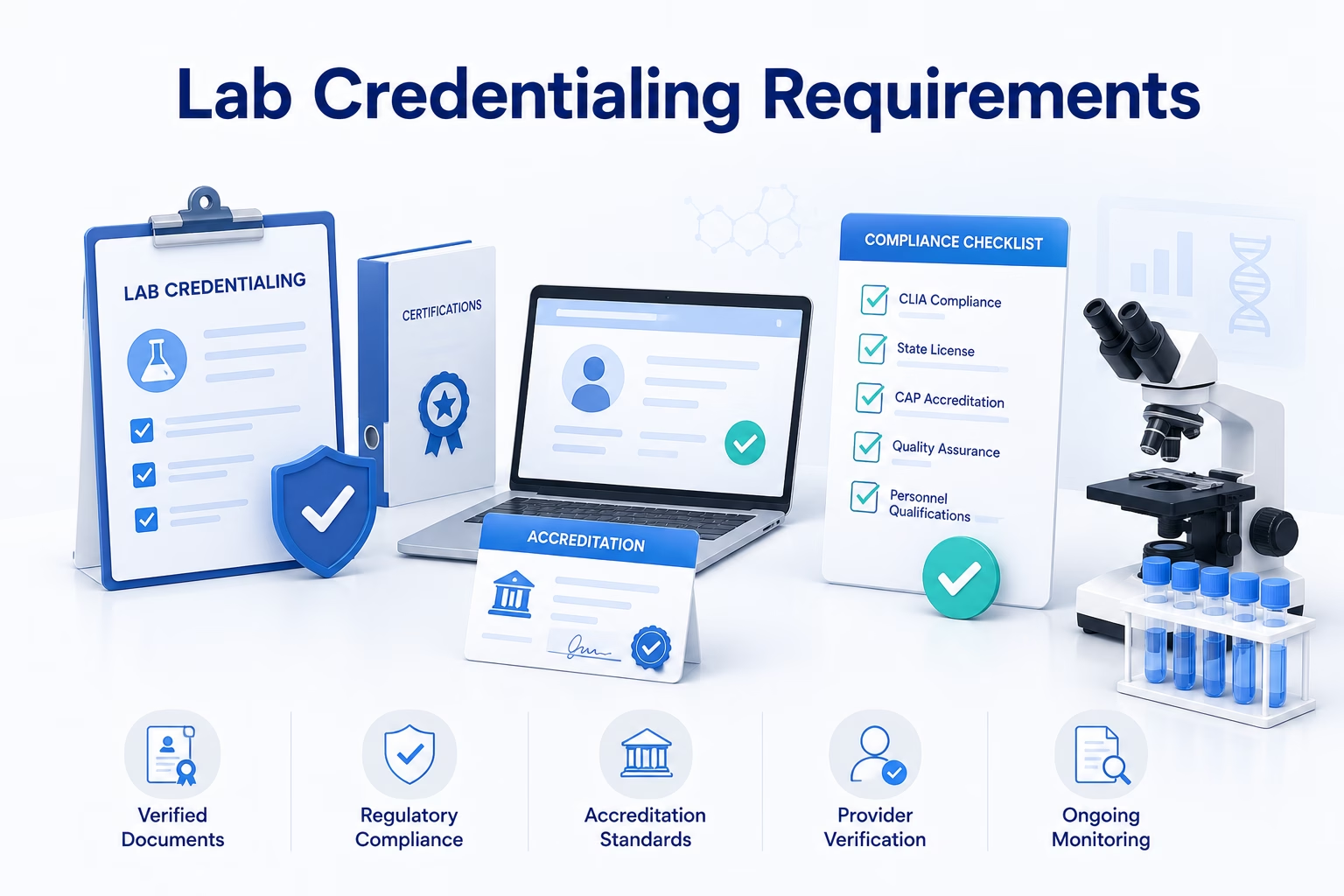
The credentialing verification process involves multiple layers of validation to ensure accuracy and compliance.
Primary Source Verification
This step confirms the authenticity of a provider’s education, training, and certifications directly from issuing institutions. It is one of the most critical steps in preventing fraud and ensuring accuracy.
State License Verification
Providers must hold active and valid licenses in the state where they practice. Any lapse in licensing can lead to immediate compliance issues and billing restrictions.
Regulatory and Sanction Checks
Verification includes reviewing the provider’s status with regulatory bodies to ensure there are no disciplinary actions, sanctions, or exclusions.
Background Screening
A thorough background check helps protect patient safety and reduces organizational risk.
Credentialing Committee Review
A formal review process ensures consistency, accuracy, and compliance before approving providers for patient care and billing.
Ongoing Monitoring and Re-Credentialing
Credentialing is not a one-time process. Continuous monitoring and periodic re-verification ensure that provider information remains current and compliant.
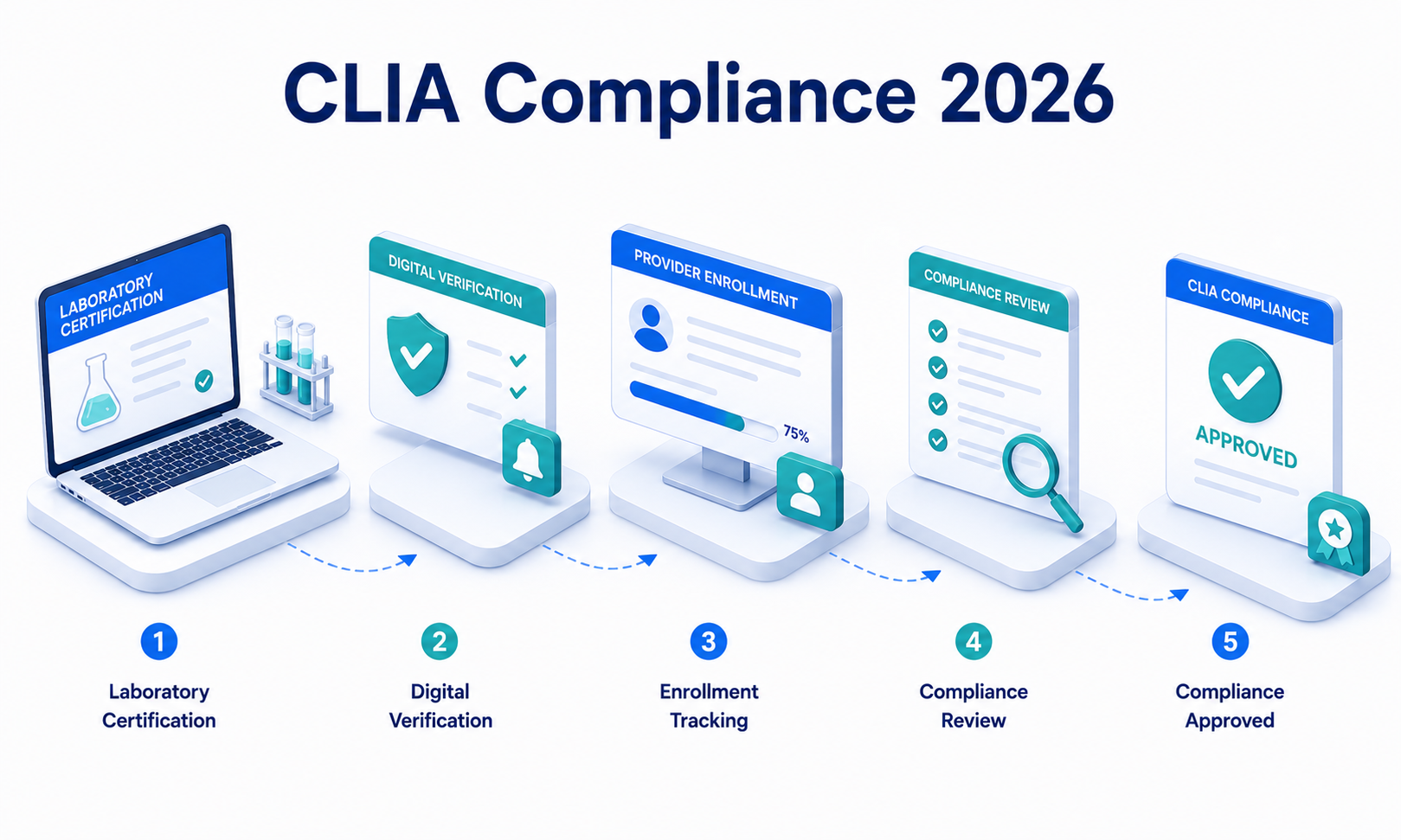
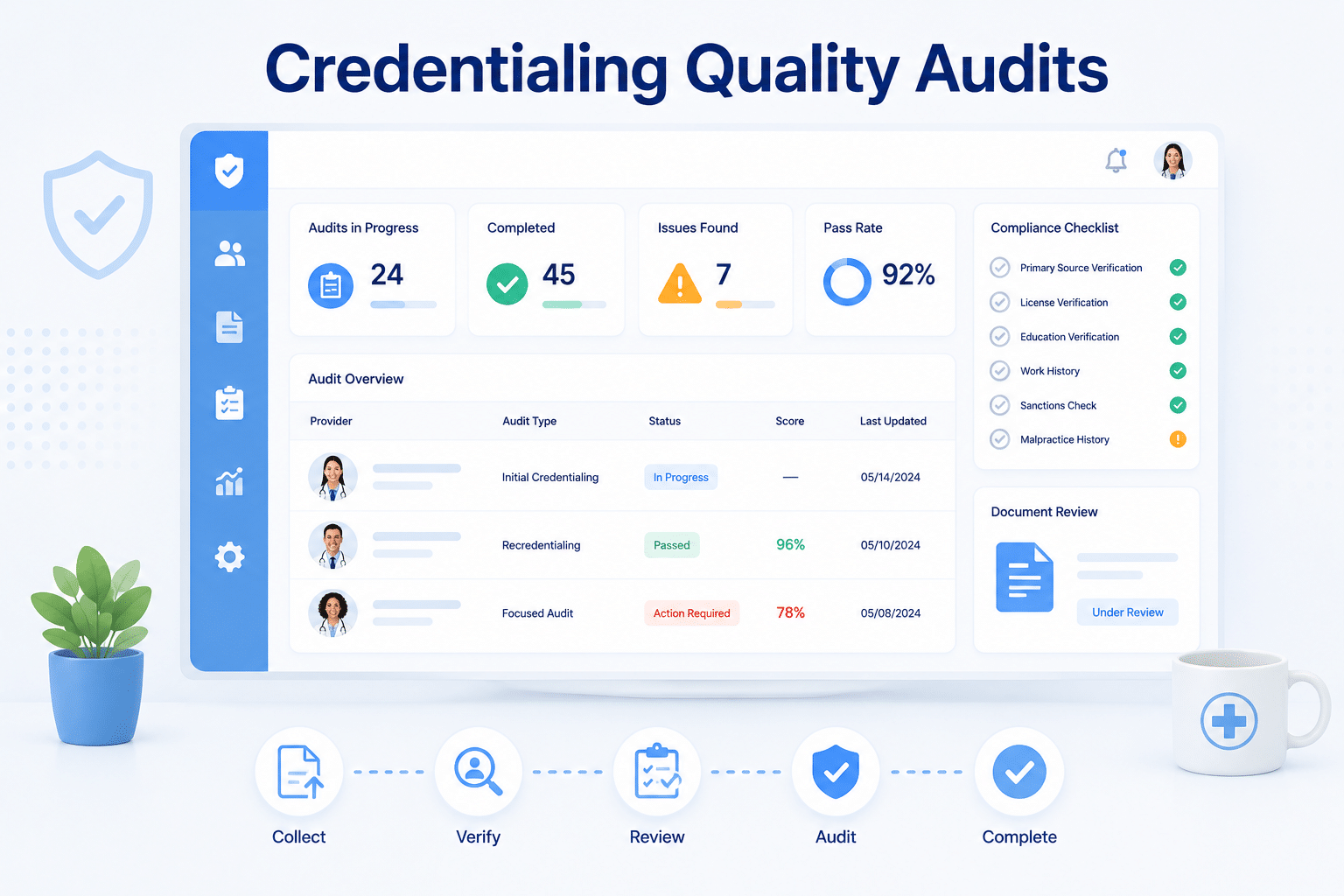
Step-by-Step: Credentialing Verification Process for Healthcare Practices
1. Collect Complete Provider Documentation
Start by gathering all required documents, including licenses, certifications, work history, malpractice insurance, and identification details.
2. Perform Primary Source Verification
Verify all credentials directly with issuing organizations to confirm authenticity and accuracy.
3. Validate Licenses and Regulatory Status
Check state licenses and regulatory databases to ensure providers are in good standing and eligible to practice.
4. Conduct Background and Compliance Checks
Run background screenings and sanction checks to identify any potential risks.
5. Review Through Credentialing Committee
Ensure all verified data is reviewed by a qualified committee before approval.
6. Maintain Ongoing Monitoring Systems
Track expiration dates, renewals, and compliance updates to prevent lapses in credentialing.
Common Challenges in Credentialing Verification
Despite its importance, many practices struggle with credentialing verification due to:
- Incomplete or outdated documentation
- Inconsistent provider data across systems
- Manual processes that increase errors
- Delays in verification responses
These challenges often lead to delays in provider enrollment and billing activation.
To minimize these risks, practices must also focus on how to prevent credentialing delays and improve approval timelines across payers.
Impact on Revenue Cycle Management
The credentialing verification process plays a direct role in revenue generation.
When verification is delayed or inaccurate:
- Providers cannot bill for services
- Claims are denied or delayed
- Cash flow becomes inconsistent
- Administrative workload increases
Over time, these issues can significantly impact practice growth and operational performance.
Best Practices to Improve Credentialing Verification
To streamline the credentialing verification process:
- Standardize documentation collection and review workflows
- Maintain accurate and consistent provider data
- Use digital tools to automate verification tasks
- Train staff on compliance and credentialing standards
A proactive and structured approach reduces errors and improves efficiency.
The Role of Technology in Credentialing Verification
Modern credentialing systems can automate key processes such as primary source verification, license tracking, and compliance monitoring.
These tools help practices:
- Reduce manual errors
- Improve turnaround times
- Enhance data accuracy
- Maintain continuous compliance
Investing in technology is essential for scaling operations and improving efficiency.
Strengthen Your Credentialing Verification Process
The credentialing verification process is a critical component of patient safety, healthcare compliance, and revenue cycle management. Practices that implement a strong credentialing verification process can reduce delays, improve provider onboarding, and ensure consistent billing performance.
If your practice is struggling with credentialing verification or compliance challenges, eClinicAssist provides expert support to streamline your credentialing process, ensure accuracy, and accelerate approvals. Contact us today to strengthen your operations and protect your revenue.