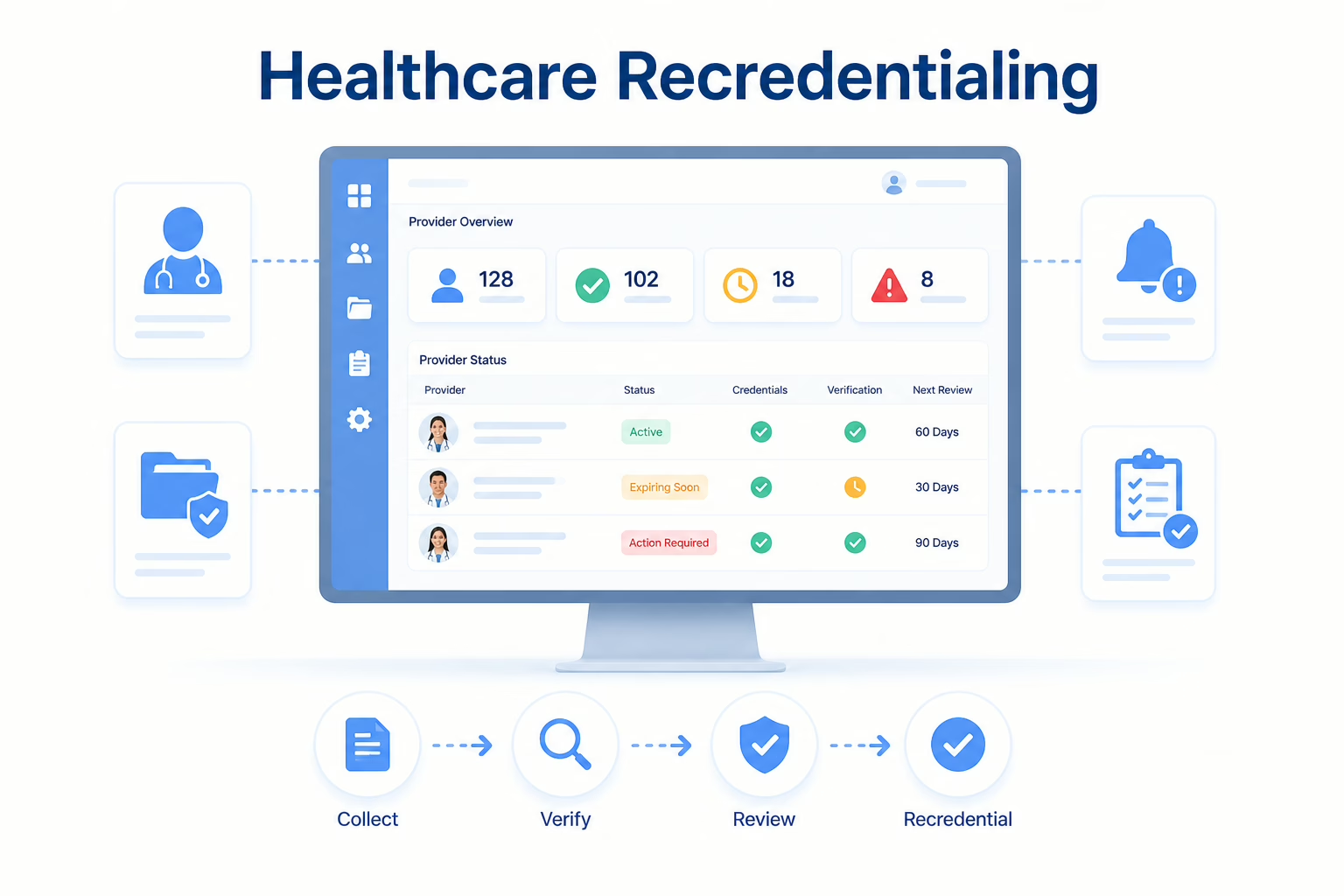
Healthcare recredentialing is the periodic reassessment of a practitioner’s qualifications by a health plan, hospital, healthcare organization, or credentialing entity. It may include updated verification of licensure, certification, malpractice history, sanctions, professional liability coverage, and other criteria. Recredentialing is separate from license renewal, Medicare revalidation, payer enrollment, and clinical privileging.
Initial credentialing is only the beginning of provider qualification management.
Licenses change. Certifications expire. Professional liability policies renew. Practice locations change. New sanctions or adverse actions may appear. Payers and healthcare organizations therefore need processes for reviewing practitioners after initial credentialing.
That process is generally called recredentialing.
What Is Healthcare Recredentialing?
Healthcare recredentialing is a periodic review of a practitioner’s professional qualifications after the practitioner has already completed an initial credentialing process.
Depending on the organization, recredentialing may review:
- Professional license status
- National certification where applicable
- Education or training information when relevant
- Professional liability coverage
- Malpractice history
- Sanctions and disciplinary actions
- Practice information
- Other organization-specific credentialing criteria
The purpose is to determine whether the practitioner continues to satisfy the organization’s credentialing standards.
How Is Recredentialing Different From Initial Credentialing?
| Initial Credentialing | Recredentialing |
|---|---|
| Occurs before or during initial organizational or network participation | Occurs after initial credentialing |
| Establishes baseline professional qualifications | Confirms that relevant qualifications remain current |
| Reviews professional history and credentials | Reviews updated professional information and changes since the prior review |
| May lead to an initial credentialing decision | Supports continued participation decisions |
See our provider credentialing process guide for the initial credentialing workflow.
How Often Does Recredentialing Occur?
There is no universal recredentialing cycle that applies to every payer and healthcare organization.
The frequency depends on:
- Payer requirements
- Credentialing organization policies
- Accreditation standards
- Applicable law or regulation
- Provider type
For organizations following NCQA credentialing standards, practitioners are generally recredentialed at least every 36 months.
That three-year framework should not automatically be applied to every healthcare organization.
Is Medicare Revalidation the Same as Recredentialing?
No.
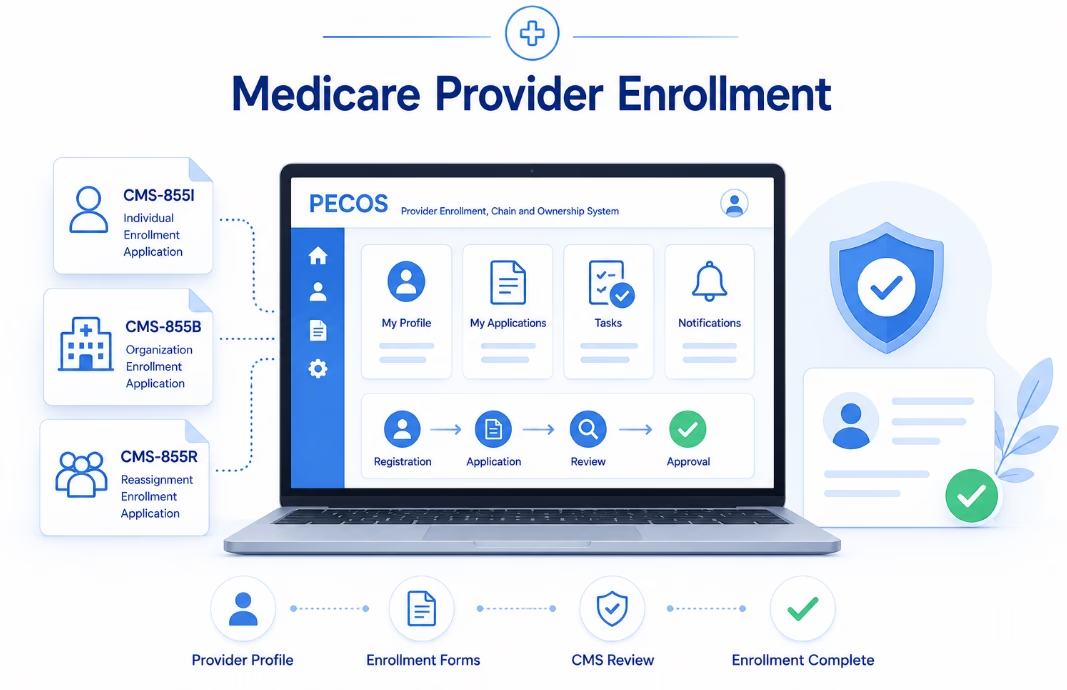
Medicare revalidation is a provider enrollment requirement administered by CMS.
CMS currently states that:
- Most Medicare providers and suppliers generally revalidate every five years.
- DMEPOS suppliers generally revalidate every three years.
- CMS may require off-cycle revalidation.
Medicare revalidation requires providers and suppliers to resubmit and recertify their enrollment information.
It should be tracked separately from commercial payer recredentialing.
Is Recredentialing the Same as License Renewal?
No.
A professional license is issued and renewed by the applicable state licensing authority.
A payer or healthcare organization may verify the license during recredentialing, but the payer does not renew the provider’s license.
Practices should therefore maintain separate workflows for:
- License renewal
- Credentialing
- Recredentialing
- Medicare revalidation
- Payer enrollment maintenance
Is Recredentialing the Same as Reprivileging?
No.
Credentialing evaluates professional qualifications.
Privileging determines which specific clinical activities a practitioner is authorized to perform within an organization.
Hospitals and certain other healthcare organizations may therefore perform recredentialing and reappointment or reprivileging as related but distinct processes.
Current Joint Commission guidance generally permits reappointment and reprivileging periods of up to three years for applicable accredited organizations, unless law or regulation requires a shorter period.
Why Does Healthcare Recredentialing Matter?
Recredentialing gives an organization a structured opportunity to determine whether important provider information has changed since the previous credentialing decision.
Potential changes include:
- License status
- Board certification
- Malpractice history
- Sanctions
- Practice locations
- Professional liability coverage
- Other credentialing information
Without a defined recredentialing process, an organization may continue relying on information collected years earlier.
Does Recredentialing Only Happen Every Few Years?
Formal recredentialing may occur on a defined cycle, but some credentialing information may need monitoring between formal reviews.
NCQA’s current Credentialing Accreditation standards include ongoing monitoring of:
- Practitioner sanctions
- Complaints
- Quality issues
This illustrates an important distinction between periodic recredentialing and ongoing monitoring.
A credentialing program should not necessarily wait until the next formal recredentialing cycle to address significant new information.
What Documents May Be Reviewed During Recredentialing?
Requirements vary, but information may include:
- Professional licenses
- Current certification where applicable
- Professional liability coverage
- DEA registration where applicable
- Updated professional history
- Malpractice information
- Practice locations
- Attestations
- Other payer-specific documents
Not every provider needs every document.
See our provider credentialing documents guide for a broader provider-file checklist.
How Does CAQH Affect Recredentialing?
Many commercial health plans use information from the CAQH Provider Data Portal during credentialing and recredentialing.
DataSpring currently states that providers generally need to re-attest their Provider Data Portal profiles every 120 days, or every 180 days for Illinois providers.
Some directory-management workflows prompt providers to confirm information every 90 days.
Practices should monitor:
- Profile status
- Attestation status
- Expired documents
- Practice locations
- Professional liability information
- Certification and license information
A current CAQH profile does not itself mean that a payer has completed recredentialing.
Should CAQH and Payer Records Match Exactly?
They should be accurate and reasonably consistent where the same information is represented.
However, systems should not be forced to match field for field.
For example:
- CAQH stores professional information for authorized organizations.
- NPPES stores NPI-related information.
- PECOS stores Medicare enrollment information.
- Payers maintain their own network and enrollment relationships.
The goal is to identify genuine discrepancies, not create artificial uniformity between unrelated databases.
Can Missing Recredentialing Cause Claims to Deny?
It can affect payer participation in some circumstances, but the outcome is payer-specific.
A missed recredentialing request may result in:
- Additional payer outreach
- Administrative closure
- Participation review
- Termination or deactivation under applicable payer rules
- Billing issues if the provider’s participation status changes
It should not be stated that every expired credential automatically causes every claim to deny.
Billing teams should verify the actual:
- Provider participation status
- Group affiliation
- Location
- Product
- Effective or termination date
What Credential Expirations Should Practices Track?
Credential expiration management supports recredentialing but is not identical to it.
Depending on provider type, practices may monitor:
- Professional licenses
- Board certification
- DEA registration where applicable
- State controlled-substance registration where applicable
- Professional liability coverage
- Other time-sensitive professional documents
See our credential expiration management guide for a detailed workflow.
How Should a Practice Track Recredentialing?
Every provider should have a clear recredentialing record.
A useful tracker can include:
- Provider name
- Payer or organization
- Previous credentialing decision date
- Expected recredentialing period
- Request received date
- Required documents
- Submission date
- Outstanding items
- Last follow-up
- Next follow-up
- Final decision
Do not rely solely on the payer to remind the practice.
How Early Should Recredentialing Start?
There is no universal number of days that applies to every payer.
The best approach is to:
- Know the payer’s recredentialing cycle.
- Track provider-document expiration dates.
- Respond promptly when the payer initiates recredentialing.
- Begin collecting updates early enough to meet the payer’s stated deadline.
Starting too late can create avoidable pressure, but practices should not invent a universal submission window if the payer does not use one.
What Information Should Be Checked Before Submission?
Before returning a recredentialing application, verify:
- Provider name and identifiers
- License information
- Certification status
- Professional liability coverage
- Practice locations
- Work history where requested
- DEA information where applicable
- Attestations
- Other payer-specific requirements
A second administrative quality review can help identify missing or outdated information before submission.
What Are Common Recredentialing Mistakes?
Confusing recredentialing with Medicare revalidation
They are separate processes with different authorities and timelines.
Waiting for documents to expire
Track expiration dates in advance so updated documents can be available when recredentialing begins.
Assuming CAQH attestation completes recredentialing
CAQH can supply information, but the credentialing organization still performs its own review and decision process.
Using one generic status for every payer
Each payer relationship should have its own recredentialing status and due dates.
Assuming one payer’s cycle applies to another
Use payer-specific requirements whenever available.
Ignoring ongoing monitoring
Significant sanctions, complaints, or professional actions may require review before the next formal recredentialing cycle.
Assuming every lapse causes immediate claim denials
The consequence depends on the payer’s actual participation decision and effective dates.
Healthcare Recredentialing Checklist
| Area | What to Confirm |
|---|---|
| Recredentialing cycle | Payer or organization’s actual cycle documented |
| License | Current status and expiration date verified |
| Certification | Current where applicable |
| Professional liability | Current coverage information available |
| CAQH | Profile and attestation current where used |
| Professional history | Required updates and explanations complete |
| Ongoing monitoring | Applicable sanctions, complaints, or quality-review processes maintained |
| Submission | Payer-specific requirements and deadline confirmed |
| Follow-up | Last action and next action recorded |
| Decision | Final recredentialing outcome documented |
Frequently Asked Questions
What is healthcare recredentialing?
Healthcare recredentialing is the periodic reassessment of a practitioner’s qualifications after initial credentialing to determine whether the practitioner continues to meet an organization’s credentialing standards.
How often does healthcare recredentialing occur?
There is no universal cycle for every organization. NCQA’s current credentialing framework generally requires recredentialing at least every 36 months for organizations subject to those standards.
Is recredentialing the same as Medicare revalidation?
No. Medicare revalidation is a CMS provider enrollment process. Most Medicare providers and suppliers generally revalidate every five years, while DMEPOS suppliers generally revalidate every three years.
Is recredentialing the same as renewing a medical license?
No. Licenses are renewed through the applicable licensing authority. Credentialing organizations may verify the license during recredentialing but do not renew it.
Does CAQH need to be re-attested every 120 days?
DataSpring currently states that Provider Data Portal profiles generally require re-attestation every 120 days, or every 180 days for Illinois providers. Some directory workflows prompt 90-day confirmation.
Does current CAQH status mean recredentialing is complete?
No. CAQH provides professional data to authorized organizations, but the payer or credentialing organization still performs its own review.
Will missing recredentialing automatically cause claims to deny?
Not automatically. The outcome depends on the payer’s policy, the provider’s actual participation status, and applicable effective or termination dates.
Do providers need monitoring between recredentialing cycles?
Some credentialing standards require ongoing monitoring of areas such as sanctions and complaints between formal recredentialing cycles.
Manage Recredentialing as an Ongoing Credentialing Function
Healthcare recredentialing works best when it is separated from other provider-maintenance processes.
Practices should independently track:
- Professional license renewals
- Payer recredentialing
- CAQH attestation
- Professional document expirations
- Medicare revalidation
- Medicaid revalidation where applicable
- Ongoing sanctions or credential monitoring
The goal is not to guarantee continuous reimbursement. It is to maintain accurate provider information, meet applicable credentialing requirements, and identify important changes before they create larger administrative problems.
eClinicAssist supports healthcare organizations with recredentialing administration, provider-document tracking, credential expiration management, CAQH administration, payer follow-up, Medicare and Medicaid enrollment administration, and related provider-management workflows.
eClinicAssist does not make credentialing decisions, renew professional licenses, determine accreditation compliance, or guarantee payer participation or reimbursement.
Contact eClinicAssist to discuss provider recredentialing and payer enrollment support for your organization.
This article provides general administrative information and is not legal, licensing, accreditation, billing, or payer-specific advice. Recredentialing requirements vary by payer, organization, provider type, accreditation program, and applicable law. Verify current requirements with the responsible payer or credentialing organization.