Credential expiration management is essential for maintaining compliance, ensuring uninterrupted provider enrollment, and protecting your revenue cycle. For practice managers and healthcare administrators, even a single expired credential can delay approvals, disrupt operations, and lead to claim denials.
In a highly regulated healthcare environment, staying proactive with credential tracking is not optional—it is critical for operational stability and financial performance.
The Real Risk of Expired Credentials
When provider credentials expire, the consequences extend far beyond administrative inconvenience. Providers may lose their ability to practice, payer contracts may be affected, and claims can be denied for services already rendered.
A simple oversight—like an expired license—can result in weeks of revenue loss, increased administrative workload, and frustrated patients. These disruptions highlight why practices must adopt a structured and proactive credential management system.
Key Systems for Effective Credential Expiration Management
To avoid delays and compliance risks, healthcare practices should implement the following systems:
- Centralized Credential Management: Store all provider credentials, including licenses, certifications, and expiration dates, in a single secure system to improve visibility and reduce errors.
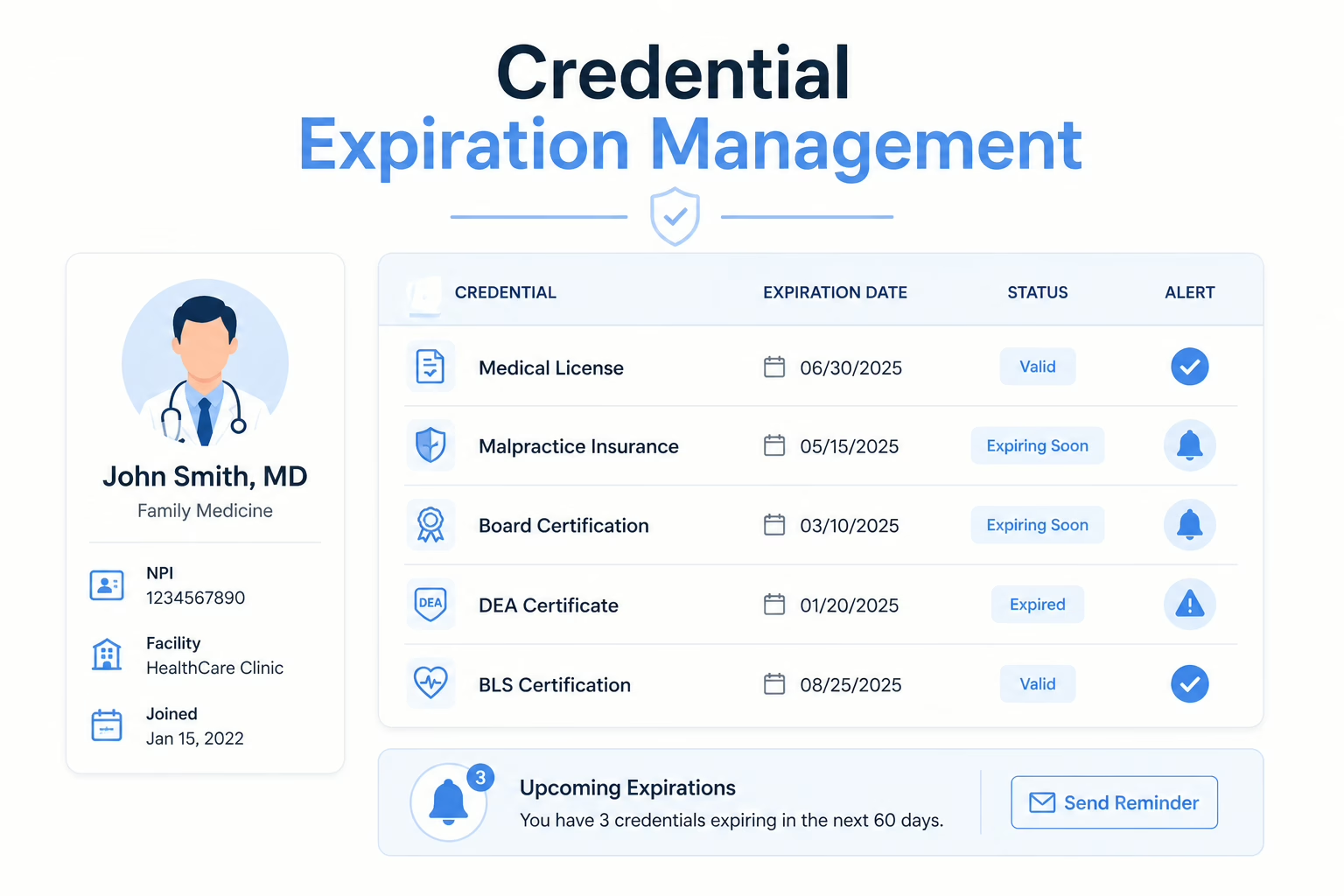
- Automated Alerts and Notifications: Set up automated reminders 90, 60, and 30 days before expiration to ensure timely renewals and prevent lapses.
- Real-Time Provider Communication: Notify providers immediately when credentials are nearing expiration so they can take action without delays.
- Credential Tracking Dashboards: Use dashboards to monitor credential status across providers, helping leadership quickly identify risks and act proactively.
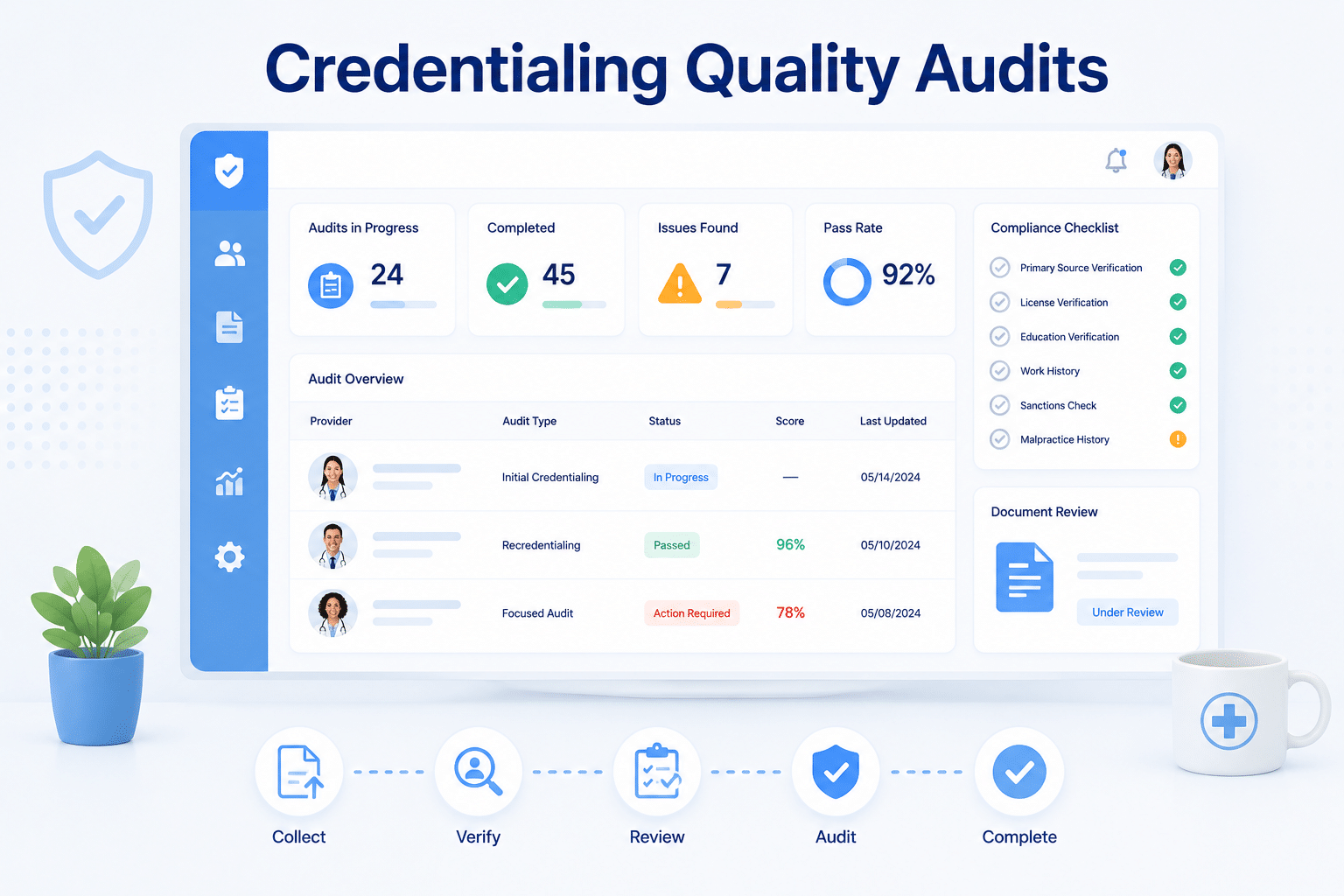
- Regular Credential Audits: Conduct monthly or quarterly reviews to verify document accuracy and ensure compliance before issues arise.
- Data Security and Compliance Controls: Ensure credentialing systems follow HIPAA standards, include access controls, and maintain audit logs to protect sensitive data.
- Updated CAQH Profiles: Maintain accurate and current CAQH profiles to prevent payer-side discrepancies that often cause delays.
- Primary Source Verification: Verify credentials directly with issuing organizations to ensure accuracy and eliminate reliance on outdated or incorrect information.
- Re-Credentialing Timeline Tracking: Monitor payer-specific re-credentialing deadlines to avoid provider deactivation or interruptions in billing.
- Standardized Credentialing Workflows: Establish consistent processes for document collection, verification, and updates to improve efficiency across teams.
To strengthen this process, practices should also ensure all credentialing documents are complete and consistently maintained.
Impact on Revenue Cycle and Operations
Credential expiration management directly affects revenue cycle management. When credentials lapse, providers cannot bill, resulting in denied claims, delayed payments, and increased accounts receivable.
Billing teams are forced to spend additional time correcting errors and resubmitting claims, which slows down operations and increases administrative burden. Over time, this impacts overall practice efficiency and growth.
Practices that proactively manage credential timelines also focus on reducing payer enrollment delays to improve claim approvals and revenue flow.
Common Mistakes to Avoid
Many practices still rely on manual tracking systems, which increases the risk of missed deadlines and incomplete documentation. Lack of coordination between credentialing, billing, and compliance teams often leads to avoidable errors.
Failing to update systems after renewals or ignoring early warning signs can result in unnecessary financial losses and compliance risks.
Stay Ahead with Proactive Credential Management
Credential expiration management is critical for preventing delays, maintaining compliance, and protecting your practice’s revenue. A proactive system ensures providers remain active, claims are processed without disruption, and patient care continues smoothly.
Practices that invest in structured credential management systems experience fewer delays, improved operational efficiency, and stronger financial performance. If your practice needs expert help managing credentialing and avoiding costly disruptions, contact eClinicAssist today for professional support.