Primary source verification in credentialing is an important process used by healthcare organizations, insurance payers, and credentialing teams to confirm professional qualifications. It helps determine whether information supplied by a healthcare practitioner is accurate, current, and supported by an acceptable verification source.
Primary source verification (PSV) involves confirming applicable professional credentials directly with the original issuing authority or through an acceptable authorized verification source. Depending on the relevant requirements, this may include professional licenses, education, training, board certification, and other qualifications.
For practice managers, healthcare administrators, and credentialing professionals, understanding PSV helps improve provider onboarding, documentation quality, and compliance with applicable credentialing requirements.
What Is Primary Source Verification in Healthcare Credentialing?
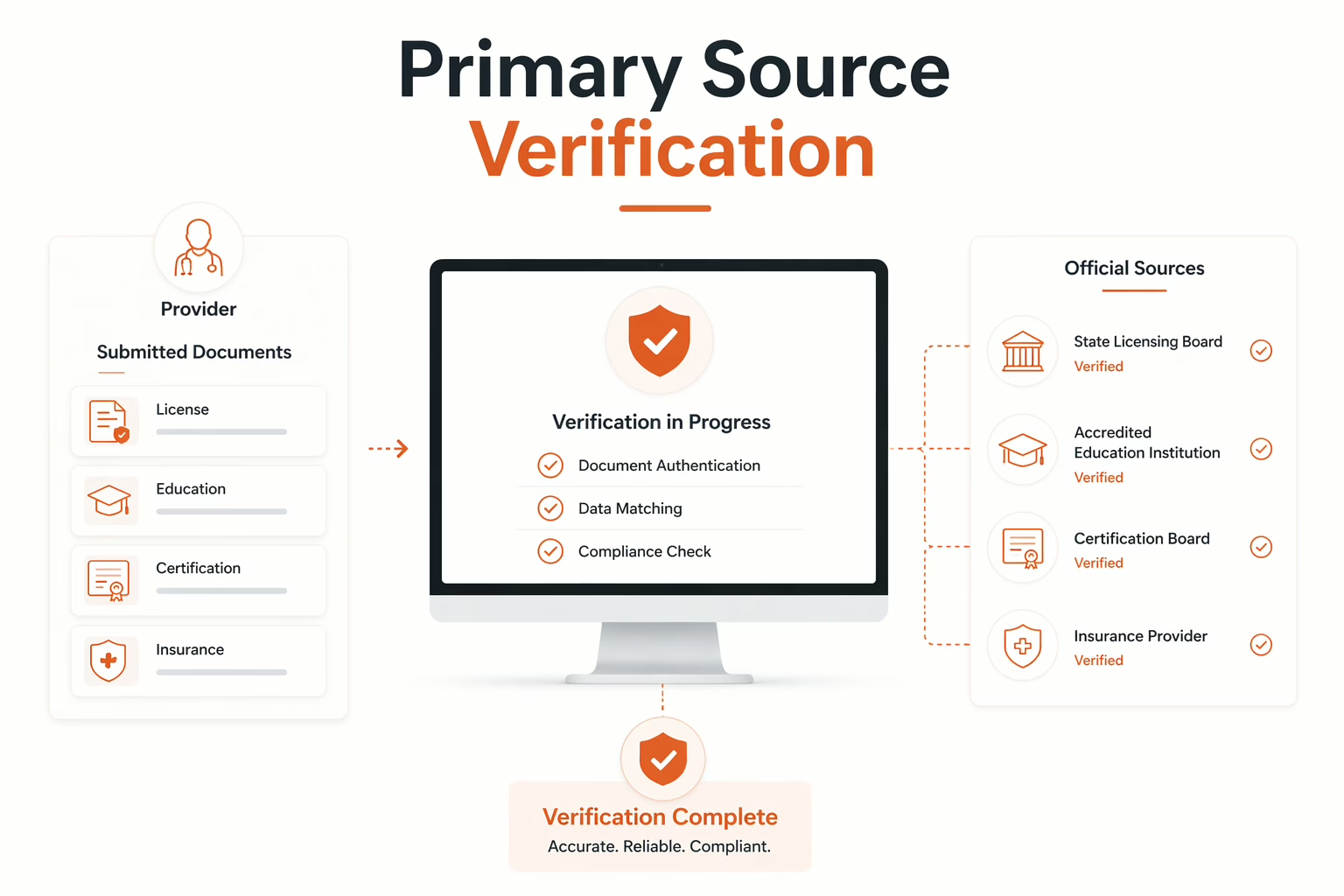
Primary source verification is the process of confirming a reported credential with the organization that issued it or another source permitted under the applicable verification standards.
For example, a physician may submit a copy of a current medical license during credentialing.
The credentialing organization may verify the license through the relevant state medical board’s official licensing database.
This verification helps confirm that the license belongs to the practitioner and reflects the appropriate status at the time of review.
Verification requirements vary according to the credential being reviewed, the organization performing credentialing, and applicable payer or accreditation standards.
For more information about the complete onboarding process, see our provider credentialing process guide.
Primary Source Verification vs. Secondary Source Verification
Not every document provided by a healthcare professional constitutes evidence of primary source verification.
A distinction should be made between collecting a document and independently confirming its authenticity or status.
| Primary Source Verification | Secondary Source Documentation |
|---|---|
| Verification through the original issuing authority or another acceptable authorized source. | Information supplied by the practitioner or obtained from another nonauthoritative source. |
| May confirm the current status of a professional license. | May include a photocopy of a professional license. |
| May establish a qualification through an official educational or certifying source. | May include a diploma or certificate supplied by the applicant. |
| Requires documentation appropriate to the applicable verification standard. | Supports document collection but may not satisfy required independent verification. |
For example, a scanned nursing license may provide useful identifying information, but it may not satisfy a requirement to verify current licensure through the licensing board.
Important: Some credentialing standards permit recognized equivalent sources, authorized agents, or qualifying credentials verification organizations. Verification does not always require contacting the original institution individually.
Which Credentials Require Primary Source Verification?
Primary source verification requirements differ by healthcare profession, credentialing program, and organizational responsibility.
The following table summarizes common verification considerations.
| Credential or Information | Potential Verification Source | Important Consideration |
|---|---|---|
| Professional license | State licensing board or acceptable official verification source. | Often requires verification of current and valid licensure. |
| Board certification | Relevant professional specialty board or recognized verification source. | Requirements depend on the practitioner and applicable standards. |
| Education | Educational institution or acceptable recognized source. | Specific verification requirements vary by credentialing program. |
| Residency or specialty training | Training program or acceptable verification source. | May be required for the relevant professional category. |
| DEA registration | Applicable authoritative registration source. | Relevant when registration is required for the practitioner’s activities or participation. |
| Professional work history | Provider disclosures and other sources required by the applicable process. | Review is important, but direct verification of every employer is not universally required. |
| Malpractice history | Applicable insurer information, provider disclosures, or authorized reporting sources. | Verification and disclosure requirements differ by organization. |
| Exclusion and sanction information | Relevant government or authorized reporting databases. | These checks are distinct from verification of a professional qualification. |
A credentialing team should identify the standards applicable to each provider category before deciding which information must be verified and which methods are acceptable.
Why Primary Source Verification Matters
1. Confirms Professional Qualifications
PSV helps healthcare organizations evaluate whether a practitioner holds the reported professional credentials.
This may include confirming that a license is active, that an applicable certification remains valid, or that required professional training has been completed.
Verification provides evidence for credentialing decisions rather than relying solely on information submitted by the applicant.
2. Supports Patient Safety and Appropriate Provider Onboarding
Confirming relevant professional qualifications is an important part of assessing whether a healthcare practitioner meets applicable eligibility requirements.
However, primary source verification alone does not establish overall clinical competence or guarantee patient safety.
Organizations may also need to review professional experience, clinical performance, references, privileging requirements, and other relevant information.
3. Supports Applicable Credentialing Standards
Healthcare organizations may be subject to credentialing requirements established by payers, accreditation bodies, licensing authorities, and contractual arrangements.
For example, NCQA maintains credentialing accreditation and certification programs, while The Joint Commission establishes requirements for organizations participating in its applicable accreditation programs. For additional guidance, see Joint Commission credentialing standards.
Not every independent medical practice must satisfy every standard from both organizations.
Review the NCQA Credentialing Program and The Joint Commission’s primary source verification guidance.
4. Helps Identify Inaccurate or Misrepresented Credentials
Verification can reveal discrepancies between a provider’s application and information available from an authoritative source.
Examples may include:
- An expired professional license.
- Incorrect professional license information.
- An inaccurate board certification claim.
- Incomplete training documentation.
- An unresolved licensing restriction.
- A credential attributed to the wrong individual.
Discrepancies should be investigated and documented before the responsible organization makes the relevant credentialing decision.
5. Reduces Avoidable Administrative Risks
Incomplete verification records may create additional requests during payer credentialing or accreditation reviews.
Organized verification procedures can help identify missing information earlier.
However, successful verification does not independently guarantee credentialing approval, payer enrollment, or reimbursement.
How Primary Source Verification Works: Step-by-Step
Step 1: Collect Provider Information
Begin by gathering the information required for the specific provider and credentialing process.
This may include:
- Legal provider name.
- Individual NPI.
- Professional license numbers.
- Education and training history.
- Board certifications.
- Applicable DEA registration.
- Professional work history.
- Relevant malpractice and disciplinary disclosures.
Verify that identifying information is accurate before beginning external checks.
Our provider credentialing documents checklist provides a broader overview of commonly requested records.
Step 2: Identify the Applicable Verification Requirements
Determine which verification standards apply to the practitioner and organization.
Requirements may be established by:
- Insurance payer credentialing programs.
- Applicable NCQA standards.
- Applicable Joint Commission standards.
- State licensing requirements.
- Hospital medical staff credentialing policies.
- Delegated credentialing agreements.
- Other relevant organizational or contractual requirements.
Identify the required credentials, acceptable verification sources, and any timing or documentation requirements.
Step 3: Verify Information Through an Acceptable Source
Access the original issuing authority or another source accepted under the applicable verification criteria.
Depending on the credential, acceptable methods may include:
- Official state licensing board databases.
- Secure verification from educational institutions.
- Professional certification board databases.
- Documented communication with the issuing organization.
- Approved agents or recognized verification services.
- Qualifying credentials verification organizations.
A credentialing team should not assume that every third-party database is acceptable for every credential.
The verification source must satisfy the relevant requirements.
Step 4: Document the Verification
Verification results should be recorded in a manner that demonstrates what was checked and how the information was confirmed.
A useful verification record may include:
- Provider identifier.
- Credential reviewed.
- Verification source.
- Date of verification.
- Person or authorized system completing the check.
- Information confirmed.
- Any restrictions, discrepancies, or exceptions.
- Supporting evidence or verification reference.
- Final review status.
The Joint Commission’s guidance emphasizes appropriate documentation of the verification date, person conducting the verification, information verified, and results.
Step 5: Investigate Discrepancies
When the verification result differs from the application, the credentialing team should determine the cause.
For example, a license record may show a different surname because of a legal name change.
Other discrepancies may involve an expired credential or information that was entered incorrectly.
Obtain clarification or supporting evidence as appropriate and escalate unresolved eligibility concerns to the responsible credentialing or compliance decision-maker.
Step 6: Complete the Applicable Credentialing Review
After verification activities are completed, the results should be provided to the appropriate organization or decision-making body.
Primary source verification supports credentialing decisions but is not itself a guarantee of approval.
Depending on the organization, additional credentialing committee, contracting, or payer enrollment steps may remain outstanding.
Step 7: Monitor Changes and Reverification Requirements
Credentialing responsibilities may continue after initial approval.
Organizations should monitor relevant changes and perform additional verification when required by applicable standards, policies, contracts, or specific events.
Examples include professional license renewal, recredentialing, new disclosures, or changes affecting participation eligibility.
How Do NCQA and The Joint Commission Treat Primary Source Verification?
NCQA and The Joint Commission both address credential verification, but their programs apply to different organizational activities and accreditation arrangements.
NCQA Credentialing Requirements
NCQA Credentialing Accreditation evaluates organizations that perform credentialing and recredentialing functions.
Its Credentialing Certification program addresses organizations that verify professional credentials and report results to their clients.
Depending on the applicable program, recognized sources or contracted agents of original sources may be acceptable for specified credentialing activities.
The Joint Commission Requirements
The Joint Commission requires qualifying accredited organizations to follow the verification standards relevant to their accreditation program.
Its guidance permits verification through original sources and other acceptable arrangements when the stated requirements are met.
Healthcare organizations are responsible for demonstrating that required verification activities have been appropriately completed.
Important: These standards should not be applied indiscriminately to every practice. An independent physician office, hospital medical staff department, and accredited credentialing verification organization may have different responsibilities.
Is an NPDB Query the Same as Primary Source Verification?
No. A National Practitioner Data Bank (NPDB) query and primary source verification serve different purposes.
The NPDB contains certain medical malpractice payment reports and adverse professional actions.
Eligible healthcare organizations may use NPDB information as part of credentialing, privileging, employment, or other authorized decisions.
However, an NPDB report should not be treated as a universal replacement for professional license or educational verification.
Access to NPDB reports is restricted under federal rules.
Eligible organizations must meet registration and querying requirements, and authorized agents may perform queries on their behalf when permitted.
Review the official NPDB querying guidance.
Common Primary Source Verification Mistakes
1. Treating a Copy of a License as Independent Verification
A provider-supplied license copy may contain useful information, but it does not necessarily demonstrate that the license status was independently checked.
Use an acceptable verification source when independent verification is required.
2. Using an Unapproved Third-Party Database
Not every website or commercial database qualifies as an acceptable source for every credential.
Confirm the source’s eligibility under the applicable verification standard.
3. Missing Verification Documentation
A credential may have been checked, but the organization may lack evidence showing when the verification occurred or what information was confirmed.
Maintain records that satisfy the relevant documentation requirements.
4. Overlooking Credential Restrictions
A professional license may exist but have restrictions or other status information requiring further review.
Check the details relevant to the credentialing decision rather than relying only on the presence of a license number.
5. Failing to Resolve Name or Identity Discrepancies
Name changes, inconsistent identifying information, or incorrectly matched records may create verification complications.
Investigate discrepancies before concluding that the credential belongs to the applicant.
6. Confusing Verification With Payer Enrollment
Completing PSV does not automatically establish a provider’s participation with an insurance company.
Separate credentialing decisions, contracting, group affiliation, and enrollment effective dates may still be required.
How Primary Source Verification Relates to Provider Enrollment and Billing
Primary source verification supports credentialing, which may be an important step in the broader insurance participation process.
For example, a new physician may be waiting for a commercial payer to complete its credentialing review.
If the payer requires additional professional verification, its onboarding process may remain pending until the necessary information is obtained.
The practice may also need to complete contracting and provider-group affiliation steps before billing as an in-network provider.
However, not every claim denial or reimbursement delay is caused by primary source verification.
Other issues may involve eligibility, coding, prior authorization, medical necessity, incorrect provider identifiers, or incomplete payer enrollment.
Read our guide to reducing payer enrollment delays for additional administrative strategies.
Can Technology Improve Primary Source Verification?
Credentialing platforms and electronic verification systems can help organize provider information and reduce repetitive administrative work.
Depending on the available integrations, technology may support:
- Provider document collection.
- Identification of missing information.
- Verification status tracking.
- License and certification expiration reminders.
- Centralized verification records.
- Assignment of unresolved verification issues.
- Reporting on credentialing progress.
Some approved electronic services can provide authoritative verification results through recognized sources.
However, artificial intelligence or automated document extraction does not automatically satisfy a primary source verification requirement.
The verification source, method, evidence, and responsible organization must meet the applicable standards.
Technology should support appropriate controls, access permissions, privacy protections, and human oversight.
Primary Source Verification Checklist for Healthcare Practices
- Identify the provider and applicable credentialing category.
- Collect accurate identifying information.
- Gather relevant professional documents.
- Determine applicable payer or accreditation standards.
- Identify credentials requiring primary source verification.
- Use acceptable verification sources.
- Confirm current professional licensure where required.
- Verify relevant education and training when required.
- Review applicable board certifications.
- Check prescribing registrations when applicable.
- Document the verification source and date.
- Retain required supporting evidence.
- Investigate unresolved discrepancies.
- Escalate eligibility concerns appropriately.
- Communicate completed verification to the relevant credentialing team.
- Track future expiration and recredentialing requirements.
The checklist should be customized according to the applicable provider type and credentialing program.
How eClinicAssist Supports Primary Source Verification Workflows
Coordinating professional verification and payer credentialing activities can require substantial administrative work, particularly for practices onboarding multiple providers.
eClinicAssist supports healthcare organizations with provider document management, credentialing application preparation, verification coordination, payer follow-up, and enrollment tracking.
Our team can help practices organize the information needed for credentialing, identify missing documents, coordinate applicable verification activities, and maintain clearer administrative records.
Formal credentialing decisions, restricted database queries, and verification responsibilities remain subject to the applicable payer, authorized organization, accreditation standards, and legal requirements.
Need assistance managing provider documentation, credentialing verification, or insurance enrollment?
Contact eClinicAssist to discuss your credentialing needs.
Frequently Asked Questions About Primary Source Verification
What is primary source verification in credentialing?
Primary source verification is the process of confirming applicable professional qualifications directly with the original issuing organization or another source accepted under the relevant credentialing standards.
Why is primary source verification important?
PSV helps organizations assess professional qualifications using reliable evidence, identify inaccurate information, and meet applicable credentialing requirements.
Does every credential require primary source verification?
No. Requirements depend on the credential category, provider type, payer agreement, accreditation program, and applicable laws or organizational policies.
Can a state medical board website be used for license verification?
Yes, an official state licensing board website may be an acceptable primary verification source when it provides the necessary information and satisfies the applicable standards.
Is a photocopy of a medical license considered primary source verification?
Generally, a copy provided by the practitioner does not independently establish verification of current license status when primary source verification is required.
Can a credentials verification organization perform PSV?
Yes. Qualifying credentials verification organizations or approved agents may perform verification activities when their methods and sources satisfy the applicable requirements.
Is an NPDB query required for every healthcare practice?
No. NPDB querying requirements and permissions depend on the organization’s legal eligibility, purpose, and applicable obligations. Access is not universally available to all medical practices or credentialing vendors.
Does primary source verification guarantee payer approval?
No. PSV is one component of credentialing. Insurance participation may also require contracting, organizational affiliation, enrollment, and confirmation of an effective date.
Can artificial intelligence replace primary source verification?
AI may assist with document management and administrative review, but it does not automatically replace required verification through acceptable authoritative sources.
Disclaimer: This article provides general educational and administrative information about primary source verification, healthcare credentialing, and provider enrollment. It does not constitute legal, regulatory, accreditation, credentialing, or billing advice. Requirements vary by provider type, payer, organization, accreditation program, and applicable regulations. Confirm current standards with the relevant payer, licensing authority, or accreditation organization. eClinicAssist does not guarantee credentialing approval, network participation, verification outcomes, processing times, or reimbursement.