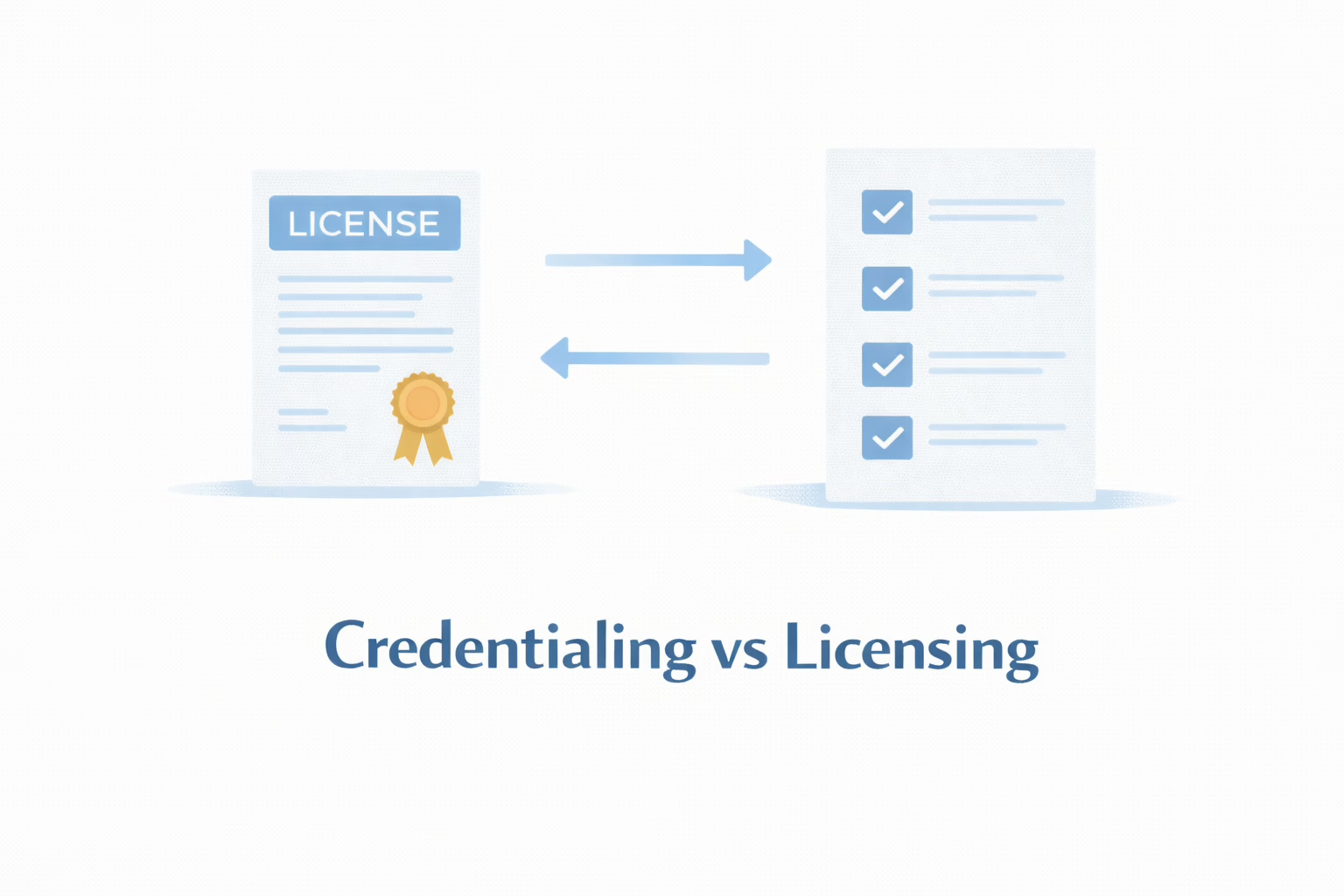
Credentialing vs licensing describes two different healthcare processes. Licensing is legal authorization from a state or other government authority to practice a regulated profession. Credentialing is a separate review of a provider’s qualifications by a payer, hospital, health system, or other healthcare organization. Neither process should be confused with payer enrollment, contracting, or billing activation.
Healthcare practices often use the terms licensing and credentialing together because the workflows overlap. However, they answer different questions. Our guide to the different types of healthcare credentialing explains how these processes fit together.
Licensing asks: Is this professional legally authorized to practice?
Credentialing asks: Does this provider meet this organization’s qualification standards?
Understanding the difference helps practices plan provider onboarding, payer enrollment, facility relationships, and renewals more accurately.
What Is the Difference Between Credentialing and Licensing?
| Area | Licensing | Credentialing |
|---|---|---|
| Purpose | Establishes legal authority to practice a regulated profession | Evaluates whether the provider meets an organization’s qualification standards |
| Who controls it? | State licensing board or other government authority | Health plan, hospital, health system, physician organization, CVO, or other healthcare organization |
| Typical review | Education, examinations, training, disclosures, and other state requirements | License, education, training, work history, sanctions, malpractice history, insurance, and other credentialing criteria |
| Geographic scope | Usually jurisdiction specific | Organization or network specific |
| Renewal | According to the applicable licensing authority | Recredentialing and monitoring according to organizational or payer requirements |
The two processes interact, but one does not replace the other.
What Is Healthcare Provider Licensing?
Professional licensing is the legal authorization to practice a regulated healthcare profession within a jurisdiction.
For physicians, state medical boards evaluate whether applicants meet the requirements established under state law.
FSMB explains that physician licensing review can include:
- Medical education
- Postgraduate training
- Performance on national licensing examinations
- Fitness to practice
- Application disclosures
- Prior professional history
Requirements for nurse practitioners, physician assistants, therapists, psychologists, social workers, dentists, and other professionals are governed by their applicable state boards or agencies.
For a detailed workflow, see our healthcare provider licensing guide.
What Does a Professional License Allow a Provider to Do?
An active professional license establishes that the provider is legally authorized to practice within the scope permitted by the applicable jurisdiction.
However, a license alone does not automatically mean the provider is:
- Credentialed with an insurance company
- Contracted as an in-network provider
- Enrolled with Medicare
- Enrolled with Medicaid
- Privileged at a hospital
- Affiliated with a specific group practice
Those are separate administrative relationships.
Is Board Certification the Same as Licensing?
No.
FSMB states that physicians are licensed for the general practice of medicine and are not licensed according to specialty.
Specialty board certification is a separate professional credential.
It may still matter for:
- Hospital privileges
- Payer participation
- Employment
- Specialty qualification requirements
Practices should therefore track medical licenses and board certifications separately.
What Is Provider Credentialing?
Provider credentialing is the process an organization uses to review and verify a healthcare professional’s qualifications.
Depending on the organization, credentialing may review:
- Professional license
- Education
- Postgraduate training
- Work history
- Board certification when applicable
- Professional liability coverage
- Sanctions and disciplinary history
- Malpractice history
- DEA registration when applicable
- Other organization-specific requirements
NCQA’s credentialing framework includes verification of practitioner credentials, monitoring of sanctions and complaints, peer or committee review, recredentialing, and other credentialing controls.
Our provider credentialing process guide explains the full workflow in more detail.
What Is Primary Source Verification?
Primary source verification means confirming a credential with the authoritative organization responsible for that credential, or another recognized source allowed under the applicable credentialing standard.
For example, credentialing may involve verification with:
- State licensing boards
- Educational institutions or accepted verification sources
- Certification boards
- Other recognized credential sources
NCQA credentialing and CVO standards specifically address verification through primary sources, recognized sources, or contracted agents of primary sources.
See our primary source verification guide for a deeper explanation.
Does Licensing Have to Be Completed Before Credentialing Starts?
Not necessarily.
A credentialing organization may allow portions of the application, document collection, or verification process to begin while a license application is still pending.
However, if an active professional license is legally required for the provider’s practice, that license generally becomes an important credential that must be verified before final approval or clinical practice.
The safest operational approach is to coordinate the two workflows rather than assuming credentialing must remain completely inactive until the licensing process is finished.
Does Credentialing Approval Mean a Provider Can Bill Insurance?
Not necessarily.
This is one of the most important distinctions for practice managers.
After credentialing, additional payer steps may include:
- Contracting
- Provider enrollment
- Group affiliation
- Practice-location enrollment
- Payer-system loading
- Confirmation of an effective date
A provider can therefore pass credentialing but still not be active under the intended billing arrangement.
For commercial payer workflows, see our insurance credentialing process guide.
Where Does Medicare Enrollment Fit?
Medicare enrollment is another separate process.
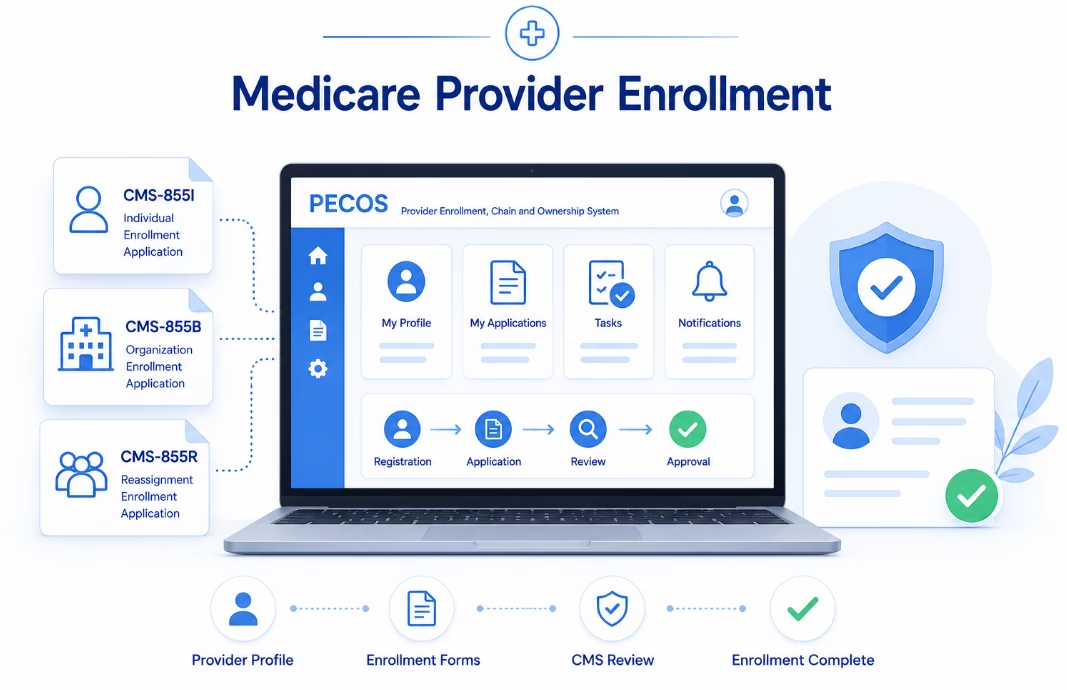
CMS uses the Provider Enrollment, Chain, and Ownership System, or PECOS, for online Medicare enrollment management.
CMS currently instructs providers and suppliers to:
- Obtain the applicable NPI.
- Complete the Medicare enrollment application.
- Submit supporting documentation.
- Work with the applicable Medicare Administrative Contractor during processing.
PECOS is also used to update and revalidate existing Medicare enrollment information.
Professional licensing, commercial payer credentialing, and Medicare enrollment should therefore be tracked as separate workflows.
Where Does Payer Enrollment Fit?
Payer enrollment establishes the provider or organization in the payer’s administrative and billing system.
Depending on the payer, enrollment may involve:
- Provider demographic information
- Group information
- TIN
- Individual and organizational NPIs
- Practice locations
- Network products
- Group affiliations
- Banking information
- Effective dates
This is why licensing, credentialing, and enrollment should not be represented as three names for the same process.
Where Does Hospital Privileging Fit?
Hospital privileging is also separate.
A hospital may first credential a practitioner by reviewing professional qualifications and then grant specific clinical privileges defining what the practitioner may perform within that organization.
A provider can therefore be:
- Licensed but not hospital credentialed
- Credentialed but not granted a particular privilege
- Hospital privileged but not in-network with a patient’s payer
Our credentialing vs. privileging vs. enrollment guide explains these distinctions further.
Credentialing vs Licensing: Step-by-Step Comparison
Typical licensing workflow
- Confirm the appropriate state licensing authority.
- Review profession-specific eligibility requirements.
- Submit the licensing application.
- Complete required verification or background procedures.
- Respond to board requests.
- Receive and verify license issuance.
- Track renewal and ongoing requirements.
Typical credentialing workflow
- Collect provider information and documentation.
- Submit the applicable credentialing application or provider data.
- Verify required credentials through approved sources.
- Review sanctions, professional history, and other required information.
- Resolve discrepancies or missing information.
- Complete the organization’s approval process.
- Maintain ongoing monitoring and recredentialing as required.
The actual sequence varies by payer, hospital, credentialing organization, provider type, and state.
How Are Licensing and Credentialing Connected?
Licensing information is often part of the credentialing review.
For example, a payer may verify:
- License number
- Licensing state
- Current status
- Expiration date
- Restrictions or disciplinary action
However, the licensing board and payer remain separate decision-makers.
The board determines legal licensure status. The credentialing organization determines whether the provider satisfies its participation or organizational criteria.
What Happens if a Provider’s License Expires?
An expired required professional license can create serious legal and operational problems.
Depending on the circumstances, it can affect:
- Legal authority to practice
- Employment
- Payer credentialing status
- Hospital privileges
- Provider enrollment
- Claims or reimbursement
The exact payer and billing consequences should be verified rather than assuming every expired license produces the same denial outcome.
What Happens if Recredentialing Is Missed?
Credentialing is not necessarily permanent.
Health plans and healthcare organizations may periodically recredential providers and perform ongoing monitoring between formal review cycles.
NCQA’s credentialing standards specifically address recredentialing cycles and ongoing monitoring.
If a payer requests recredentialing information, the practice should respond within the applicable requirements and confirm the provider’s resulting participation status.
See our provider recredentialing process guide for more detail.
Common Credentialing vs Licensing Mistakes
Calling everything credentialing
Professional licensing, payer credentialing, enrollment, contracting, and privileging should be tracked separately.
Assuming an active license means the provider is in-network
A license establishes legal authority to practice. It does not establish participation with an insurer.
Assuming credentialing means billing is active
The payer may still need to complete enrollment, affiliation, contracting, or effective-date setup.
Waiting for licensing to finish before doing any credentialing preparation
Some documentation and credentialing work may be started earlier, depending on the organization.
Tracking only one expiration date
A provider may have separate renewal dates for:
- Professional license
- DEA registration where applicable
- Professional liability coverage
- Board certification
- Credentialing or recredentialing activity
Assuming all provider data must be identical everywhere
Different systems serve different administrative purposes. The goal should be accurate, current information appropriate to each system, not mechanical duplication of every field.
Credentialing vs Licensing Checklist
| Question | Licensing | Credentialing |
|---|---|---|
| Who reviews it? | Government licensing authority | Payer, hospital, healthcare organization, or credentialing organization |
| What does it establish? | Legal professional authorization | Organizational qualification or participation eligibility |
| Is professional education reviewed? | Often | Often |
| Is the professional license checked? | The board issues it | Usually verified as part of credentialing |
| Does it establish payer billing? | No | Not necessarily, enrollment and contracting may still be required |
| Does it require maintenance? | Yes, according to licensing rules | Yes, through recredentialing and monitoring where applicable |
Frequently Asked Questions
What is the simplest difference between licensing and credentialing?
Licensing is legal authorization from a government authority to practice a regulated profession. Credentialing is an organization’s review of the provider’s qualifications for participation or appointment.
Can a provider be licensed but not credentialed?
Yes. A provider may have an active state license but not yet be credentialed by a particular payer, hospital, or healthcare organization.
Can credentialing start before a license is issued?
Sometimes. An organization may begin document collection or portions of credentialing while licensure is pending. The required active license generally must still be verified before final approval or practice when applicable.
Does credentialing approval mean the provider can bill insurance?
Not always. Contracting, enrollment, group affiliation, location setup, and a confirmed effective date may still be required.
Is Medicare enrollment the same as credentialing?
No. Medicare has a separate enrollment process administered through CMS and PECOS. Professional licensing and credentialing information may support the application, but Medicare enrollment is its own process.
Is board certification required for a medical license?
Not generally for physician licensure. FSMB states that specialty board certification is separate from the general medical license, although hospitals, employers, and payers may have their own certification requirements.
Does credentialing have to be repeated?
Often, yes. Health plans and healthcare organizations may conduct periodic recredentialing and ongoing monitoring according to their standards and policies.
Manage Licensing and Credentialing as Separate but Connected Workflows
The most effective healthcare organizations do not treat credentialing vs licensing as interchangeable processes.
They track:
- Professional licensing
- Credentialing
- Payer enrollment
- Contracting
- Group affiliation
- Privileging
- Effective dates
- Renewals and recredentialing
eClinicAssist supports healthcare practices with professional licensing administration, provider credentialing, payer enrollment, CAQH management, provider documentation, Medicare and Medicaid enrollment administration, renewals, and related workflows.
eClinicAssist does not issue professional licenses, make payer credentialing decisions, grant hospital privileges, or control network effective dates.
Contact eClinicAssist to discuss licensing, credentialing, and payer enrollment support for your healthcare organization.
This article provides general administrative information and is not legal, licensing, contractual, billing, or compliance advice. Requirements vary by profession, state, payer, healthcare organization, facility, and government program. Verify current requirements with the applicable licensing authority, payer, facility, or program.