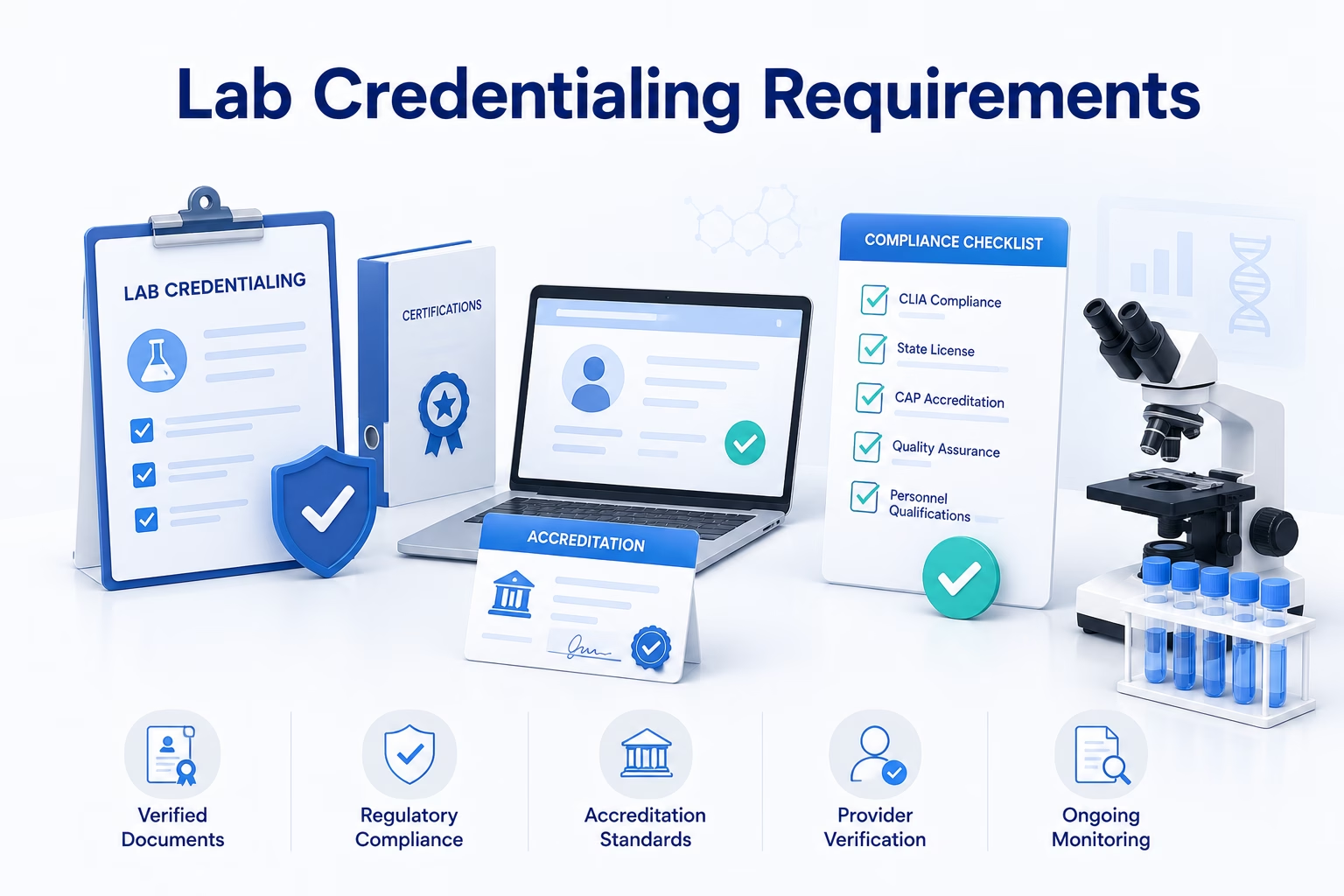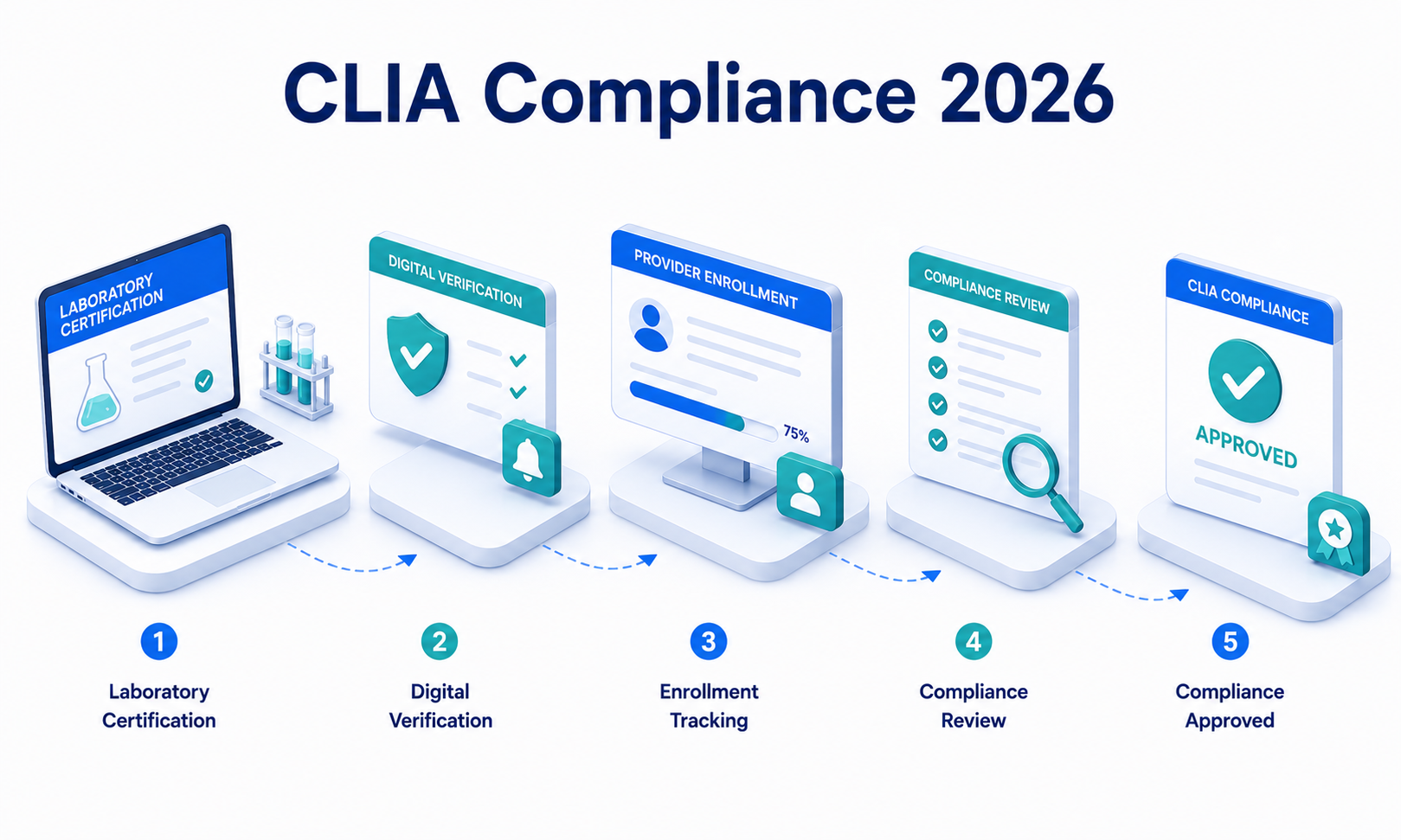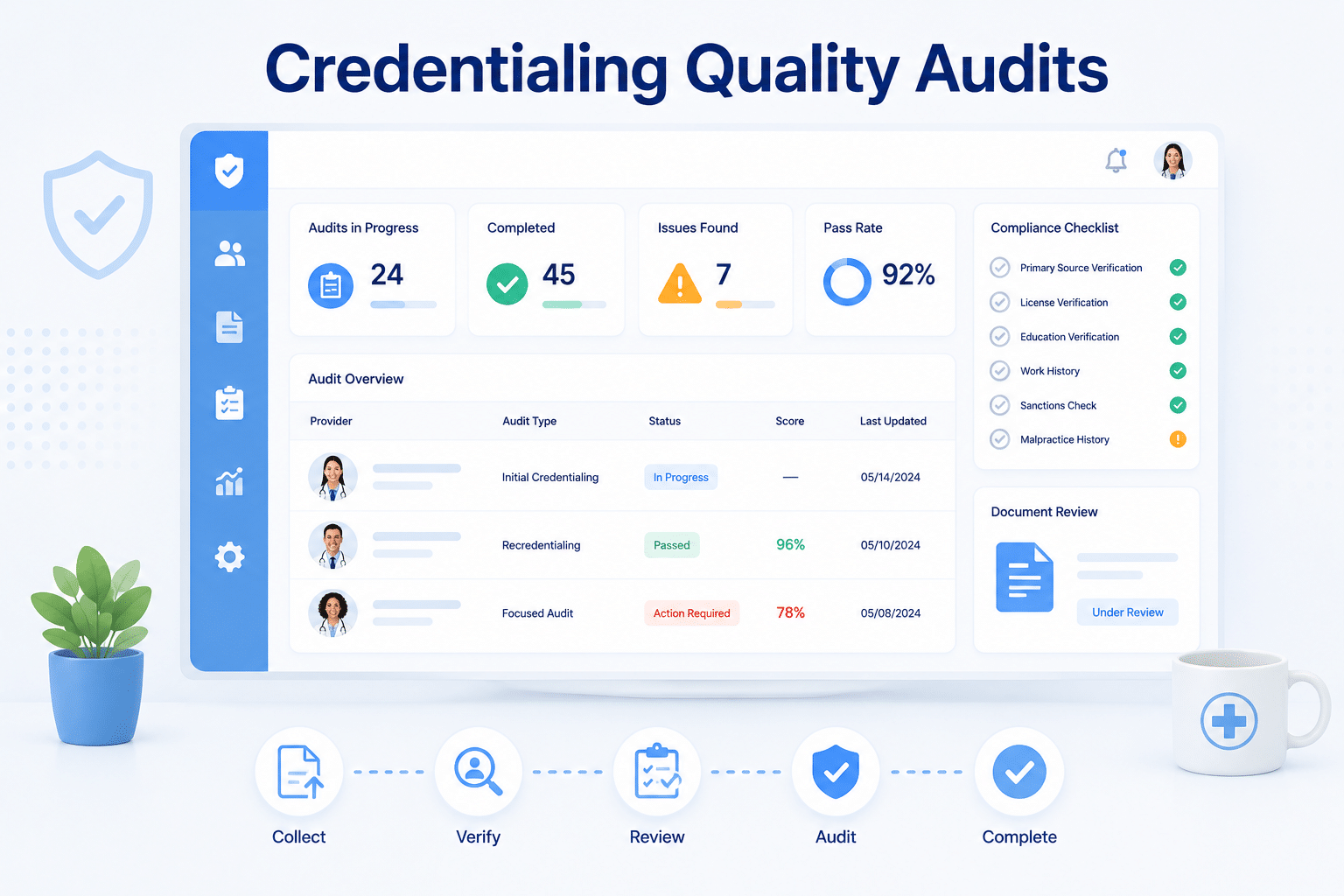
Healthcare provider licensing is the first and most critical step in the credentialing process. Without proper healthcare provider licensing, providers cannot legally practice, complete provider enrollment, or participate in insurance networks, directly impacting revenue and compliance.
For practice managers, healthcare administrators, and clinic owners, licensing is not just a regulatory step—it is the foundation of healthcare credentialing, insurance enrollment, and revenue cycle management.
Why Licensing Is Critical for Healthcare Practices
Licensing ensures that providers meet the legal and professional standards required to deliver patient care safely and effectively. Without an active license, providers cannot bill insurance, participate in Medicare or commercial plans, or meet healthcare compliance requirements.
Delays in licensing often create a ripple effect across the entire practice, impacting credentialing timelines, payer approvals, and ultimately cash flow.
The Real Impact of Licensing Delays
Licensing delays are more than administrative setbacks—they directly affect operations and revenue. When licensing is incomplete or delayed, providers cannot begin credentialing or insurance enrollment. This results in delayed provider onboarding, inability to bill services, and interruptions in medical billing workflows.
Over time, these issues increase administrative workload, slow down revenue cycle management, and reduce patient access to care.
Understanding the Healthcare Provider Licensing Process
The licensing process typically takes 60 to 90 days, depending on the state and provider type.
However, the timeline can extend significantly if documentation is incomplete or verification steps are delayed.
1. Education and Examination Requirements
Providers must complete accredited education programs and pass required licensing exams to demonstrate competency.
2. Application Submission
A detailed application must be submitted, including personal information, credentials, and supporting documentation.
3. Primary Source Verification
Licensing boards verify education, training, and certifications directly from issuing institutions to ensure accuracy.
4. Background Checks
Providers undergo background checks to confirm compliance with regulatory and legal standards.
5. State-Specific Requirements
Some states require additional exams or documentation based on local regulations and scope of practice.
6. License Approval and Issuance
Once all requirements are met, the licensing board issues the provider’s license, allowing them to begin the credentialing process.
Step-by-Step: How to Streamline Healthcare Provider Licensing
1. Start Licensing Early
Begin the licensing process as soon as a provider is hired or planning to relocate. Early initiation prevents delays in credentialing and enrollment.
2. Maintain Complete and Accurate Documentation
Ensure all documents, including licenses, certifications, and identification records, are accurate and up to date.
3. Understand State-Specific Requirements
Each state has unique licensing rules. Familiarity with these requirements helps avoid rejections and delays.
4. Align Licensing with Credentialing Strategy
Licensing must be completed before credentialing begins. Delays in licensing will automatically delay provider enrollment and billing readiness.
To better understand how licensing connects to credentialing workflows, it’s important to review how the provider credentialing process works from application to approval.
5. Track Deadlines and Renewal Dates
Licenses require periodic renewal. Missing renewal deadlines can result in provider deactivation and billing interruptions.
6. Use Technology for Tracking and Compliance
Credentialing and licensing software can help track expiration dates, manage documents, and automate reminders.
Common Licensing Mistakes to Avoid
Many practices face delays due to avoidable mistakes in licensing. Submitting incomplete applications, failing to track expiration dates, and misunderstanding state requirements are among the most common issues.
Inconsistent provider data across licensing and credentialing systems can also create verification delays and compliance risks.
How Licensing Impacts Credentialing and Revenue Cycle
Healthcare provider licensing directly influences the speed and success of credentialing and insurance enrollment. Without proper licensing, providers cannot move forward with credentialing, which delays payer approvals and prevents timely billing.
Many practices experience revenue loss because licensing delays create bottlenecks in the entire enrollment process. Understanding how licensing connects to documentation is critical for avoiding these issues.
To improve accuracy and prevent delays, it’s important to understand the role of provider credentialing documents in ensuring smooth approvals.
Best Practices for Long-Term Licensing Efficiency
Maintaining licensing compliance requires ongoing attention and proactive management. Practices should regularly audit provider credentials, monitor expiration timelines, and ensure all documentation remains updated and consistent.
Training staff on licensing requirements and integrating licensing into overall credentialing workflows can significantly improve efficiency. Practices that adopt structured processes experience fewer delays, better compliance, and improved revenue cycle performance.
Real-World Impact on Healthcare Operations
Consider a scenario where a provider’s license renewal is missed. Even if the provider continues seeing patients, claims cannot be submitted to insurance companies, leading to revenue loss and compliance risks.
Multiply this across multiple providers, and the financial and operational impact becomes substantial. Efficient licensing management ensures uninterrupted provider activity and stable cash flow.
Build a Strong Foundation with Healthcare Provider Licensing
Healthcare provider licensing is the cornerstone of credentialing, compliance, and revenue cycle success. By managing healthcare provider licensing proactively and aligning it with credentialing and enrollment processes, practices can reduce delays, improve efficiency, and maintain consistent revenue flow.
If your practice is facing licensing challenges or delays, eClinicAssist offers expert support to streamline licensing, credentialing, and provider enrollment. Contact us today to ensure compliance, avoid costly delays, and optimize your healthcare operations.